

Vermifiltration technology ranging from small to pilot-scale levels were reported to
efficiently treat sewage with different ranges of COD, BOD and SS, reducing N and
P (Sinha et al. 2008). pH and ammonia which affect the earthworms’ survival
resulting to efficiency of wastewater treatment have also been studied. It was
found that earthworms were able to neutralize pH in wastewater, and the process
is nearly odour-free (Sinha et al. 2008; Hughes et al. 2009). Hughes et al. (2009) also
reported that ammonia at high level was toxic to the earthworms in vermifilter. The
effect of different hydraulic loading rates on vermifilter using riverbed material for
the treatment of domestic wastewater has been investigated (Kumar et al. 2014).
Taylor et al. (2003) found that filter bed depth affected the efficiency of small-scale
vermifiltration system. The filter bed was found to be suitable environment for the
earthworms and easily survived the surface loadings of solid organic waste and
130 L/day of raw domestic wastewater. Li et al. (2008) were able to reduce ammonia
emissions by reusing the wastewater to flush out the manure in a swine facility. They
were also able to treat diluted manure and produce earthworms and vermicompost.
They reported that adopting decentralized vermifiltration system reduced transportation costs. Hughes et al. (2009) were able to conclude from their studies on toxicity
of sodium during vermifiltration that juveniles were more susceptible and could be
killed because of high NaCl in the wastewater. However, the predicted bed concentration (PEC) of NaCl was very low when compared to the average mass of sodium
loaded into a vermifiltration system on a weekly basis. Treatment is done on various
types of wastewater using vermifiltration process as listed in Table 2.3.
A study was also carried out to compare the performance of vermifilter containing
the earthworm species (Eisenia fetida) and geofilter (without earthworms) for
enhancing the treatment of the wastewater. Four different hydraulic loading rates
of 1.5, 2, 2.5 and 3.0 m
3 m
À2 day
À1 were applied to the vermifilter and geofilter using
synthetic domestic wastewater. For the optimum hydraulic loading rate of 2.5
m
3 m
À2 day
À1 , the removal efficiency values (%) of BOD, TSS and TDS with
vermifilter were found to be 96, 90 and 82, respectively, while in geofilter the
observed values (%) were 70, 79 and 56, respectively. In addition to this,
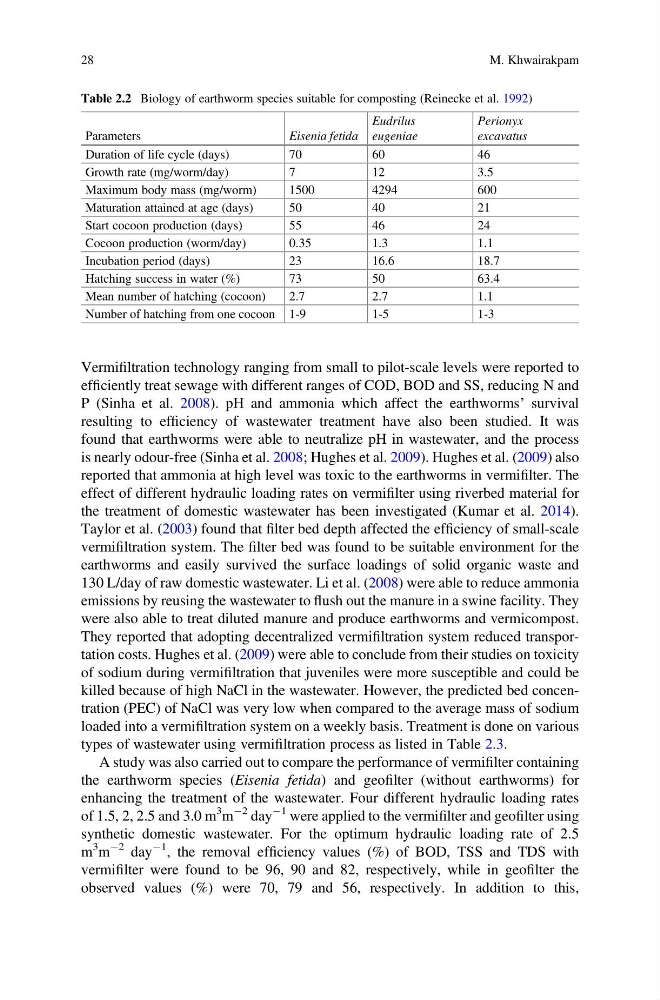
Table 2.2 Biology of earthworm species suitable for composting (Reinecke et al. 1992)
Parameters
Eisenia fetida
Eudrilus
eugeniae
Perionyx
excavatus
Duration of life cycle (days)
70
60
46
Growth rate (mg/worm/day)
7
12
3.5
Maximum body mass (mg/worm)
1500
4294
600
Maturation attained at age (days)
50
40
21
Start cocoon production (days)
55
46
24
Cocoon production (worm/day)
0.35
1.3
1.1
Incubation period (days)
23
16.6
18.7
Hatching success in water (%)
73
50
63.4
Mean number of hatching (cocoon)
2.7
2.7
1.1
Number of hatching from one cocoon 1-9
1-5
1-3
28
M. Khwairakpam
efficiently treat sewage with different ranges of COD, BOD and SS, reducing N and
P (Sinha et al. 2008). pH and ammonia which affect the earthworms’ survival
resulting to efficiency of wastewater treatment have also been studied. It was
found that earthworms were able to neutralize pH in wastewater, and the process
is nearly odour-free (Sinha et al. 2008; Hughes et al. 2009). Hughes et al. (2009) also
reported that ammonia at high level was toxic to the earthworms in vermifilter. The
effect of different hydraulic loading rates on vermifilter using riverbed material for
the treatment of domestic wastewater has been investigated (Kumar et al. 2014).
Taylor et al. (2003) found that filter bed depth affected the efficiency of small-scale
vermifiltration system. The filter bed was found to be suitable environment for the
earthworms and easily survived the surface loadings of solid organic waste and
130 L/day of raw domestic wastewater. Li et al. (2008) were able to reduce ammonia
emissions by reusing the wastewater to flush out the manure in a swine facility. They
were also able to treat diluted manure and produce earthworms and vermicompost.
They reported that adopting decentralized vermifiltration system reduced transportation costs. Hughes et al. (2009) were able to conclude from their studies on toxicity
of sodium during vermifiltration that juveniles were more susceptible and could be
killed because of high NaCl in the wastewater. However, the predicted bed concentration (PEC) of NaCl was very low when compared to the average mass of sodium
loaded into a vermifiltration system on a weekly basis. Treatment is done on various
types of wastewater using vermifiltration process as listed in Table 2.3.
A study was also carried out to compare the performance of vermifilter containing
the earthworm species (Eisenia fetida) and geofilter (without earthworms) for
enhancing the treatment of the wastewater. Four different hydraulic loading rates
of 1.5, 2, 2.5 and 3.0 m
3 m
À2 day
À1 were applied to the vermifilter and geofilter using
synthetic domestic wastewater. For the optimum hydraulic loading rate of 2.5
m
3 m
À2 day
À1 , the removal efficiency values (%) of BOD, TSS and TDS with
vermifilter were found to be 96, 90 and 82, respectively, while in geofilter the
observed values (%) were 70, 79 and 56, respectively. In addition to this,
Table 2.2 Biology of earthworm species suitable for composting (Reinecke et al. 1992)
Parameters
Eisenia fetida
Eudrilus
eugeniae
Perionyx
excavatus
Duration of life cycle (days)
70
60
46
Growth rate (mg/worm/day)
7
12
3.5
Maximum body mass (mg/worm)
1500
4294
600
Maturation attained at age (days)
50
40
21
Start cocoon production (days)
55
46
24
Cocoon production (worm/day)
0.35
1.3
1.1
Incubation period (days)
23
16.6
18.7
Hatching success in water (%)
73
50
63.4
Mean number of hatching (cocoon)
2.7
2.7
1.1
Number of hatching from one cocoon 1-9
1-5
1-3
28
M. Khwairakpam