

filter bed is called anoxic zone in vermifiltration (Samal et al. 2018a). Oxygen level
is increased in filter bed by the borrowing action of earthworms. Further, the increase
in the surface area of soil particles with an increase in vermibed porosity to retain
more organic pollutants and suspended solids facilitates further decomposition by
earthworms (Jiang et al. 2016; Sinha et al. 2008; Singh et al. 2018). Earthworms
process wastes by actions like ingestion, grinding, digestion and excretion, and these
actions have several physical, chemical and biological effects on the internal ecosystem of earthworm active zone (Singh et al. 2017). The ingestion and grinding
actions by earthworm result in conversion of feed waste material into small particles
(2–4 microns) followed by the digestion due to symbiotic action of microbes and
enzymes in intestine (Kumar et al. 2015; Sinha et al. 2010; Singh et al. 2017; Wang
et al. 2011). Numerous enzymes like protease, lipase, amylase, cellulase and
chitinase are secreted in the gizzard and intestine of the earthworms which lead to
biochemical conversion of the cellulosic and the proteinaceous materials present in
the wastewater (Sinha et al. 2010). Since earthworm gut hosts diverse microbial
communities, ingested food materials are excreted as vermicast into the soil with
nutrients. Microbes present in the biofilm for their population growth further degrade
nutrients retained on it, and the nutrients present in the vermicast (Sinha et al. 2008).
Earthworms secrete mucus (slimy fluid) from their body which is composed of
various metabolites to keep their body surface humid, which also helps in absorbing
oxygen (Singh et al. 2017). Earthworms are able to convert large organic matter into
complex amorphous solids which contains phenolic compounds and this process is
called ‘humification’. These humic substances present in vermibed help in metal
adsorption and contain those organic compounds which have complex molecular
structure as aromatic rings, carbonyl groups, phenolic and alcoholic hydroxyl. This
Earthworms + soil
Coarse gravel
Fine gravel
Sand
Macrophyte:
• Microbial growth
• Filter bed stabilization
• Plant exudates and toxins for pathogen
removal
• Nutrients removal
• Improved soil hydraulic conductivity
Earthworm:
• Organic matter degradation
• Digestion of pathogens
• Mineralization and absorption of
nutrients
• Excretion
of
digested
wastes
(vermicasts): Nutrients and microbial
rich and pathogen free
Sand:
• Retention of solids
Fine gravel:
• Supporting layer
• Forms biofilm
Coarse gravel:
• Supporting layer
• Acts as filtration unit
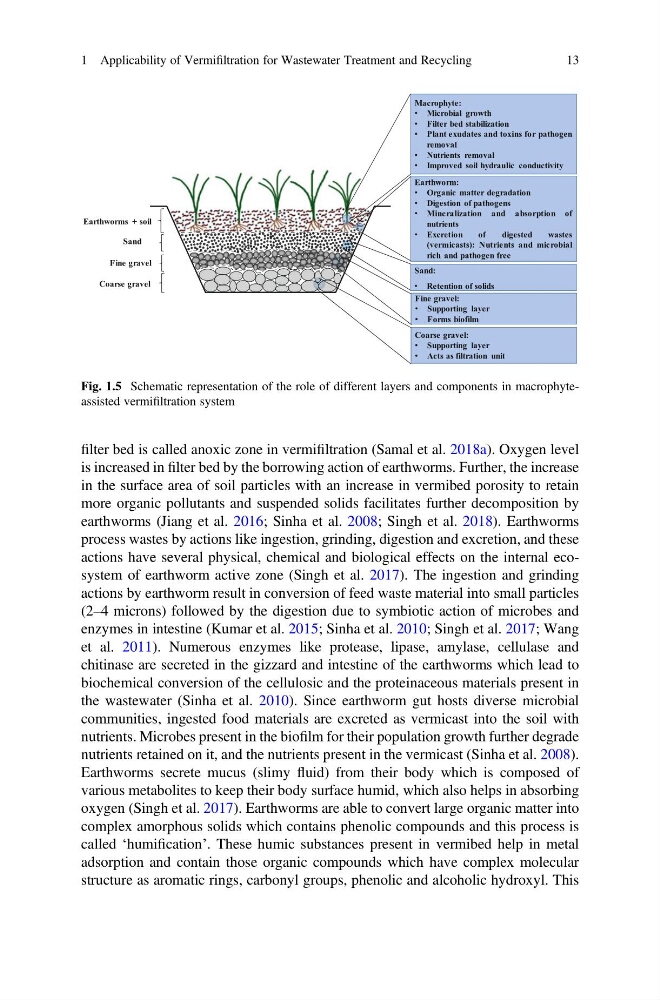
Fig. 1.5 Schematic representation of the role of different layers and components in macrophyteassisted vermifiltration system
1 Applicability of Vermifiltration for Wastewater Treatment and Recycling
13
is increased in filter bed by the borrowing action of earthworms. Further, the increase
in the surface area of soil particles with an increase in vermibed porosity to retain
more organic pollutants and suspended solids facilitates further decomposition by
earthworms (Jiang et al. 2016; Sinha et al. 2008; Singh et al. 2018). Earthworms
process wastes by actions like ingestion, grinding, digestion and excretion, and these
actions have several physical, chemical and biological effects on the internal ecosystem of earthworm active zone (Singh et al. 2017). The ingestion and grinding
actions by earthworm result in conversion of feed waste material into small particles
(2–4 microns) followed by the digestion due to symbiotic action of microbes and
enzymes in intestine (Kumar et al. 2015; Sinha et al. 2010; Singh et al. 2017; Wang
et al. 2011). Numerous enzymes like protease, lipase, amylase, cellulase and
chitinase are secreted in the gizzard and intestine of the earthworms which lead to
biochemical conversion of the cellulosic and the proteinaceous materials present in
the wastewater (Sinha et al. 2010). Since earthworm gut hosts diverse microbial
communities, ingested food materials are excreted as vermicast into the soil with
nutrients. Microbes present in the biofilm for their population growth further degrade
nutrients retained on it, and the nutrients present in the vermicast (Sinha et al. 2008).
Earthworms secrete mucus (slimy fluid) from their body which is composed of
various metabolites to keep their body surface humid, which also helps in absorbing
oxygen (Singh et al. 2017). Earthworms are able to convert large organic matter into
complex amorphous solids which contains phenolic compounds and this process is
called ‘humification’. These humic substances present in vermibed help in metal
adsorption and contain those organic compounds which have complex molecular
structure as aromatic rings, carbonyl groups, phenolic and alcoholic hydroxyl. This
Earthworms + soil
Coarse gravel
Fine gravel
Sand
Macrophyte:
• Microbial growth
• Filter bed stabilization
• Plant exudates and toxins for pathogen
removal
• Nutrients removal
• Improved soil hydraulic conductivity
Earthworm:
• Organic matter degradation
• Digestion of pathogens
• Mineralization and absorption of
nutrients
• Excretion
of
digested
wastes
(vermicasts): Nutrients and microbial
rich and pathogen free
Sand:
• Retention of solids
Fine gravel:
• Supporting layer
• Forms biofilm
Coarse gravel:
• Supporting layer
• Acts as filtration unit
Fig. 1.5 Schematic representation of the role of different layers and components in macrophyteassisted vermifiltration system
1 Applicability of Vermifiltration for Wastewater Treatment and Recycling
13