

2008). Moreover, the incineration plant is also recognized as a pollution source of
heavy metals for the surrounding environment. In many developing countries,
however, landfill and direct dumping are still practiced. The landfill and dumping
can deteriorate the soil and water environments. Direct dumping to urban rivers or
garbage collection stations near domestic areas may cause foul smelling and leachate
that affect the living environment of humans (Du and Li 2017). Therefore, it is
necessary to overcome the relevant defects of landfill or incineration for treatment
and recycling of FVW, concurrently developing an environment-friendly method
which can convert FVW to high value products.
Currently, anaerobic digestion and composting are recognized as two efficient
and environmentally friendly methods to recycle/recover available resources from
organic waste and are used extensively worldwide (Cerda et al. 2018). Diverting
organic waste like FVW from landfill or incineration to anaerobic digestion or
composting has many environmental benefits, such as reduction of greenhouse gas
emission and improvement of soil properties through the application of compost
(Bernstad Saraiva Schott et al. 2016). Anaerobic digestion is a biological process in
which stabilization of organic waste is achieved by microorganisms in the absence of
oxygen. The main products of this process are biogas (a mixture of CH 4 , H 2 , and
other gases) and the digested sludge as the main by-product (Moukazis et al. 2018).
The biogas can be used to generate heat and/or electricity or can be used as transport
fuel or injection into the natural gas system (Singh et al. 2010). However, it is
reported that the required range of pH, carbon to nitrogen (C/N) ratio, and moisture
for anaerobic digestion are around 7.0 (Khalid et al. 2011), 20–30, and 70–80%
(Hernández-Berriel et al. 2008), respectively. Therefore, it is necessary to introduce
a pretreatment process for FVW before the anaerobic digestion. Composting, as one
of the most sustainable options for the treatment of organic waste including the
FVW, can not only cut down the volume of organic waste but also produce a useful
product as fertilizer (Lou and Nair 2009; Cerda et al. 2018). Since the composting is
an aerobic biochemical process via the function of thermophilic microorganisms, it
is important to maintain the requirements for the growth of microorganisms. Some
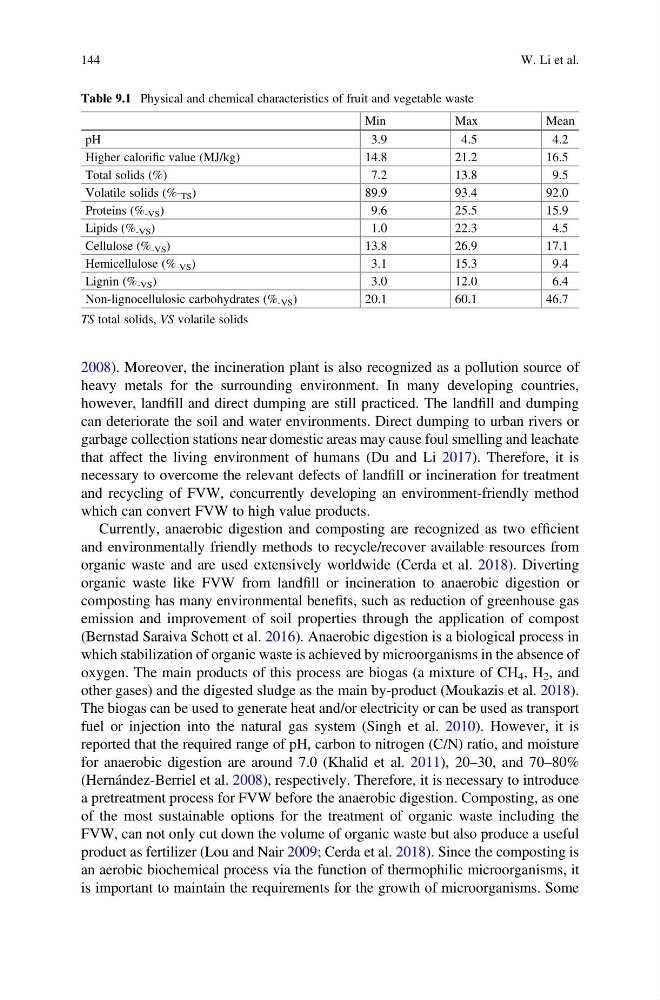
Table 9.1 Physical and chemical characteristics of fruit and vegetable waste
Min
Max
Mean
pH
3.9
4.5
4.2
Higher calorific value (MJ/kg)
14.8
21.2
16.5
Total solids (%)
7.2
13.8
9.5
Volatile solids (%- TS )
89.9
93.4
92.0
Proteins (% -VS )
9.6
25.5
15.9
Lipids (% -VS )
1.0
22.3
4.5
Cellulose (% -VS )
13.8
26.9
17.1
Hemicellulose (% -VS )
3.1
15.3
9.4
Lignin (% -VS )
3.0
12.0
6.4
Non-lignocellulosic carbohydrates (% -VS )
20.1
60.1
46.7
TS total solids, VS volatile solids
144
W. Li et al.
heavy metals for the surrounding environment. In many developing countries,
however, landfill and direct dumping are still practiced. The landfill and dumping
can deteriorate the soil and water environments. Direct dumping to urban rivers or
garbage collection stations near domestic areas may cause foul smelling and leachate
that affect the living environment of humans (Du and Li 2017). Therefore, it is
necessary to overcome the relevant defects of landfill or incineration for treatment
and recycling of FVW, concurrently developing an environment-friendly method
which can convert FVW to high value products.
Currently, anaerobic digestion and composting are recognized as two efficient
and environmentally friendly methods to recycle/recover available resources from
organic waste and are used extensively worldwide (Cerda et al. 2018). Diverting
organic waste like FVW from landfill or incineration to anaerobic digestion or
composting has many environmental benefits, such as reduction of greenhouse gas
emission and improvement of soil properties through the application of compost
(Bernstad Saraiva Schott et al. 2016). Anaerobic digestion is a biological process in
which stabilization of organic waste is achieved by microorganisms in the absence of
oxygen. The main products of this process are biogas (a mixture of CH 4 , H 2 , and
other gases) and the digested sludge as the main by-product (Moukazis et al. 2018).
The biogas can be used to generate heat and/or electricity or can be used as transport
fuel or injection into the natural gas system (Singh et al. 2010). However, it is
reported that the required range of pH, carbon to nitrogen (C/N) ratio, and moisture
for anaerobic digestion are around 7.0 (Khalid et al. 2011), 20–30, and 70–80%
(Hernández-Berriel et al. 2008), respectively. Therefore, it is necessary to introduce
a pretreatment process for FVW before the anaerobic digestion. Composting, as one
of the most sustainable options for the treatment of organic waste including the
FVW, can not only cut down the volume of organic waste but also produce a useful
product as fertilizer (Lou and Nair 2009; Cerda et al. 2018). Since the composting is
an aerobic biochemical process via the function of thermophilic microorganisms, it
is important to maintain the requirements for the growth of microorganisms. Some
Table 9.1 Physical and chemical characteristics of fruit and vegetable waste
Min
Max
Mean
pH
3.9
4.5
4.2
Higher calorific value (MJ/kg)
14.8
21.2
16.5
Total solids (%)
7.2
13.8
9.5
Volatile solids (%- TS )
89.9
93.4
92.0
Proteins (% -VS )
9.6
25.5
15.9
Lipids (% -VS )
1.0
22.3
4.5
Cellulose (% -VS )
13.8
26.9
17.1
Hemicellulose (% -VS )
3.1
15.3
9.4
Lignin (% -VS )
3.0
12.0
6.4
Non-lignocellulosic carbohydrates (% -VS )
20.1
60.1
46.7
TS total solids, VS volatile solids
144
W. Li et al.