

Moreover, higher differential abundances of the phyla Chloroflexi (mean: 4.10
log2 fold change, p ¼ 0.0001), Proteobacteria (mean: 1.02 log2 fold change,
p ¼ 0.028) and Armatimonadetes (mean: 4.89 log2 fold change, p ¼ 0.003) were
detected in the vermicompost samples obtained from the raw grape marc when
compared to those derived from the Scotch broom plant material. The opposite
trend was found for the phylum Fibrobacteres (mean: À7.82 log2 fold change,
p ¼ 0.048), with lower differential abundances in the raw grape marc-derived
vermicompost. If we compared the raw grape marc- and acacia-derived
vermicomposts, Actinobacteria (mean: 2.01 log2 fold change, p ¼ 0.004),
Patescibacteria (mean: À6.85 log2 fold change, p ¼ 0.026), Spirochaetes (mean:
À6.04 log2 fold change, p ¼ 0.002) and Armatimonadetes (mean: 3.48 log2 fold
change, p ¼ 0.049) were found to significantly differ in terms of abundance between
this pair of vermicomposts.
The comparison of the bacterial community composition of the distilled grape
marc-derived vermicompost and that from Scotch broom- and acacia vermicomposts
Acacia Vc
Distilled marc Vc
Raw marc Vc
Scotch broom Vc
35-42%, 30-35%
2 1 - 2 2 %
, 2 0 - 1 8 %
% 7 1 - 9 1
,
% 2 2 - 0 2
15-19%,
17-17%
1 4 - 1 5 %
, 1 2 - 1 3 %
46-51%, 42-46%
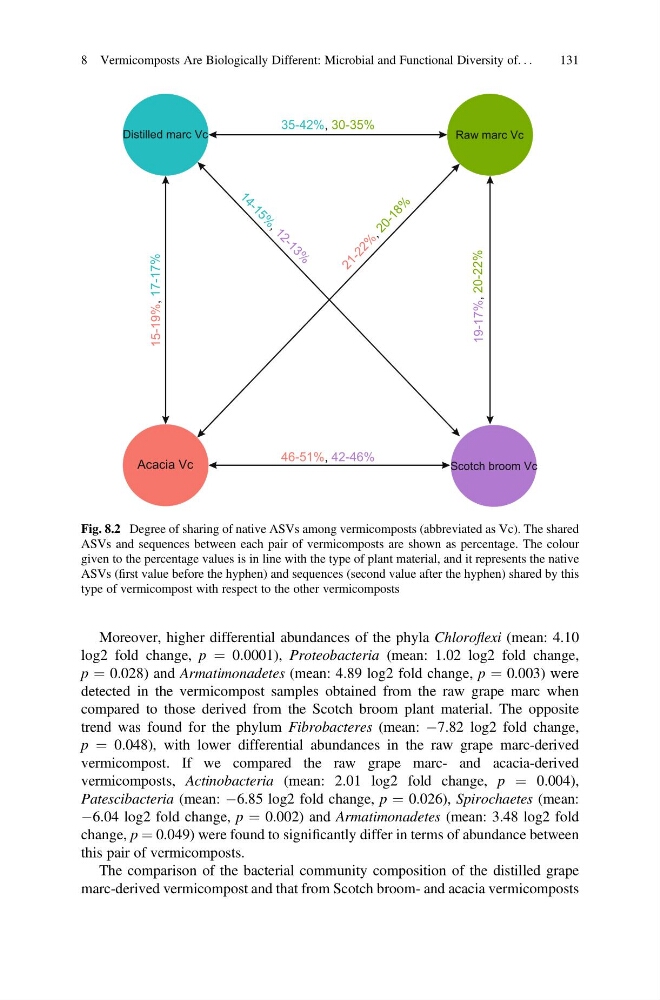
Fig. 8.2 Degree of sharing of native ASVs among vermicomposts (abbreviated as Vc). The shared
ASVs and sequences between each pair of vermicomposts are shown as percentage. The colour
given to the percentage values is in line with the type of plant material, and it represents the native
ASVs (first value before the hyphen) and sequences (second value after the hyphen) shared by this
type of vermicompost with respect to the other vermicomposts
8 Vermicomposts Are Biologically Different: Microbial and Functional Diversity of. . .
131
log2 fold change, p ¼ 0.0001), Proteobacteria (mean: 1.02 log2 fold change,
p ¼ 0.028) and Armatimonadetes (mean: 4.89 log2 fold change, p ¼ 0.003) were
detected in the vermicompost samples obtained from the raw grape marc when
compared to those derived from the Scotch broom plant material. The opposite
trend was found for the phylum Fibrobacteres (mean: À7.82 log2 fold change,
p ¼ 0.048), with lower differential abundances in the raw grape marc-derived
vermicompost. If we compared the raw grape marc- and acacia-derived
vermicomposts, Actinobacteria (mean: 2.01 log2 fold change, p ¼ 0.004),
Patescibacteria (mean: À6.85 log2 fold change, p ¼ 0.026), Spirochaetes (mean:
À6.04 log2 fold change, p ¼ 0.002) and Armatimonadetes (mean: 3.48 log2 fold
change, p ¼ 0.049) were found to significantly differ in terms of abundance between
this pair of vermicomposts.
The comparison of the bacterial community composition of the distilled grape
marc-derived vermicompost and that from Scotch broom- and acacia vermicomposts
Acacia Vc
Distilled marc Vc
Raw marc Vc
Scotch broom Vc
35-42%, 30-35%
2 1 - 2 2 %
, 2 0 - 1 8 %
% 7 1 - 9 1
,
% 2 2 - 0 2
15-19%,
17-17%
1 4 - 1 5 %
, 1 2 - 1 3 %
46-51%, 42-46%
Fig. 8.2 Degree of sharing of native ASVs among vermicomposts (abbreviated as Vc). The shared
ASVs and sequences between each pair of vermicomposts are shown as percentage. The colour
given to the percentage values is in line with the type of plant material, and it represents the native
ASVs (first value before the hyphen) and sequences (second value after the hyphen) shared by this
type of vermicompost with respect to the other vermicomposts
8 Vermicomposts Are Biologically Different: Microbial and Functional Diversity of. . .
131