

29
positive ion mode (APPI-P) at the University of Calgary with a Bruker 12 T SolariX
FTICR-MS.
Whereas nitrogen-containing pyrrolic species such as alkylcarbazoles and their
benzannulated homologues strongly dominate the acidic ESI-N-amenable fraction
of the MW oil, other nitrogen-containing species with pyridinic structures
(e.g.,(benzo)quinolines) are highly abundant in the fraction of the oil constituents
which is ionized through protonation (ESI-P). The nonpolar fraction (APPI-P)
reveals a strong predominance of hydrocarbons (70%) followed by nitrogen- and
sulfur-containing species (~12% each). Despite the broad range of molecules with
various functional chemical groups, the overall carbon number range in all three
ionization modes are similar (ESI-N, C12 to C76; ESI-P, C16 to C85; APPI-P, C12
to C83) as illustrated in Fig. 3.3. An analogous observation was made when comparing the consolidated double bond equivalent (DBE) distribution of all species measured in the three ionization modes (Fig. 3.3).
Whereas the overall DBE distribution and averaged molecular mass (weighted,
AMM) of the acidic fraction (ESI-N) and nonpolar fraction (APPI-P) are very similar (ESI-N, DBE 1 to 29, AMM 517; APPI-P, DBE 1 to 31, AMM 524), the protonated fraction (ESI-P) is composed of the broadest DBE range and highest AMM
Ϭ͘ϳϱ
Ϭ͘ϴϱ
ϭ͘ϭйZĞ
Ϭ͘ϲϴ
DtŽŝů
;ΕϬ͘ϵйZĞͿ
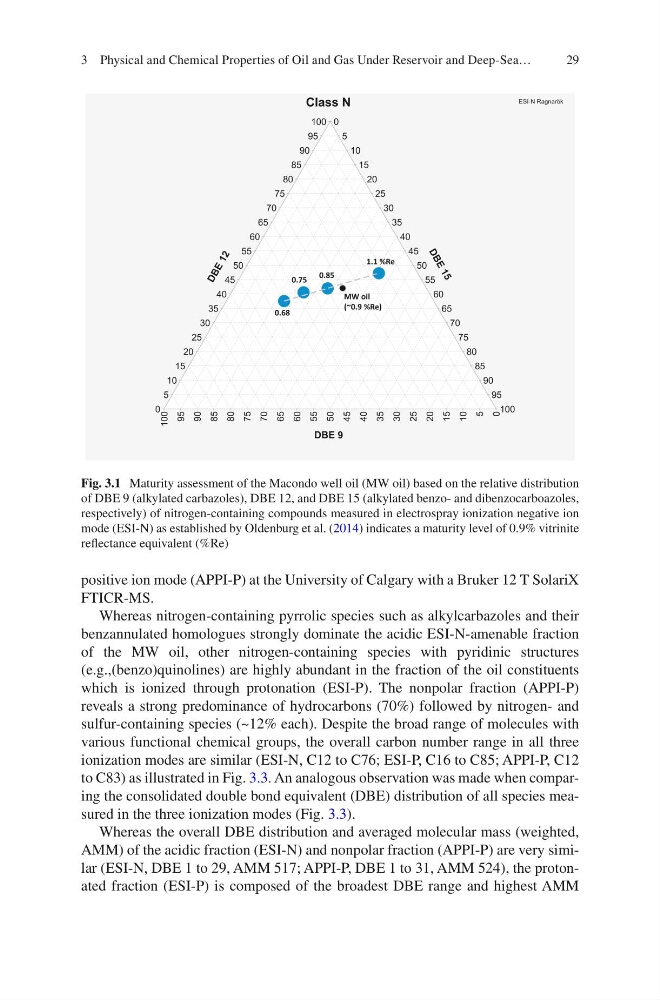
Fig. 3.1 Maturity assessment of the Macondo well oil (MW oil) based on the relative distribution
of DBE 9 (alkylated carbazoles), DBE 12, and DBE 15 (alkylated benzo- and dibenzocarboazoles,
respectively) of nitrogen-containing compounds measured in electrospray ionization negative ion
mode (ESI-N) as established by Oldenburg et al. (2014) indicates a maturity level of 0.9% vitrinite
reflectance equivalent (%Re)
3 Physical and Chemical Properties of Oil and Gas Under Reservoir and Deep-Sea…
positive ion mode (APPI-P) at the University of Calgary with a Bruker 12 T SolariX
FTICR-MS.
Whereas nitrogen-containing pyrrolic species such as alkylcarbazoles and their
benzannulated homologues strongly dominate the acidic ESI-N-amenable fraction
of the MW oil, other nitrogen-containing species with pyridinic structures
(e.g.,(benzo)quinolines) are highly abundant in the fraction of the oil constituents
which is ionized through protonation (ESI-P). The nonpolar fraction (APPI-P)
reveals a strong predominance of hydrocarbons (70%) followed by nitrogen- and
sulfur-containing species (~12% each). Despite the broad range of molecules with
various functional chemical groups, the overall carbon number range in all three
ionization modes are similar (ESI-N, C12 to C76; ESI-P, C16 to C85; APPI-P, C12
to C83) as illustrated in Fig. 3.3. An analogous observation was made when comparing the consolidated double bond equivalent (DBE) distribution of all species measured in the three ionization modes (Fig. 3.3).
Whereas the overall DBE distribution and averaged molecular mass (weighted,
AMM) of the acidic fraction (ESI-N) and nonpolar fraction (APPI-P) are very similar (ESI-N, DBE 1 to 29, AMM 517; APPI-P, DBE 1 to 31, AMM 524), the protonated fraction (ESI-P) is composed of the broadest DBE range and highest AMM
Ϭ͘ϳϱ
Ϭ͘ϴϱ
ϭ͘ϭйZĞ
Ϭ͘ϲϴ
DtŽŝů
;ΕϬ͘ϵйZĞͿ
Fig. 3.1 Maturity assessment of the Macondo well oil (MW oil) based on the relative distribution
of DBE 9 (alkylated carbazoles), DBE 12, and DBE 15 (alkylated benzo- and dibenzocarboazoles,
respectively) of nitrogen-containing compounds measured in electrospray ionization negative ion
mode (ESI-N) as established by Oldenburg et al. (2014) indicates a maturity level of 0.9% vitrinite
reflectance equivalent (%Re)
3 Physical and Chemical Properties of Oil and Gas Under Reservoir and Deep-Sea…