

394
surfactants that have been shown to elicit avoidance behavior in number of fish
species (Hara and Thompson 1978; Maynard and Weber 1981; Dauble et al. 1985;
Hidaka and Tatsukawa 1989; Ishida and Kobayashi 1995; Martin 2017; Lari and
Pyle 2017; Reichert et al. 2017; Claireaux et al. 2018).
Post-DWH surveys conducted from Texas to Florida documented oiling along
2100 km of shoreline and more than 1100 km of coastal wetlands (Nixon et al.
2016). Ichthyoplankton surveys (2006–2010) from oil-impacted nearshore regions
were used to assess potential habitat shifts and abundances of juvenile fish in seagrass nursery habitats in the northern GoM (Chandeleur Islands, LA to St. Joseph
Bay, FL; Fodrie and Heck Jr 2011). Over 160,000 individual fishes representing 86
taxa were examined. Species composition of juvenile fish assemblages was unaltered, and there was little statistical evidence that potential exposures significantly
impacted catch per unit effort (CPUE) during 2010. However, as compared to prespill catch rates, the fish characterized as of moderate (spring spawning, nearshore
larvae) or high risk (spring-summer spawning, sparse larvae across continental
shelf) exhibited decreases in CPUE following the spill in several of the bays assessed
(Fodrie and Heck Jr 2011). Collectively, there were no significant post-spill shifts in
community composition or juvenile cohorts in seagrass habitats, although the
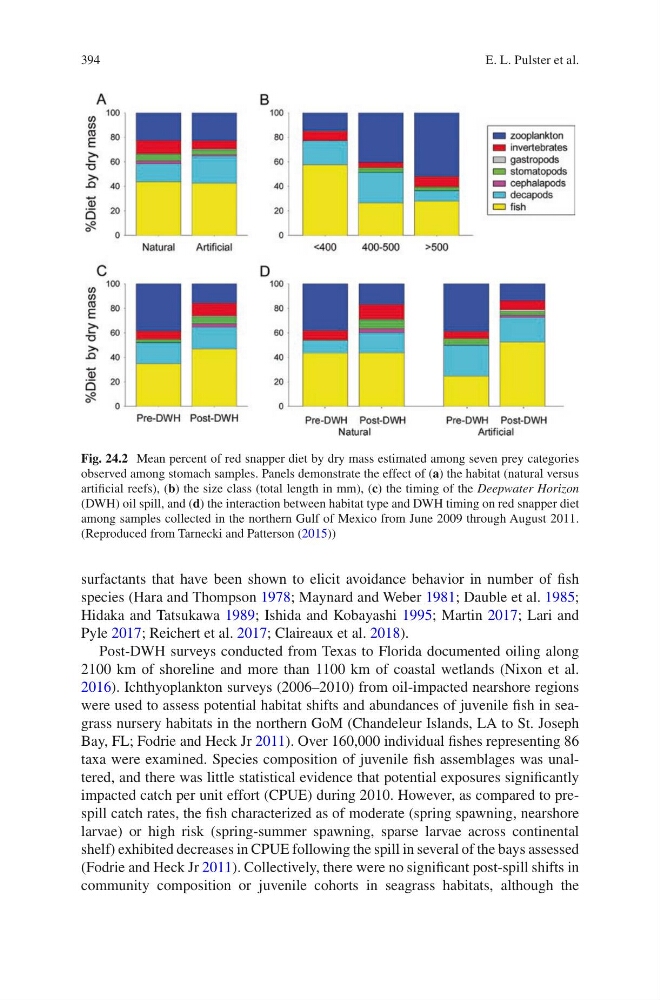
Fig. 24.2 Mean percent of red snapper diet by dry mass estimated among seven prey categories
observed among stomach samples. Panels demonstrate the effect of (a) the habitat (natural versus
artificial reefs), (b) the size class (total length in mm), (c) the timing of the Deepwater Horizon
(DWH) oil spill, and (d) the interaction between habitat type and DWH timing on red snapper diet
among samples collected in the northern Gulf of Mexico from June 2009 through August 2011.
(Reproduced from Tarnecki and Patterson (2015))
E. L. Pulster et al.
surfactants that have been shown to elicit avoidance behavior in number of fish
species (Hara and Thompson 1978; Maynard and Weber 1981; Dauble et al. 1985;
Hidaka and Tatsukawa 1989; Ishida and Kobayashi 1995; Martin 2017; Lari and
Pyle 2017; Reichert et al. 2017; Claireaux et al. 2018).
Post-DWH surveys conducted from Texas to Florida documented oiling along
2100 km of shoreline and more than 1100 km of coastal wetlands (Nixon et al.
2016). Ichthyoplankton surveys (2006–2010) from oil-impacted nearshore regions
were used to assess potential habitat shifts and abundances of juvenile fish in seagrass nursery habitats in the northern GoM (Chandeleur Islands, LA to St. Joseph
Bay, FL; Fodrie and Heck Jr 2011). Over 160,000 individual fishes representing 86
taxa were examined. Species composition of juvenile fish assemblages was unaltered, and there was little statistical evidence that potential exposures significantly
impacted catch per unit effort (CPUE) during 2010. However, as compared to prespill catch rates, the fish characterized as of moderate (spring spawning, nearshore
larvae) or high risk (spring-summer spawning, sparse larvae across continental
shelf) exhibited decreases in CPUE following the spill in several of the bays assessed
(Fodrie and Heck Jr 2011). Collectively, there were no significant post-spill shifts in
community composition or juvenile cohorts in seagrass habitats, although the
Fig. 24.2 Mean percent of red snapper diet by dry mass estimated among seven prey categories
observed among stomach samples. Panels demonstrate the effect of (a) the habitat (natural versus
artificial reefs), (b) the size class (total length in mm), (c) the timing of the Deepwater Horizon
(DWH) oil spill, and (d) the interaction between habitat type and DWH timing on red snapper diet
among samples collected in the northern Gulf of Mexico from June 2009 through August 2011.
(Reproduced from Tarnecki and Patterson (2015))
E. L. Pulster et al.