

366
previously been identified as uncertain were now classified as impacted. The area of
high impacts increased 80% from 172 km
2
to 310 km
2
compared to the earlier study.
There were also good macrofauna bioindicators of the oil spill because diversity
decreased up to 10 km away from the wellhead (Washburn et al. 2016). Crustacean
taxa were the most sensitive to the oil spill. There were six families of macrofauna
that were tolerant of the presence of oil, and four were polychaetes. While polychaete taxa varied in their sensitivity, the family Dorvilleidae was the best indicator
of effects close to the wellhead. Interestingly, high abundance or presence of
Dorvilleidae is often associated with organic enrichment. Like the increase of nematodes, the increase of dorvillid polychaetes is an indicator of potential organic
enrichment due to oil as well. Another interesting detail is that the loss of macrofauna diversity close to the wellhead was due to a loss in the surface sediments,
because diversity in the lower 5–10 cm of sediments was similar in all stations. This
is likely because the oil landed on the surface sediment and had yet to be buried or
reworked by the macrofauna into the sediment. Thus toxicity was primarily at the
surface.
Toxicity is evident in the benthic data, and sediment quality benchmarks were set
using the macrofauna and meiofauna response to levels of TPH and PAHs in the
sediment (Balthis et al. 2017). The low sample size contributes to uncertainty. The
likelihood of impacts to benthic macrofauna and meiofauna communities is low (<
20%) at TPH concentrations of <606 mg/kg (ppm dry weight) and 700 mg/kg,
respectively. Impacts are high (> 80%) at concentrations >2144 mg/kg and 2359 mg/
kg, respectively. Impacts are intermediate at concentrations in between 700 mg/kg
and 2144 mg/kg. For total PAH concentrations, the probability of impacts is low
(<20%) at concentrations <4.0 mg/kg for both macrofauna and meiofauna; high
(>80%) at concentrations >24 mg/kg and 25 mg/kg for macrofauna and meiofauna,
respectively; and intermediate at concentrations in between. Dispersants can
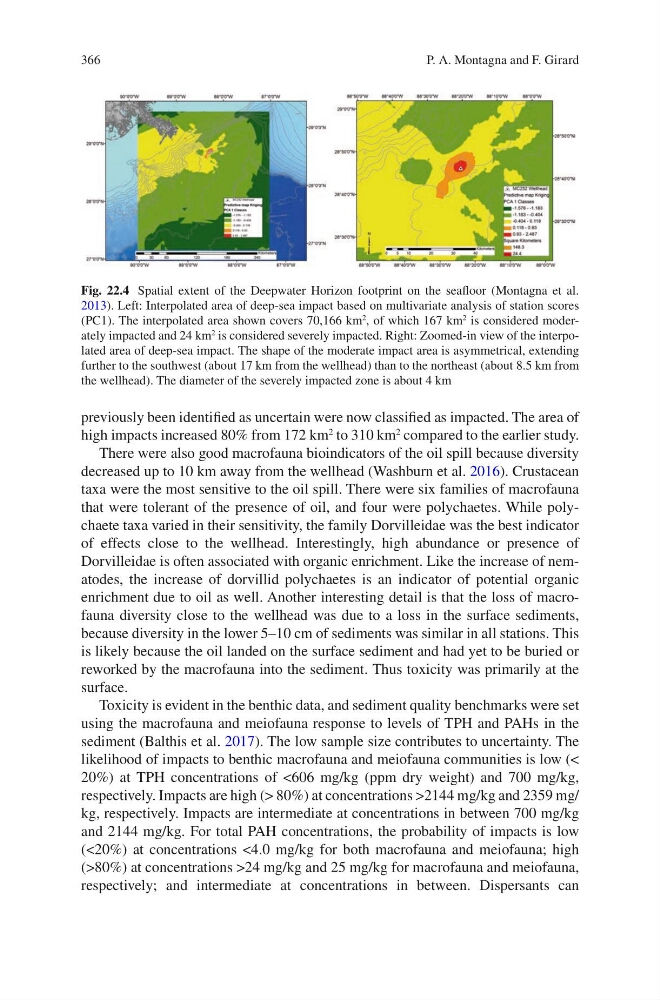
Fig. 22.4 Spatial extent of the Deepwater Horizon footprint on the seafloor (Montagna et al.
2013). Left: Interpolated area of deep-sea impact based on multivariate analysis of station scores
(PC1). The interpolated area shown covers 70,166 km
2
, of which 167 km
2 is considered moderately impacted and 24 km
2 is considered severely impacted. Right: Zoomed-in view of the interpolated area of deep-sea impact. The shape of the moderate impact area is asymmetrical, extending
further to the southwest (about 17 km from the wellhead) than to the northeast (about 8.5 km from
the wellhead). The diameter of the severely impacted zone is about 4 km
P. A. Montagna and F. Girard
previously been identified as uncertain were now classified as impacted. The area of
high impacts increased 80% from 172 km
2
to 310 km
2
compared to the earlier study.
There were also good macrofauna bioindicators of the oil spill because diversity
decreased up to 10 km away from the wellhead (Washburn et al. 2016). Crustacean
taxa were the most sensitive to the oil spill. There were six families of macrofauna
that were tolerant of the presence of oil, and four were polychaetes. While polychaete taxa varied in their sensitivity, the family Dorvilleidae was the best indicator
of effects close to the wellhead. Interestingly, high abundance or presence of
Dorvilleidae is often associated with organic enrichment. Like the increase of nematodes, the increase of dorvillid polychaetes is an indicator of potential organic
enrichment due to oil as well. Another interesting detail is that the loss of macrofauna diversity close to the wellhead was due to a loss in the surface sediments,
because diversity in the lower 5–10 cm of sediments was similar in all stations. This
is likely because the oil landed on the surface sediment and had yet to be buried or
reworked by the macrofauna into the sediment. Thus toxicity was primarily at the
surface.
Toxicity is evident in the benthic data, and sediment quality benchmarks were set
using the macrofauna and meiofauna response to levels of TPH and PAHs in the
sediment (Balthis et al. 2017). The low sample size contributes to uncertainty. The
likelihood of impacts to benthic macrofauna and meiofauna communities is low (<
20%) at TPH concentrations of <606 mg/kg (ppm dry weight) and 700 mg/kg,
respectively. Impacts are high (> 80%) at concentrations >2144 mg/kg and 2359 mg/
kg, respectively. Impacts are intermediate at concentrations in between 700 mg/kg
and 2144 mg/kg. For total PAH concentrations, the probability of impacts is low
(<20%) at concentrations <4.0 mg/kg for both macrofauna and meiofauna; high
(>80%) at concentrations >24 mg/kg and 25 mg/kg for macrofauna and meiofauna,
respectively; and intermediate at concentrations in between. Dispersants can
Fig. 22.4 Spatial extent of the Deepwater Horizon footprint on the seafloor (Montagna et al.
2013). Left: Interpolated area of deep-sea impact based on multivariate analysis of station scores
(PC1). The interpolated area shown covers 70,166 km
2
, of which 167 km
2 is considered moderately impacted and 24 km
2 is considered severely impacted. Right: Zoomed-in view of the interpolated area of deep-sea impact. The shape of the moderate impact area is asymmetrical, extending
further to the southwest (about 17 km from the wellhead) than to the northeast (about 8.5 km from
the wellhead). The diameter of the severely impacted zone is about 4 km
P. A. Montagna and F. Girard