

331
20.3 Chemical Composition of Ixtoc 1 Oil and Coastal Oil
Residues
20.3.1 GC-MS/MS-MRM
Gas chromatography, coupled with tandem mass spectrometry (GC-MS/MS), operated in multiple reaction monitoring mode (MRM), is an analytical method that
selectively characterizes multiple target compounds in complex matrices, such as
oil residues in marine sediments. In GC-MS/MS-MRM, high selectivity of target
compounds is achieved by filtering a precursor ion of interest to further produce
product ions, after collision with a gas molecule and detecting only generated product ions with specific mass-to-charge ratios (m/z). This high ion selectivity enables
the identification and quantification of compounds at very low concentrations with
no interferences, giving an advantage to GC-MS/MS-MRM, over other targeted
analytical methods. In petroleum forensic geochemistry, characterization of specific
compounds is critical in order to accurately identify oil sources, quantify levels in
the environment including in biological samples, and detect major weathering processes and molecular transformations that can be linked to toxicity and environmental health assessment studies. Specifically, for the DWH oil spill, GC-MS/MS-MRM
analysis of biomarkers (e.g., hopanoids) helped identify for the first time the DWH
oil residues in deep-sea sediments that were strongly weathered during deposition
processes such as direct impingement of deep plumes on the continental slope and
sinking of oiled marine snow (Romero et al. 2015). This study was further
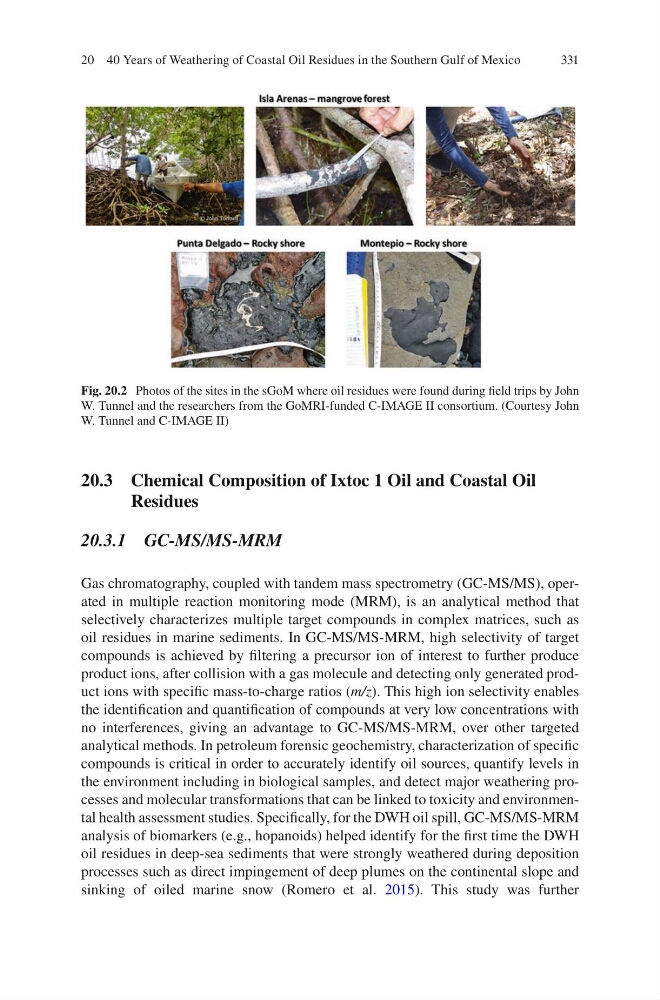
Fig. 20.2 Photos of the sites in the sGoM where oil residues were found during field trips by John
W. Tunnel and the researchers from the GoMRI-funded C-IMAGE II consortium. (Courtesy John
W. Tunnel and C-IMAGE II)
20 40 Years of Weathering of Coastal Oil Residues in the Southern Gulf of Mexico
20.3 Chemical Composition of Ixtoc 1 Oil and Coastal Oil
Residues
20.3.1 GC-MS/MS-MRM
Gas chromatography, coupled with tandem mass spectrometry (GC-MS/MS), operated in multiple reaction monitoring mode (MRM), is an analytical method that
selectively characterizes multiple target compounds in complex matrices, such as
oil residues in marine sediments. In GC-MS/MS-MRM, high selectivity of target
compounds is achieved by filtering a precursor ion of interest to further produce
product ions, after collision with a gas molecule and detecting only generated product ions with specific mass-to-charge ratios (m/z). This high ion selectivity enables
the identification and quantification of compounds at very low concentrations with
no interferences, giving an advantage to GC-MS/MS-MRM, over other targeted
analytical methods. In petroleum forensic geochemistry, characterization of specific
compounds is critical in order to accurately identify oil sources, quantify levels in
the environment including in biological samples, and detect major weathering processes and molecular transformations that can be linked to toxicity and environmental health assessment studies. Specifically, for the DWH oil spill, GC-MS/MS-MRM
analysis of biomarkers (e.g., hopanoids) helped identify for the first time the DWH
oil residues in deep-sea sediments that were strongly weathered during deposition
processes such as direct impingement of deep plumes on the continental slope and
sinking of oiled marine snow (Romero et al. 2015). This study was further
Fig. 20.2 Photos of the sites in the sGoM where oil residues were found during field trips by John
W. Tunnel and the researchers from the GoMRI-funded C-IMAGE II consortium. (Courtesy John
W. Tunnel and C-IMAGE II)
20 40 Years of Weathering of Coastal Oil Residues in the Southern Gulf of Mexico