

306
P. putida F1 and an n-alkane-degrading culture R. qingshengii TUHH-12 were used
for the degradation of crude oil (Fig. 18.3).
Using both cultures resulted in an immediate degradation of BTEX compounds,
followed by degradation of n-alkanes. The inhibition of chemically dispersed crude
oil lasted only 10 days due to the fast biodegradation of the dissolved light aromatic
(BTEX) compounds by P. putida F1.
Finally, hydrocarbon-degrading bacteria can also be inhibited by high concentrations of the chemical dispersant itself, as demonstrated by Hamdan and Fulmer
(2011). They studied the composition of the microbial community in oil that had
been freshly deposited on a beach in Louisiana as a result of the DWH oil spill and
showed a decrease in microbial activity and viability of Acinetobacter and
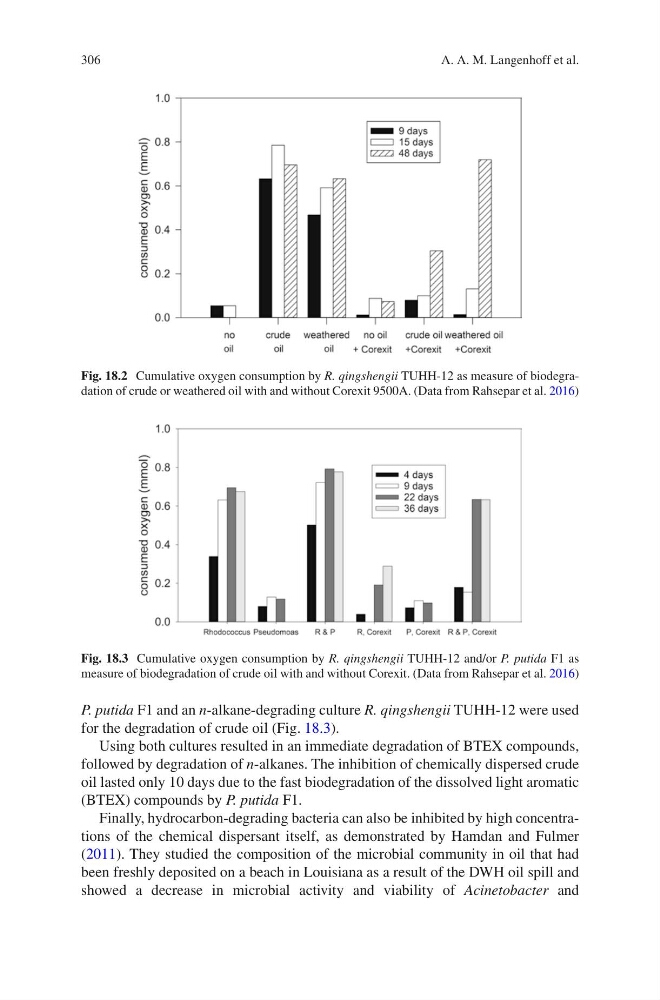
Fig. 18.2 Cumulative oxygen consumption by R. qingshengii TUHH-12 as measure of biodegradation of crude or weathered oil with and without Corexit 9500A. (Data from Rahsepar et al. 2016)
Fig. 18.3 Cumulative oxygen consumption by R. qingshengii TUHH-12 and/or P. putida F1 as
measure of biodegradation of crude oil with and without Corexit. (Data from Rahsepar et al. 2016)
A. A. M. Langenhoff et al.
P. putida F1 and an n-alkane-degrading culture R. qingshengii TUHH-12 were used
for the degradation of crude oil (Fig. 18.3).
Using both cultures resulted in an immediate degradation of BTEX compounds,
followed by degradation of n-alkanes. The inhibition of chemically dispersed crude
oil lasted only 10 days due to the fast biodegradation of the dissolved light aromatic
(BTEX) compounds by P. putida F1.
Finally, hydrocarbon-degrading bacteria can also be inhibited by high concentrations of the chemical dispersant itself, as demonstrated by Hamdan and Fulmer
(2011). They studied the composition of the microbial community in oil that had
been freshly deposited on a beach in Louisiana as a result of the DWH oil spill and
showed a decrease in microbial activity and viability of Acinetobacter and
Fig. 18.2 Cumulative oxygen consumption by R. qingshengii TUHH-12 as measure of biodegradation of crude or weathered oil with and without Corexit 9500A. (Data from Rahsepar et al. 2016)
Fig. 18.3 Cumulative oxygen consumption by R. qingshengii TUHH-12 and/or P. putida F1 as
measure of biodegradation of crude oil with and without Corexit. (Data from Rahsepar et al. 2016)
A. A. M. Langenhoff et al.