

304
key components of Corexit 9500A that was documented to have undergone negligible rates of biodegradation in the affected waters of the deepwater hydrocarbon
plume of the DHW area (Kujawinski et al. 2011).
A more relevant process for the removal of Corexit than biodegradation in the
water phase is photolysis with high degradation rates, suggesting that this process
may play a significant role in the overall fate of Corexit in the ocean (Glover et al.
2014).
18.2.2 Enhanced Bioavailability and Biodegradation of Oil
with Dispersant
A number of studies show the positive effect of dispersants on oil biodegradation by
mixed bacterial communities. Generally, dispersants enhance the biodegradation of
oil, through higher bioavailability of the dispersed oil (Kujawinski et al. 2011).
Hazen et al. (2010) reported the stimulation of deep-sea indigenous
Gammaproteobacteria by the dispersed hydrocarbon plume from the DWH blowout; Gammaproteobacteria are closely related to known petroleum degraders. In
that study, 16 distinct taxa classified as Gammaproteobacteria were found to be
significantly enriched in the plume by using bacterial taxa microarray analysis.
They conclude that the deep sea has a potential for intrinsic bioremediation of the
dispersed oil plume by aerobic bacteria in the deepwater column without substantial
oxygen depletion.
A recent study by Tremblay et al. (2017) demonstrated that the addition of dispersants to weathered crude oil increased degradation rates and favored the
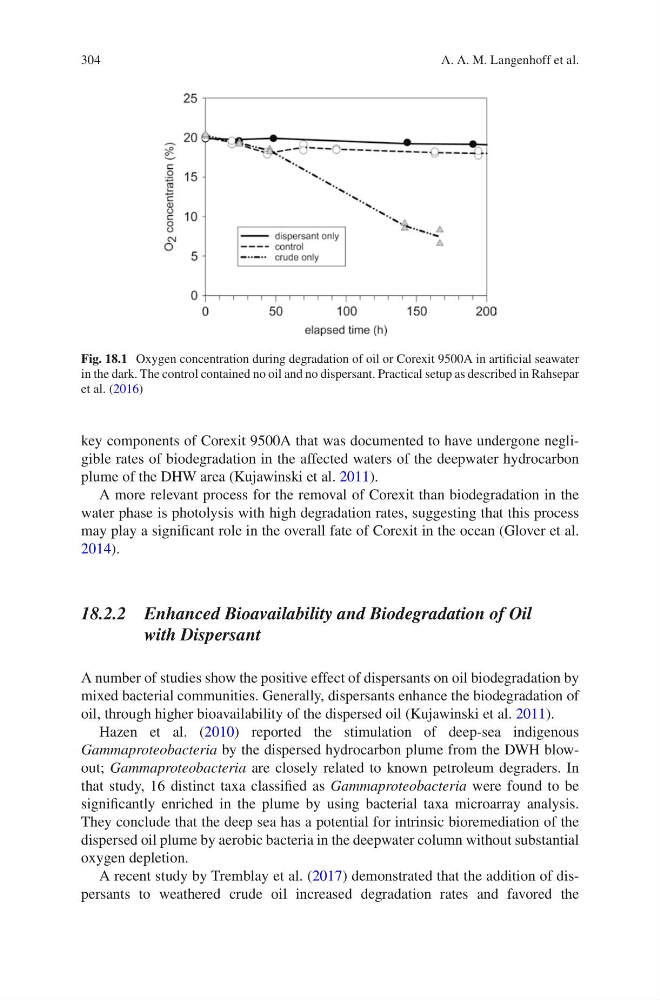
Fig. 18.1 Oxygen concentration during degradation of oil or Corexit 9500A in artificial seawater
in the dark. The control contained no oil and no dispersant. Practical setup as described in Rahsepar
et al. (2016)
A. A. M. Langenhoff et al.
key components of Corexit 9500A that was documented to have undergone negligible rates of biodegradation in the affected waters of the deepwater hydrocarbon
plume of the DHW area (Kujawinski et al. 2011).
A more relevant process for the removal of Corexit than biodegradation in the
water phase is photolysis with high degradation rates, suggesting that this process
may play a significant role in the overall fate of Corexit in the ocean (Glover et al.
2014).
18.2.2 Enhanced Bioavailability and Biodegradation of Oil
with Dispersant
A number of studies show the positive effect of dispersants on oil biodegradation by
mixed bacterial communities. Generally, dispersants enhance the biodegradation of
oil, through higher bioavailability of the dispersed oil (Kujawinski et al. 2011).
Hazen et al. (2010) reported the stimulation of deep-sea indigenous
Gammaproteobacteria by the dispersed hydrocarbon plume from the DWH blowout; Gammaproteobacteria are closely related to known petroleum degraders. In
that study, 16 distinct taxa classified as Gammaproteobacteria were found to be
significantly enriched in the plume by using bacterial taxa microarray analysis.
They conclude that the deep sea has a potential for intrinsic bioremediation of the
dispersed oil plume by aerobic bacteria in the deepwater column without substantial
oxygen depletion.
A recent study by Tremblay et al. (2017) demonstrated that the addition of dispersants to weathered crude oil increased degradation rates and favored the
Fig. 18.1 Oxygen concentration during degradation of oil or Corexit 9500A in artificial seawater
in the dark. The control contained no oil and no dispersant. Practical setup as described in Rahsepar
et al. (2016)
A. A. M. Langenhoff et al.