

209
NPIURP
ZHOOKHDG
PZDWHU
GHSWK
NPIURP
ZHOOKHDG
PZDWHU
GHSWK
͘ŽƌĞWŚŽƚŽŐƌĂƉŚƐ
͘'ƌĂĚŝĞŶƚƐ
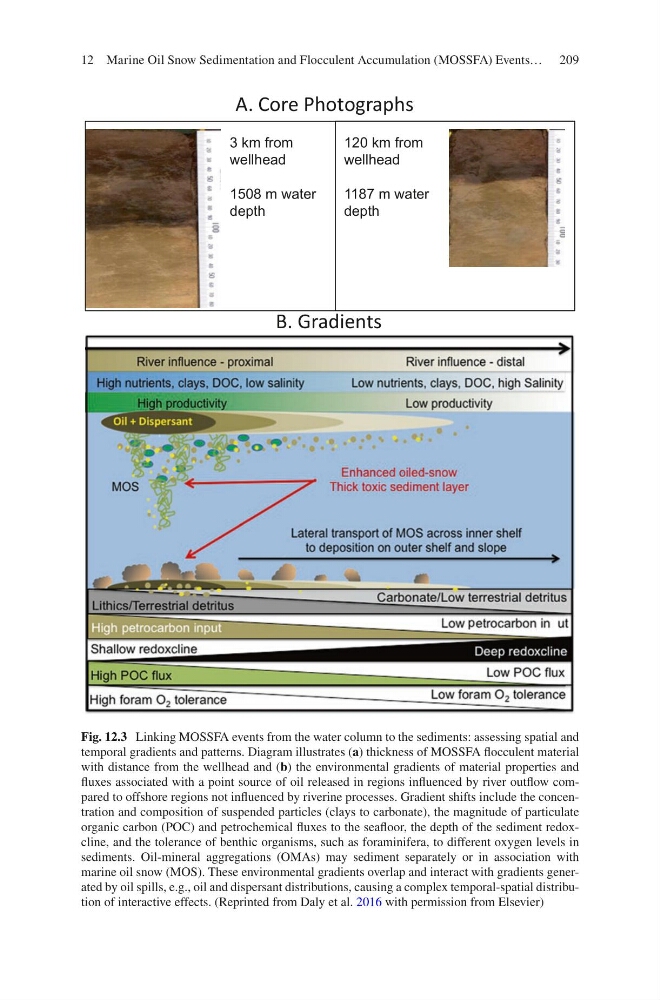
Fig. 12.3 Linking MOSSFA events from the water column to the sediments: assessing spatial and
temporal gradients and patterns. Diagram illustrates (a) thickness of MOSSFA flocculent material
with distance from the wellhead and (b) the environmental gradients of material properties and
fluxes associated with a point source of oil released in regions influenced by river outflow compared to offshore regions not influenced by riverine processes. Gradient shifts include the concentration and composition of suspended particles (clays to carbonate), the magnitude of particulate
organic carbon (POC) and petrochemical fluxes to the seafloor, the depth of the sediment redoxcline, and the tolerance of benthic organisms, such as foraminifera, to different oxygen levels in
sediments. Oil-mineral aggregations (OMAs) may sediment separately or in association with
marine oil snow (MOS). These environmental gradients overlap and interact with gradients generated by oil spills, e.g., oil and dispersant distributions, causing a complex temporal-spatial distribution of interactive effects. (Reprinted from Daly et al. 2016 with permission from Elsevier)
12 Marine Oil Snow Sedimentation and Flocculent Accumulation (MOSSFA) Events…
NPIURP
ZHOOKHDG
PZDWHU
GHSWK
NPIURP
ZHOOKHDG
PZDWHU
GHSWK
͘ŽƌĞWŚŽƚŽŐƌĂƉŚƐ
͘'ƌĂĚŝĞŶƚƐ
Fig. 12.3 Linking MOSSFA events from the water column to the sediments: assessing spatial and
temporal gradients and patterns. Diagram illustrates (a) thickness of MOSSFA flocculent material
with distance from the wellhead and (b) the environmental gradients of material properties and
fluxes associated with a point source of oil released in regions influenced by river outflow compared to offshore regions not influenced by riverine processes. Gradient shifts include the concentration and composition of suspended particles (clays to carbonate), the magnitude of particulate
organic carbon (POC) and petrochemical fluxes to the seafloor, the depth of the sediment redoxcline, and the tolerance of benthic organisms, such as foraminifera, to different oxygen levels in
sediments. Oil-mineral aggregations (OMAs) may sediment separately or in association with
marine oil snow (MOS). These environmental gradients overlap and interact with gradients generated by oil spills, e.g., oil and dispersant distributions, causing a complex temporal-spatial distribution of interactive effects. (Reprinted from Daly et al. 2016 with permission from Elsevier)
12 Marine Oil Snow Sedimentation and Flocculent Accumulation (MOSSFA) Events…