

94
surrounding water, they may be actively or passively absorbed onto particulate
matter, either inorganic or biological.
Organic-rich particulate matter that forms and sinks within the water column is
described as “marine snow” and is an important pathway for carbon cycling in the
ocean. Marine snow aggregates can comprise materials such as microbial cells and
their extracellular polymers, detritus, fecal material, and inorganic particles. During
oil spills, oil can associate with marine snow aggregates, which may exceed 1 cm in
diameter (Passow 2016). If the aggregate material exceeds the density of the surrounding water, it may settle out of the water column and oil may be transported to
the sediments (Loh et al. 2014). For oil associated with marine snow or other settling materials to reach the seafloor, the sedimentation rate needs to be fast enough
that natural degradation processes are unable to metabolize or remove the oil compounds during transit. The settling velocity depends on the density of the particles
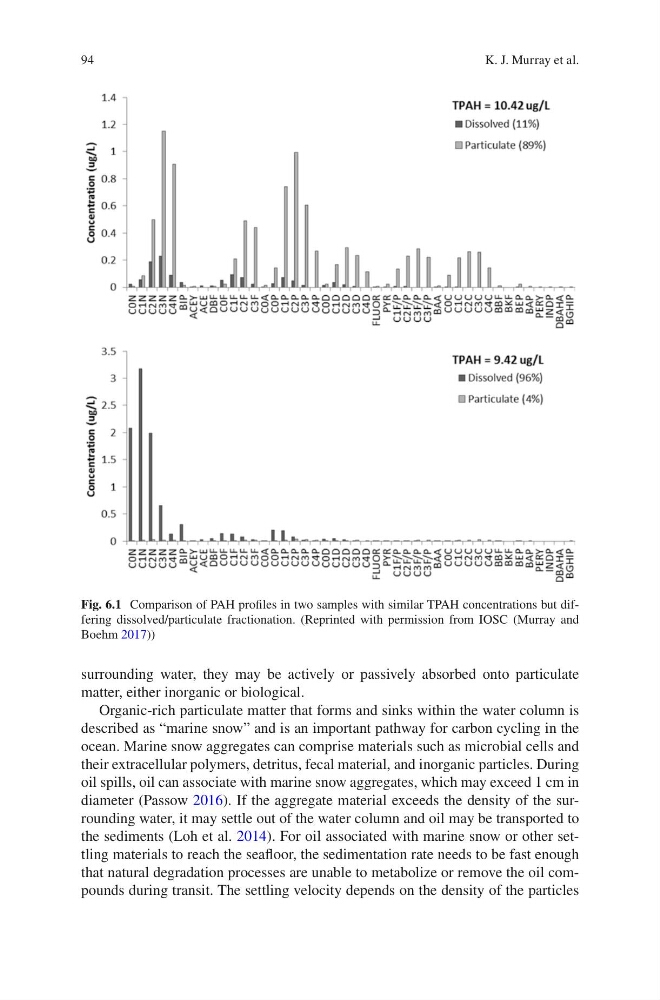
Fig. 6.1 Comparison of PAH profiles in two samples with similar TPAH concentrations but differing dissolved/particulate fractionation. (Reprinted with permission from IOSC (Murray and
Boehm 2017))
K. J. Murray et al.
surrounding water, they may be actively or passively absorbed onto particulate
matter, either inorganic or biological.
Organic-rich particulate matter that forms and sinks within the water column is
described as “marine snow” and is an important pathway for carbon cycling in the
ocean. Marine snow aggregates can comprise materials such as microbial cells and
their extracellular polymers, detritus, fecal material, and inorganic particles. During
oil spills, oil can associate with marine snow aggregates, which may exceed 1 cm in
diameter (Passow 2016). If the aggregate material exceeds the density of the surrounding water, it may settle out of the water column and oil may be transported to
the sediments (Loh et al. 2014). For oil associated with marine snow or other settling materials to reach the seafloor, the sedimentation rate needs to be fast enough
that natural degradation processes are unable to metabolize or remove the oil compounds during transit. The settling velocity depends on the density of the particles
Fig. 6.1 Comparison of PAH profiles in two samples with similar TPAH concentrations but differing dissolved/particulate fractionation. (Reprinted with permission from IOSC (Murray and
Boehm 2017))
K. J. Murray et al.