

46
2 High-Efficient Anaerobic Fermentation Technology of Organic …
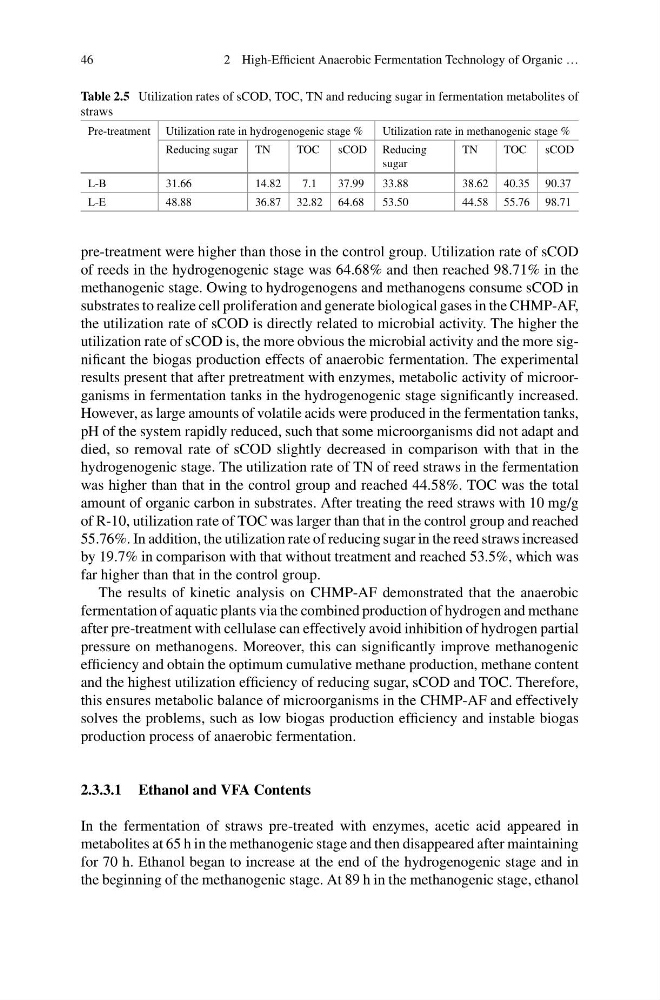
Table 2.5 Utilization rates of sCOD, TOC, TN and reducing sugar in fermentation metabolites of
straws
Pre-treatment Utilization rate in hydrogenogenic stage %
Utilization rate in methanogenic stage %
Reducing sugar
TN
TOC
sCOD Reducing
sugar
TN
TOC
sCOD
L-B
31.66
14.82
7.1
37.99
33.88
38.62 40.35 90.37
L-E
48.88
36.87 32.82 64.68
53.50
44.58 55.76 98.71
pre-treatment were higher than those in the control group. Utilization rate of sCOD
of reeds in the hydrogenogenic stage was 64.68% and then reached 98.71% in the
methanogenic stage. Owing to hydrogenogens and methanogens consume sCOD in
substrates to realize cell proliferation and generate biological gases in the CHMP-AF,
the utilization rate of sCOD is directly related to microbial activity. The higher the
utilization rate of sCOD is, the more obvious the microbial activity and the more significant the biogas production effects of anaerobic fermentation. The experimental
results present that after pretreatment with enzymes, metabolic activity of microorganisms in fermentation tanks in the hydrogenogenic stage significantly increased.
However, as large amounts of volatile acids were produced in the fermentation tanks,
pH of the system rapidly reduced, such that some microorganisms did not adapt and
died, so removal rate of sCOD slightly decreased in comparison with that in the
hydrogenogenic stage. The utilization rate of TN of reed straws in the fermentation
was higher than that in the control group and reached 44.58%. TOC was the total
amount of organic carbon in substrates. After treating the reed straws with 10 mg/g
of R-10, utilization rate of TOC was larger than that in the control group and reached
55.76%. In addition, the utilization rate of reducing sugar in the reed straws increased
by 19.7% in comparison with that without treatment and reached 53.5%, which was
far higher than that in the control group.
The results of kinetic analysis on CHMP-AF demonstrated that the anaerobic
fermentation of aquatic plants via the combined production of hydrogen and methane
after pre-treatment with cellulase can effectively avoid inhibition of hydrogen partial
pressure on methanogens. Moreover, this can significantly improve methanogenic
efficiency and obtain the optimum cumulative methane production, methane content
and the highest utilization efficiency of reducing sugar, sCOD and TOC. Therefore,
this ensures metabolic balance of microorganisms in the CHMP-AF and effectively
solves the problems, such as low biogas production efficiency and instable biogas
production process of anaerobic fermentation.
2.3.3.1 Ethanol and VFA Contents
In the fermentation of straws pre-treated with enzymes, acetic acid appeared in
metabolites at 65 h in the methanogenic stage and then disappeared after maintaining
for 70 h. Ethanol began to increase at the end of the hydrogenogenic stage and in
the beginning of the methanogenic stage. At 89 h in the methanogenic stage, ethanol
2 High-Efficient Anaerobic Fermentation Technology of Organic …
Table 2.5 Utilization rates of sCOD, TOC, TN and reducing sugar in fermentation metabolites of
straws
Pre-treatment Utilization rate in hydrogenogenic stage %
Utilization rate in methanogenic stage %
Reducing sugar
TN
TOC
sCOD Reducing
sugar
TN
TOC
sCOD
L-B
31.66
14.82
7.1
37.99
33.88
38.62 40.35 90.37
L-E
48.88
36.87 32.82 64.68
53.50
44.58 55.76 98.71
pre-treatment were higher than those in the control group. Utilization rate of sCOD
of reeds in the hydrogenogenic stage was 64.68% and then reached 98.71% in the
methanogenic stage. Owing to hydrogenogens and methanogens consume sCOD in
substrates to realize cell proliferation and generate biological gases in the CHMP-AF,
the utilization rate of sCOD is directly related to microbial activity. The higher the
utilization rate of sCOD is, the more obvious the microbial activity and the more significant the biogas production effects of anaerobic fermentation. The experimental
results present that after pretreatment with enzymes, metabolic activity of microorganisms in fermentation tanks in the hydrogenogenic stage significantly increased.
However, as large amounts of volatile acids were produced in the fermentation tanks,
pH of the system rapidly reduced, such that some microorganisms did not adapt and
died, so removal rate of sCOD slightly decreased in comparison with that in the
hydrogenogenic stage. The utilization rate of TN of reed straws in the fermentation
was higher than that in the control group and reached 44.58%. TOC was the total
amount of organic carbon in substrates. After treating the reed straws with 10 mg/g
of R-10, utilization rate of TOC was larger than that in the control group and reached
55.76%. In addition, the utilization rate of reducing sugar in the reed straws increased
by 19.7% in comparison with that without treatment and reached 53.5%, which was
far higher than that in the control group.
The results of kinetic analysis on CHMP-AF demonstrated that the anaerobic
fermentation of aquatic plants via the combined production of hydrogen and methane
after pre-treatment with cellulase can effectively avoid inhibition of hydrogen partial
pressure on methanogens. Moreover, this can significantly improve methanogenic
efficiency and obtain the optimum cumulative methane production, methane content
and the highest utilization efficiency of reducing sugar, sCOD and TOC. Therefore,
this ensures metabolic balance of microorganisms in the CHMP-AF and effectively
solves the problems, such as low biogas production efficiency and instable biogas
production process of anaerobic fermentation.
2.3.3.1 Ethanol and VFA Contents
In the fermentation of straws pre-treated with enzymes, acetic acid appeared in
metabolites at 65 h in the methanogenic stage and then disappeared after maintaining
for 70 h. Ethanol began to increase at the end of the hydrogenogenic stage and in
the beginning of the methanogenic stage. At 89 h in the methanogenic stage, ethanol