

Purpose and Study Design
18
representation of annual average flow-weighted stream water quality when
only single samples can be collected. Summer or fall index (commonly avoiding large rainstorm events) chemistry is often regarded as a good representation of annual average lake water chemistry. Lake sampling after fall overturn
can yield results for fully mixed conditions but may require measuring the lake
temperature profile to verify that turnover has occurred. Selection of an index
period has implications for the temporal stability of the water quality and
for the degree of impact that might be revealed by that water quality. Water
quality is more likely to be stable (and thus comparable among water bodies
if a survey is conducted of multiple lakes or streams) during summer and fall.
However, in many regions, the lowest pH and ANC, and highest Al i and nutrient
concentrations, are likely to occur during spring.
Better representation of annual conditions in both streams and lakes can
be obtained with seasonal or other periodic sampling, as opposed to collection
of only one sample to represent a given year. Selecting a sampling period when
flows are low and least variable may provide data that are generally comparable among a group of waters or comparable in a given water body between
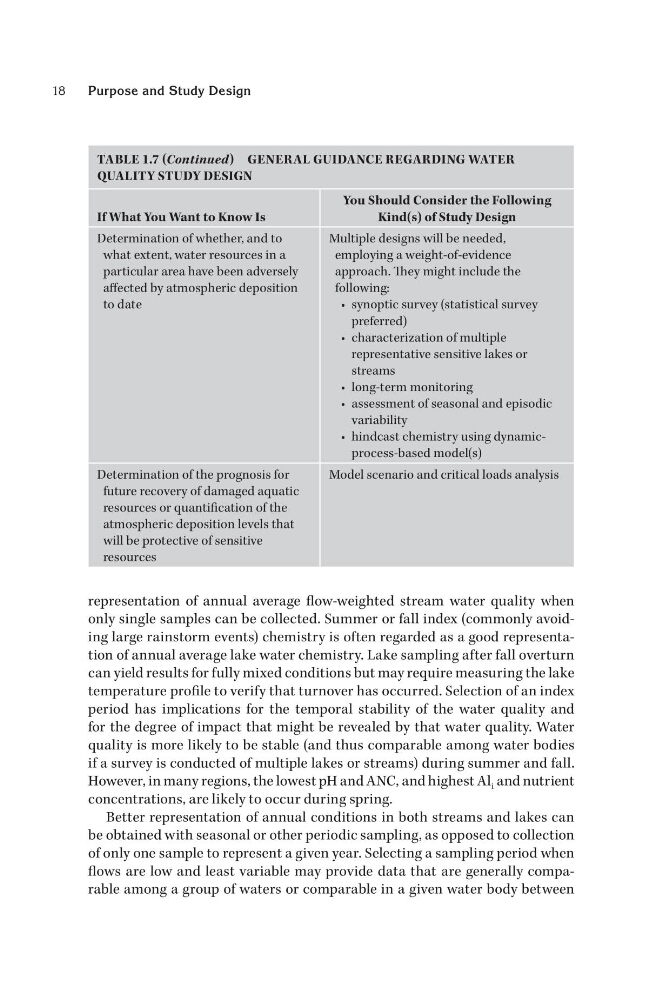
TABLE 1.7 (Continued) GENERAL GUIDANCE REGARDING WATER
QUALITY STUDY DESIGN
If What You Want to Know Is
You Should Consider the Following
Kind(s) of Study Design
Determination of whether, and to
what extent, water resources in a
particular area have been adversely
affected by atmospheric deposition
to date
Multiple designs will be needed,
employing a weight-of-evidence
approach. They might include the
following:
• synoptic survey (statistical survey
preferred)
• characterization of multiple
representative sensitive lakes or
streams
• long-term monitoring
• assessment of seasonal and episodic
variability
• hindcast chemistry using dynamicprocess-based model(s)
Determination of the prognosis for
future recovery of damaged aquatic
resources or quantification of the
atmospheric deposition levels that
will be protective of sensitive
resources
Model scenario and critical loads analysis
18
representation of annual average flow-weighted stream water quality when
only single samples can be collected. Summer or fall index (commonly avoiding large rainstorm events) chemistry is often regarded as a good representation of annual average lake water chemistry. Lake sampling after fall overturn
can yield results for fully mixed conditions but may require measuring the lake
temperature profile to verify that turnover has occurred. Selection of an index
period has implications for the temporal stability of the water quality and
for the degree of impact that might be revealed by that water quality. Water
quality is more likely to be stable (and thus comparable among water bodies
if a survey is conducted of multiple lakes or streams) during summer and fall.
However, in many regions, the lowest pH and ANC, and highest Al i and nutrient
concentrations, are likely to occur during spring.
Better representation of annual conditions in both streams and lakes can
be obtained with seasonal or other periodic sampling, as opposed to collection
of only one sample to represent a given year. Selecting a sampling period when
flows are low and least variable may provide data that are generally comparable among a group of waters or comparable in a given water body between
TABLE 1.7 (Continued) GENERAL GUIDANCE REGARDING WATER
QUALITY STUDY DESIGN
If What You Want to Know Is
You Should Consider the Following
Kind(s) of Study Design
Determination of whether, and to
what extent, water resources in a
particular area have been adversely
affected by atmospheric deposition
to date
Multiple designs will be needed,
employing a weight-of-evidence
approach. They might include the
following:
• synoptic survey (statistical survey
preferred)
• characterization of multiple
representative sensitive lakes or
streams
• long-term monitoring
• assessment of seasonal and episodic
variability
• hindcast chemistry using dynamicprocess-based model(s)
Determination of the prognosis for
future recovery of damaged aquatic
resources or quantification of the
atmospheric deposition levels that
will be protective of sensitive
resources
Model scenario and critical loads analysis