

Result and discussion
73
Results discussion :
Based on the observations from the 15-day in vivo experiment on wound healing, several
observations can be highlighted:
Day 3, it was observed that the treated rabbit showed no signs of redness around the wound,
indicating successful management of inflammation. Additionally, the wound appeared clean,
free from any signs of infection. In contrast, the untreated rabbit exhibited slight redness,
suggesting a continued inflammatory response, and the wound showed no noticeable progress.
Day 7, significant progress in wound closure was observed in the treated rabbit compared to
the untreated rabbit. The wound in the treated rabbit exhibited accelerated closure, indicating a
more efficient healing process. Conversely, the untreated rabbit's wound showed slower
progress in healing, suggesting a delay in the closure process.
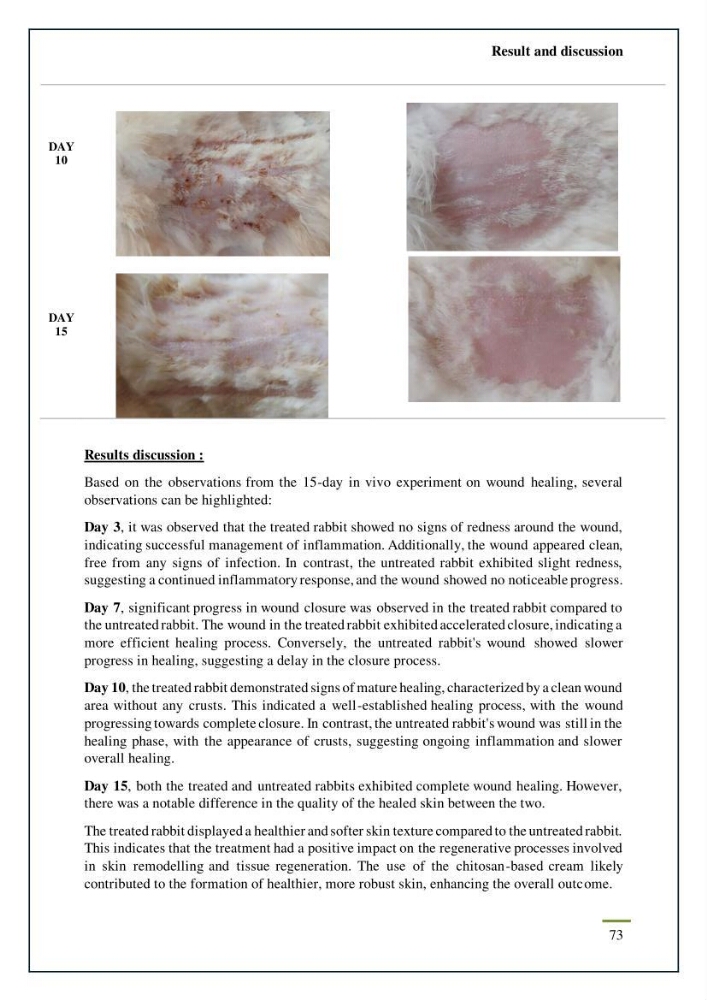
Day 10, the treated rabbit demonstrated signs of mature healing, characterized by a clean wound
area without any crusts. This indicated a well-established healing process, with the wound
progressing towards complete closure. In contrast, the untreated rabbit's wound was still in the
healing phase, with the appearance of crusts, suggesting ongoing inflammation and slower
overall healing.
Day 15, both the treated and untreated rabbits exhibited complete wound healing. However,
there was a notable difference in the quality of the healed skin between the two.
The treated rabbit displayed a healthier and softer skin texture compared to the untreated rabbit.
This indicates that the treatment had a positive impact on the regenerative processes involved
in skin remodelling and tissue regeneration. The use of the chitosan-based cream likely
contributed to the formation of healthier, more robust skin, enhancing the overall outcome.
DAY
10
DAY
15
73
Results discussion :
Based on the observations from the 15-day in vivo experiment on wound healing, several
observations can be highlighted:
Day 3, it was observed that the treated rabbit showed no signs of redness around the wound,
indicating successful management of inflammation. Additionally, the wound appeared clean,
free from any signs of infection. In contrast, the untreated rabbit exhibited slight redness,
suggesting a continued inflammatory response, and the wound showed no noticeable progress.
Day 7, significant progress in wound closure was observed in the treated rabbit compared to
the untreated rabbit. The wound in the treated rabbit exhibited accelerated closure, indicating a
more efficient healing process. Conversely, the untreated rabbit's wound showed slower
progress in healing, suggesting a delay in the closure process.
Day 10, the treated rabbit demonstrated signs of mature healing, characterized by a clean wound
area without any crusts. This indicated a well-established healing process, with the wound
progressing towards complete closure. In contrast, the untreated rabbit's wound was still in the
healing phase, with the appearance of crusts, suggesting ongoing inflammation and slower
overall healing.
Day 15, both the treated and untreated rabbits exhibited complete wound healing. However,
there was a notable difference in the quality of the healed skin between the two.
The treated rabbit displayed a healthier and softer skin texture compared to the untreated rabbit.
This indicates that the treatment had a positive impact on the regenerative processes involved
in skin remodelling and tissue regeneration. The use of the chitosan-based cream likely
contributed to the formation of healthier, more robust skin, enhancing the overall outcome.
DAY
10
DAY
15