

Literature review
19
applications, it exhibits a relatively low toxicity compared to most polycations, making it
comparable to more expensive synthetic polycations. Nevertheless, it is important to note that
chitosan toxicity has been reported in animals, with a LD50 of 16 g/kg body weight in
laboratory mice, which is similar to that of salt or sugar (ZARGAR et al., 2015).
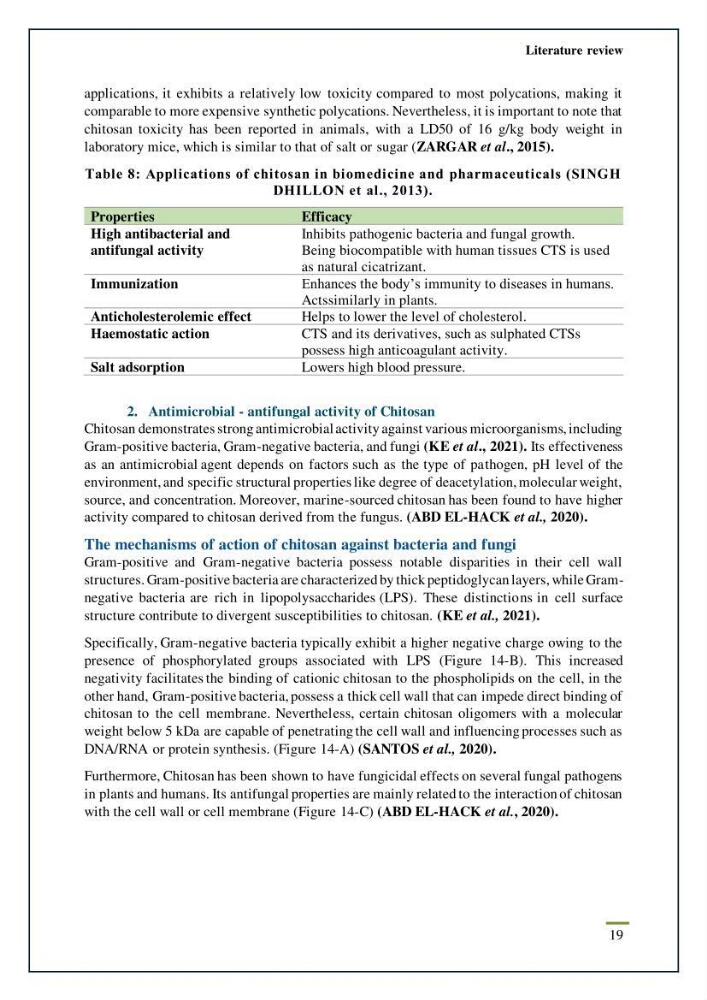
Table 8: Applications of chitosan in biomedicine and pharmaceuticals (SINGH
DHILLON et al., 2013).
Properties
Efficacy
High antibacterial and
antifungal activity
Inhibits pathogenic bacteria and fungal growth.
Being biocompatible with human tissues CTS is used
as natural cicatrizant.
Immunization
Enhances the body’s immunity to diseases in humans.
Actssimilarly in plants.
Anticholesterolemic effect
Helps to lower the level of cholesterol.
Haemostatic action
CTS and its derivatives, such as sulphated CTSs
possess high anticoagulant activity.
Salt adsorption
Lowers high blood pressure.
2. Antimicrobial - antifungal activity of Chitosan
Chitosan demonstrates strong antimicrobial activity against various microorganisms, including
Gram-positive bacteria, Gram-negative bacteria, and fungi (KE et al., 2021). Its effectiveness
as an antimicrobial agent depends on factors such as the type of pathogen, pH level of the
environment, and specific structural properties like degree of deacetylation, molecular weight,
source, and concentration. Moreover, marine-sourced chitosan has been found to have higher
activity compared to chitosan derived from the fungus. (ABD EL-HACK et al., 2020).
The mechanisms of action of chitosan against bacteria and fungi
Gram-positive and Gram-negative bacteria possess notable disparities in their cell wall
structures. Gram-positive bacteria are characterized by thick peptidoglycan layers, while Gramnegative bacteria are rich in lipopolysaccharides (LPS). These distinctions in cell surface
structure contribute to divergent susceptibilities to chitosan. (KE et al., 2021).
Specifically, Gram-negative bacteria typically exhibit a higher negative charge owing to the
presence of phosphorylated groups associated with LPS (Figure 14-B). This increased
negativity facilitates the binding of cationic chitosan to the phospholipids on the cell, in the
other hand, Gram-positive bacteria, possess a thick cell wall that can impede direct binding of
chitosan to the cell membrane. Nevertheless, certain chitosan oligomers with a molecular
weight below 5 kDa are capable of penetrating the cell wall and influencing processes such as
DNA/RNA or protein synthesis. (Figure 14-A) (SANTOS et al., 2020).
Furthermore, Chitosan has been shown to have fungicidal effects on several fungal pathogens
in plants and humans. Its antifungal properties are mainly related to the interaction of chitosan
with the cell wall or cell membrane (Figure 14-C) (ABD EL-HACK et al., 2020).
19
applications, it exhibits a relatively low toxicity compared to most polycations, making it
comparable to more expensive synthetic polycations. Nevertheless, it is important to note that
chitosan toxicity has been reported in animals, with a LD50 of 16 g/kg body weight in
laboratory mice, which is similar to that of salt or sugar (ZARGAR et al., 2015).
Table 8: Applications of chitosan in biomedicine and pharmaceuticals (SINGH
DHILLON et al., 2013).
Properties
Efficacy
High antibacterial and
antifungal activity
Inhibits pathogenic bacteria and fungal growth.
Being biocompatible with human tissues CTS is used
as natural cicatrizant.
Immunization
Enhances the body’s immunity to diseases in humans.
Actssimilarly in plants.
Anticholesterolemic effect
Helps to lower the level of cholesterol.
Haemostatic action
CTS and its derivatives, such as sulphated CTSs
possess high anticoagulant activity.
Salt adsorption
Lowers high blood pressure.
2. Antimicrobial - antifungal activity of Chitosan
Chitosan demonstrates strong antimicrobial activity against various microorganisms, including
Gram-positive bacteria, Gram-negative bacteria, and fungi (KE et al., 2021). Its effectiveness
as an antimicrobial agent depends on factors such as the type of pathogen, pH level of the
environment, and specific structural properties like degree of deacetylation, molecular weight,
source, and concentration. Moreover, marine-sourced chitosan has been found to have higher
activity compared to chitosan derived from the fungus. (ABD EL-HACK et al., 2020).
The mechanisms of action of chitosan against bacteria and fungi
Gram-positive and Gram-negative bacteria possess notable disparities in their cell wall
structures. Gram-positive bacteria are characterized by thick peptidoglycan layers, while Gramnegative bacteria are rich in lipopolysaccharides (LPS). These distinctions in cell surface
structure contribute to divergent susceptibilities to chitosan. (KE et al., 2021).
Specifically, Gram-negative bacteria typically exhibit a higher negative charge owing to the
presence of phosphorylated groups associated with LPS (Figure 14-B). This increased
negativity facilitates the binding of cationic chitosan to the phospholipids on the cell, in the
other hand, Gram-positive bacteria, possess a thick cell wall that can impede direct binding of
chitosan to the cell membrane. Nevertheless, certain chitosan oligomers with a molecular
weight below 5 kDa are capable of penetrating the cell wall and influencing processes such as
DNA/RNA or protein synthesis. (Figure 14-A) (SANTOS et al., 2020).
Furthermore, Chitosan has been shown to have fungicidal effects on several fungal pathogens
in plants and humans. Its antifungal properties are mainly related to the interaction of chitosan
with the cell wall or cell membrane (Figure 14-C) (ABD EL-HACK et al., 2020).