

Generalities
21
Biological Oxygen Demand (BOD): is a measure of the quantity of oxygen required
for the biological degradation of organic matter by aerobic microorganisms over a
specific period, generally 5 days at a temperature of 20°C.
Nutrients: such as nitrogen and phosphorus. The excessive presence of these nutrients
can lead to eutrophication of water bodies.
Pathogenic microorganisms: such as bacteria, viruses and parasites. These pathogens
of fecal origin can be transmitted by direct contact or contamination of water resources,
and cause disease for humans.
Chemical contaminants: wastewater can contain a variety of chemical contaminants
such as heavy metals, hydrocarbons, pesticides and so on. These contaminants can have
harmful effects on human health and the environment. (Abouzlam, 2006).
1.2.1.5. Discharge standards
Wastewater discharge standards refer to regulatory limits and criteria established to control
the quality of wastewater discharged into the environment.
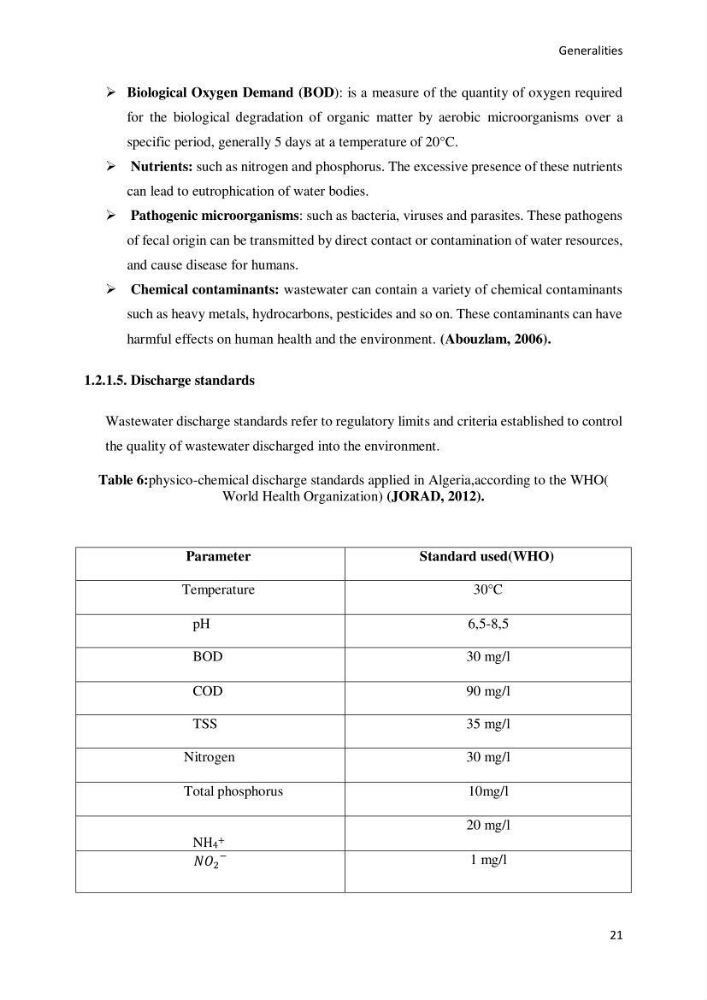
Table 6:physico-chemical discharge standards applied in Algeria,according to the WHO(
World Health Organization) (JORAD, 2012).
Parameter
Standard used(WHO)
Temperature
30°C
pH
6,5-8,5
BOD
30 mg/l
COD
90 mg/l
TSS
35 mg/l
Nitrogen
30 mg/l
Total phosphorus
10mg/l
NH4 +
20 mg/l
í µí±í µí± 2
−
1 mg/l
21
Biological Oxygen Demand (BOD): is a measure of the quantity of oxygen required
for the biological degradation of organic matter by aerobic microorganisms over a
specific period, generally 5 days at a temperature of 20°C.
Nutrients: such as nitrogen and phosphorus. The excessive presence of these nutrients
can lead to eutrophication of water bodies.
Pathogenic microorganisms: such as bacteria, viruses and parasites. These pathogens
of fecal origin can be transmitted by direct contact or contamination of water resources,
and cause disease for humans.
Chemical contaminants: wastewater can contain a variety of chemical contaminants
such as heavy metals, hydrocarbons, pesticides and so on. These contaminants can have
harmful effects on human health and the environment. (Abouzlam, 2006).
1.2.1.5. Discharge standards
Wastewater discharge standards refer to regulatory limits and criteria established to control
the quality of wastewater discharged into the environment.
Table 6:physico-chemical discharge standards applied in Algeria,according to the WHO(
World Health Organization) (JORAD, 2012).
Parameter
Standard used(WHO)
Temperature
30°C
pH
6,5-8,5
BOD
30 mg/l
COD
90 mg/l
TSS
35 mg/l
Nitrogen
30 mg/l
Total phosphorus
10mg/l
NH4 +
20 mg/l
í µí±í µí± 2
−
1 mg/l