

Chapter VI
Machine Learning
85
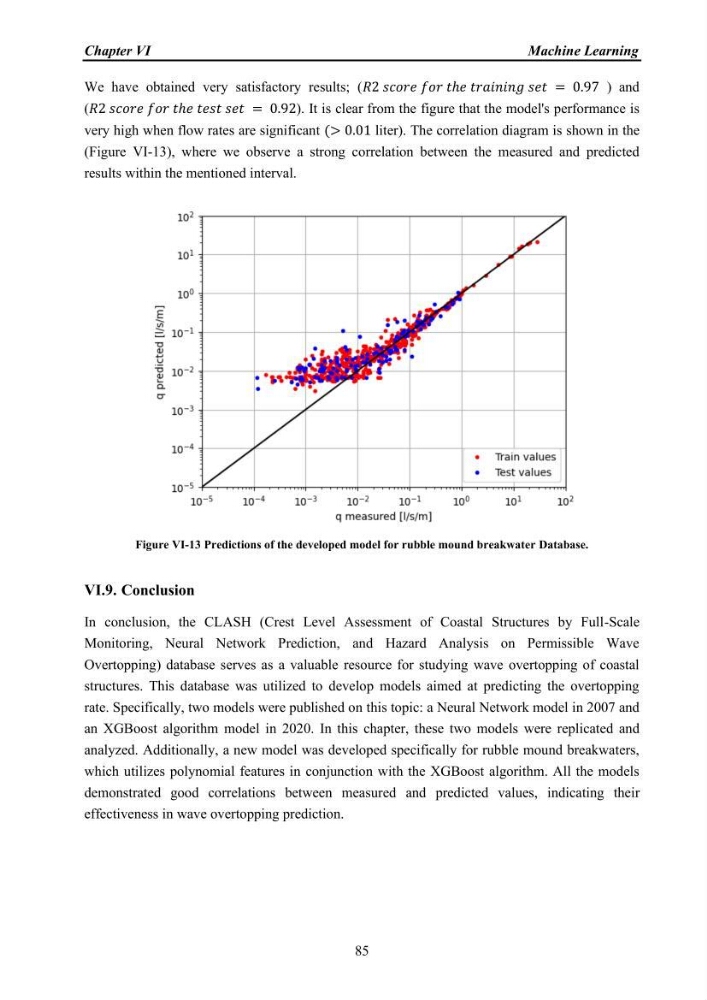
We have obtained very satisfactory results; (í µí± 2 í µí± í µí±í µí±í µí±í µí± í µí±í µí±í µí± í µí±¡ℎí µí± í µí±¡í µí±í µí±í µí±í µí±í µí±í µí±í µí± í µí± í µí±í µí±¡ = 0.97 ) and
(í µí± 2 í µí± í µí±í µí±í µí±í µí± í µí±í µí±í µí± í µí±¡ℎí µí± í µí±¡í µí±í µí± í µí±¡ í µí± í µí±í µí±¡ = 0.92). It is clear from the figure that the model's performance is
very high when flow rates are significant (> 0.01 liter). The correlation diagram is shown in the
(Figure VI-13), where we observe a strong correlation between the measured and predicted
results within the mentioned interval.
Figure VI-13 Predictions of the developed model for rubble mound breakwater Database.
VI.9. Conclusion
In conclusion, the CLASH (Crest Level Assessment of Coastal Structures by Full-Scale
Monitoring, Neural Network Prediction, and Hazard Analysis on Permissible Wave
Overtopping) database serves as a valuable resource for studying wave overtopping of coastal
structures. This database was utilized to develop models aimed at predicting the overtopping
rate. Specifically, two models were published on this topic: a Neural Network model in 2007 and
an XGBoost algorithm model in 2020. In this chapter, these two models were replicated and
analyzed. Additionally, a new model was developed specifically for rubble mound breakwaters,
which utilizes polynomial features in conjunction with the XGBoost algorithm. All the models
demonstrated good correlations between measured and predicted values, indicating their
effectiveness in wave overtopping prediction.
Machine Learning
85
We have obtained very satisfactory results; (í µí± 2 í µí± í µí±í µí±í µí±í µí± í µí±í µí±í µí± í µí±¡ℎí µí± í µí±¡í µí±í µí±í µí±í µí±í µí±í µí±í µí± í µí± í µí±í µí±¡ = 0.97 ) and
(í µí± 2 í µí± í µí±í µí±í µí±í µí± í µí±í µí±í µí± í µí±¡ℎí µí± í µí±¡í µí±í µí± í µí±¡ í µí± í µí±í µí±¡ = 0.92). It is clear from the figure that the model's performance is
very high when flow rates are significant (> 0.01 liter). The correlation diagram is shown in the
(Figure VI-13), where we observe a strong correlation between the measured and predicted
results within the mentioned interval.
Figure VI-13 Predictions of the developed model for rubble mound breakwater Database.
VI.9. Conclusion
In conclusion, the CLASH (Crest Level Assessment of Coastal Structures by Full-Scale
Monitoring, Neural Network Prediction, and Hazard Analysis on Permissible Wave
Overtopping) database serves as a valuable resource for studying wave overtopping of coastal
structures. This database was utilized to develop models aimed at predicting the overtopping
rate. Specifically, two models were published on this topic: a Neural Network model in 2007 and
an XGBoost algorithm model in 2020. In this chapter, these two models were replicated and
analyzed. Additionally, a new model was developed specifically for rubble mound breakwaters,
which utilizes polynomial features in conjunction with the XGBoost algorithm. All the models
demonstrated good correlations between measured and predicted values, indicating their
effectiveness in wave overtopping prediction.