

CHAPTER IV
Results & Discussion
74
El djerda
Collo
It takes shape to the west of the port of Collo over a length of
3600m.
Kef el hmar
Skikda
Located to the west of the 7 Brothers islets, it extends over a
length of 6000m.
Approximately 70% of Skikda's shoreline consists of rocky coasts. The greatest diversity of
algae species, forming a dense blanket that typically obscures the seabed, can be found at depths
ranging from 5 to 10 meters.
IV.3.5.2. The fauna
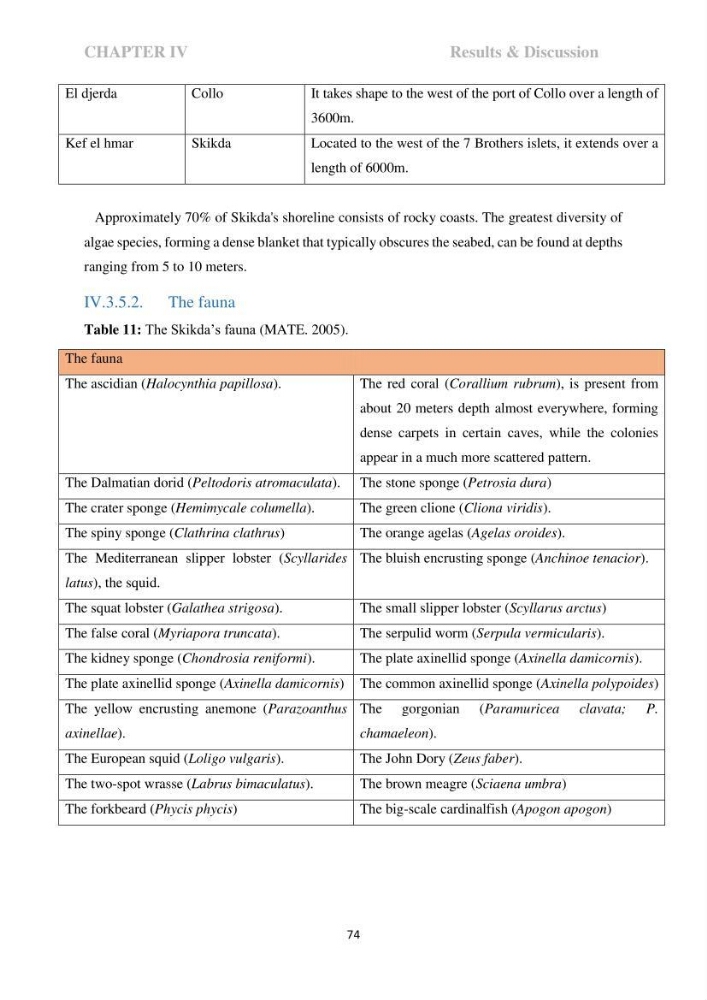
Table 11: The Skikda’s fauna (MATE. 2005).
The fauna
The ascidian (Halocynthia papillosa).
The red coral (Corallium rubrum), is present from
about 20 meters depth almost everywhere, forming
dense carpets in certain caves, while the colonies
appear in a much more scattered pattern.
The Dalmatian dorid (Peltodoris atromaculata). The stone sponge (Petrosia dura)
The crater sponge (Hemimycale columella).
The green clione (Cliona viridis).
The spiny sponge (Clathrina clathrus)
The orange agelas (Agelas oroides).
The Mediterranean slipper lobster (Scyllarides
latus), the squid.
The bluish encrusting sponge (Anchinoe tenacior).
The squat lobster (Galathea strigosa).
The small slipper lobster (Scyllarus arctus)
The false coral (Myriapora truncata).
The serpulid worm (Serpula vermicularis).
The kidney sponge (Chondrosia reniformi).
The plate axinellid sponge (Axinella damicornis).
The plate axinellid sponge (Axinella damicornis) The common axinellid sponge (Axinella polypoides)
The yellow encrusting anemone (Parazoanthus
axinellae).
The gorgonian (Paramuricea clavata; P.
chamaeleon).
The European squid (Loligo vulgaris).
The John Dory (Zeus faber).
The two-spot wrasse (Labrus bimaculatus).
The brown meagre (Sciaena umbra)
The forkbeard (Phycis phycis)
The big-scale cardinalfish (Apogon apogon)
Results & Discussion
74
El djerda
Collo
It takes shape to the west of the port of Collo over a length of
3600m.
Kef el hmar
Skikda
Located to the west of the 7 Brothers islets, it extends over a
length of 6000m.
Approximately 70% of Skikda's shoreline consists of rocky coasts. The greatest diversity of
algae species, forming a dense blanket that typically obscures the seabed, can be found at depths
ranging from 5 to 10 meters.
IV.3.5.2. The fauna
Table 11: The Skikda’s fauna (MATE. 2005).
The fauna
The ascidian (Halocynthia papillosa).
The red coral (Corallium rubrum), is present from
about 20 meters depth almost everywhere, forming
dense carpets in certain caves, while the colonies
appear in a much more scattered pattern.
The Dalmatian dorid (Peltodoris atromaculata). The stone sponge (Petrosia dura)
The crater sponge (Hemimycale columella).
The green clione (Cliona viridis).
The spiny sponge (Clathrina clathrus)
The orange agelas (Agelas oroides).
The Mediterranean slipper lobster (Scyllarides
latus), the squid.
The bluish encrusting sponge (Anchinoe tenacior).
The squat lobster (Galathea strigosa).
The small slipper lobster (Scyllarus arctus)
The false coral (Myriapora truncata).
The serpulid worm (Serpula vermicularis).
The kidney sponge (Chondrosia reniformi).
The plate axinellid sponge (Axinella damicornis).
The plate axinellid sponge (Axinella damicornis) The common axinellid sponge (Axinella polypoides)
The yellow encrusting anemone (Parazoanthus
axinellae).
The gorgonian (Paramuricea clavata; P.
chamaeleon).
The European squid (Loligo vulgaris).
The John Dory (Zeus faber).
The two-spot wrasse (Labrus bimaculatus).
The brown meagre (Sciaena umbra)
The forkbeard (Phycis phycis)
The big-scale cardinalfish (Apogon apogon)