

140
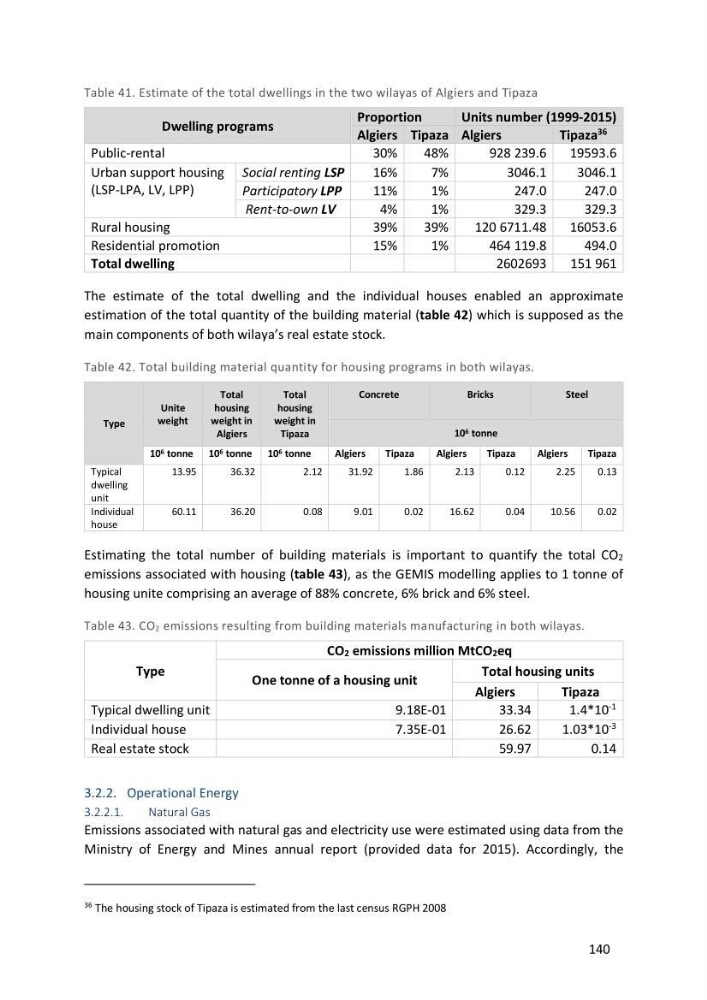
Table 41. Estimate of the total dwellings in the two wilayas of Algiers and Tipaza
Dwelling programs
Proportion
Units number (1999-2015)
Algiers Tipaza Algiers
Tipaza
36
Public-rental
30%
48%
928 239.6
19593.6
Urban support housing
(LSP-LPA, LV, LPP)
Social renting LSP
16%
7%
3046.1
3046.1
Participatory LPP
11%
1%
247.0
247.0
Rent-to-own LV
4%
1%
329.3
329.3
Rural housing
39%
39%
120 6711.48
16053.6
Residential promotion
15%
1%
464 119.8
494.0
Total dwelling
2602693
151 961
The estimate of the total dwelling and the individual houses enabled an approximate
estimation of the total quantity of the building material (table 42) which is supposed as the
main components of both wilaya’s real estate stock.
Table 42. Total building material quantity for housing programs in both wilayas.
Type
Unite
weight
Total
housing
weight in
Algiers
Total
housing
weight in
Tipaza
Concrete
Bricks
Steel
10 6 tonne
10 6 tonne 10 6 tonne 10 6 tonne
Algiers
Tipaza
Algiers
Tipaza
Algiers
Tipaza
Typical
dwelling
unit
13.95
36.32
2.12
31.92
1.86
2.13
0.12
2.25
0.13
Individual
house
60.11
36.20
0.08
9.01
0.02
16.62
0.04
10.56
0.02
Estimating the total number of building materials is important to quantify the total CO2
emissions associated with housing (table 43), as the GEMIS modelling applies to 1 tonne of
housing unite comprising an average of 88% concrete, 6% brick and 6% steel.
Table 43. CO2 emissions resulting from building materials manufacturing in both wilayas.
Type
CO2 emissions million MtCO2eq
One tonne of a housing unit
Total housing units
Algiers
Tipaza
Typical dwelling unit
9.18E-01
33.34
1.4*10
-1
Individual house
7.35E-01
26.62
1.03*10
-3
Real estate stock
59.97
0.14
3.2.2. Operational Energy
3.2.2.1.
Natural Gas
Emissions associated with natural gas and electricity use were estimated using data from the
Ministry of Energy and Mines annual report (provided data for 2015). Accordingly, the
36
The housing stock of Tipaza is estimated from the last census RGPH 2008
Table 41. Estimate of the total dwellings in the two wilayas of Algiers and Tipaza
Dwelling programs
Proportion
Units number (1999-2015)
Algiers Tipaza Algiers
Tipaza
36
Public-rental
30%
48%
928 239.6
19593.6
Urban support housing
(LSP-LPA, LV, LPP)
Social renting LSP
16%
7%
3046.1
3046.1
Participatory LPP
11%
1%
247.0
247.0
Rent-to-own LV
4%
1%
329.3
329.3
Rural housing
39%
39%
120 6711.48
16053.6
Residential promotion
15%
1%
464 119.8
494.0
Total dwelling
2602693
151 961
The estimate of the total dwelling and the individual houses enabled an approximate
estimation of the total quantity of the building material (table 42) which is supposed as the
main components of both wilaya’s real estate stock.
Table 42. Total building material quantity for housing programs in both wilayas.
Type
Unite
weight
Total
housing
weight in
Algiers
Total
housing
weight in
Tipaza
Concrete
Bricks
Steel
10 6 tonne
10 6 tonne 10 6 tonne 10 6 tonne
Algiers
Tipaza
Algiers
Tipaza
Algiers
Tipaza
Typical
dwelling
unit
13.95
36.32
2.12
31.92
1.86
2.13
0.12
2.25
0.13
Individual
house
60.11
36.20
0.08
9.01
0.02
16.62
0.04
10.56
0.02
Estimating the total number of building materials is important to quantify the total CO2
emissions associated with housing (table 43), as the GEMIS modelling applies to 1 tonne of
housing unite comprising an average of 88% concrete, 6% brick and 6% steel.
Table 43. CO2 emissions resulting from building materials manufacturing in both wilayas.
Type
CO2 emissions million MtCO2eq
One tonne of a housing unit
Total housing units
Algiers
Tipaza
Typical dwelling unit
9.18E-01
33.34
1.4*10
-1
Individual house
7.35E-01
26.62
1.03*10
-3
Real estate stock
59.97
0.14
3.2.2. Operational Energy
3.2.2.1.
Natural Gas
Emissions associated with natural gas and electricity use were estimated using data from the
Ministry of Energy and Mines annual report (provided data for 2015). Accordingly, the
36
The housing stock of Tipaza is estimated from the last census RGPH 2008