

was an effective alternative authorized in Chile for the treatment of salmonids, but its
effects were decreasing against sea lice. This brought Chilean authorities to choose
other chemical alternatives and implement strategic periods of coordinated treatments using synthetic pyrethroids as the most effective means to prevent and control
sea lice [23].
1.2.1 Addressing the Caligus Problem: Use of Pyrethroid Pesticides
in the Salmon Industry
Synthetic pyrethroids are a group of antiparasitic drugs that are characterized as
being highly hydrophobic (log K OW > 5) and having low solubility in water
(0.002–0.004 mg L
À1 ) and low volatility (Table 1). Their hydrophobic properties
allow pyrethroids to be absorbed into the organic matter available in the water
column and reach bottom sediment. In Chile, since 2007 cypermethrin and
deltamethrin have typically been applied to treat sea lice infections on salmon
farms, but these treatments were approved by authorities only in 2010 (SAG), due
to increased resistance to other antiparasitic chemicals [3, 4]. However, over the
years severe problems of ectoparasite resistance to pyrethroid treatments in Southern
Chile have been reported [25, 26], even during synchronized sea lice treatments (i.e.,
bath treatments coordinated among neighboring farms), with lower adult lice levels,
but juvenile stages less affected [27, 28]. There have been similar reports in Norway,
where increased sea lice resistance has triggered pyrethroid use by the salmon
farming industry [8, 29, 30].
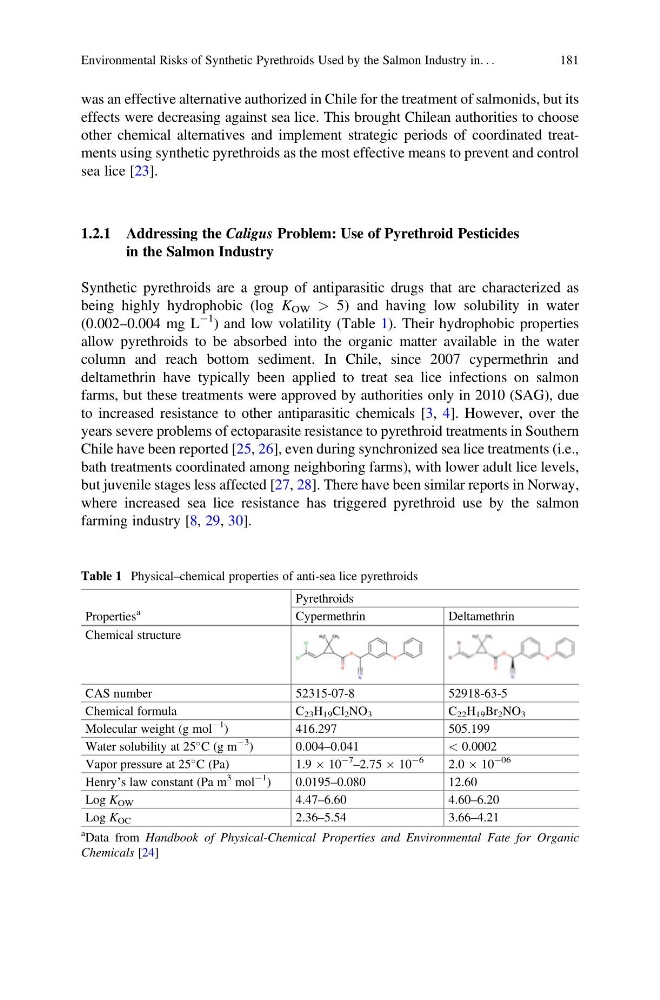
Table 1 Physical–chemical properties of anti-sea lice pyrethroids
Properties
a
Pyrethroids
Cypermethrin
Deltamethrin
Chemical structure
CAS number
52315-07-8
52918-63-5
Chemical formula
C 23 H 19 Cl 2 NO 3
C 22 H 19 Br 2 NO 3
Molecular weight (g mol
À1
)
416.297
505.199
Water solubility at 25
C (g m
À3
)
0.004–0.041
< 0.0002
Vapor pressure at 25
C (Pa)
1.9 Â 10
À7
–2.75 Â 10
À6
2.0 Â 10
À06
Henry’s law constant (Pa m
3 mol
À1
)
0.0195–0.080
12.60
Log K OW
4.47–6.60
4.60–6.20
Log K OC
2.36–5.54
3.66–4.21
a Data from Handbook of Physical-Chemical Properties and Environmental Fate for Organic
Chemicals [24]
Environmental Risks of Synthetic Pyrethroids Used by the Salmon Industry in. . .
181
effects were decreasing against sea lice. This brought Chilean authorities to choose
other chemical alternatives and implement strategic periods of coordinated treatments using synthetic pyrethroids as the most effective means to prevent and control
sea lice [23].
1.2.1 Addressing the Caligus Problem: Use of Pyrethroid Pesticides
in the Salmon Industry
Synthetic pyrethroids are a group of antiparasitic drugs that are characterized as
being highly hydrophobic (log K OW > 5) and having low solubility in water
(0.002–0.004 mg L
À1 ) and low volatility (Table 1). Their hydrophobic properties
allow pyrethroids to be absorbed into the organic matter available in the water
column and reach bottom sediment. In Chile, since 2007 cypermethrin and
deltamethrin have typically been applied to treat sea lice infections on salmon
farms, but these treatments were approved by authorities only in 2010 (SAG), due
to increased resistance to other antiparasitic chemicals [3, 4]. However, over the
years severe problems of ectoparasite resistance to pyrethroid treatments in Southern
Chile have been reported [25, 26], even during synchronized sea lice treatments (i.e.,
bath treatments coordinated among neighboring farms), with lower adult lice levels,
but juvenile stages less affected [27, 28]. There have been similar reports in Norway,
where increased sea lice resistance has triggered pyrethroid use by the salmon
farming industry [8, 29, 30].
Table 1 Physical–chemical properties of anti-sea lice pyrethroids
Properties
a
Pyrethroids
Cypermethrin
Deltamethrin
Chemical structure
CAS number
52315-07-8
52918-63-5
Chemical formula
C 23 H 19 Cl 2 NO 3
C 22 H 19 Br 2 NO 3
Molecular weight (g mol
À1
)
416.297
505.199
Water solubility at 25
C (g m
À3
)
0.004–0.041
< 0.0002
Vapor pressure at 25
C (Pa)
1.9 Â 10
À7
–2.75 Â 10
À6
2.0 Â 10
À06
Henry’s law constant (Pa m
3 mol
À1
)
0.0195–0.080
12.60
Log K OW
4.47–6.60
4.60–6.20
Log K OC
2.36–5.54
3.66–4.21
a Data from Handbook of Physical-Chemical Properties and Environmental Fate for Organic
Chemicals [24]
Environmental Risks of Synthetic Pyrethroids Used by the Salmon Industry in. . .
181