

respectively [22, 23]. This approach is useful, since the cis/trans nomenclature is
immediately associated with the spatial position of the substituents on the cyclopropane ring. Thus, in this instance, we represent the carbon configuration with the
abbreviated nomenclature to simplify the writing and the tridimensional understanding of beginners in this field.
Chiral R- and S-configurations of widely used pyrethroids and their isomeric
ratios in commercial formulations are presented in Table 1. Bold enantiomers have
higher insecticidal activity than other enantiomers.
3 Metabolic Pathways and Toxicity in Nontarget
Organisms
In biological systems, pyrethroids act with receptor-ligand interactions related to
molecular tridimensional arrangements. Stereoselectivity at enzymatic sites directly
influences binding to specific enantiomers with consequences on biotransformation
reactions, such as hydrolysis, reduction, oxidation and conjugation [20]. Therefore,
different responses to toxicity, bioaccumulation, biodegradability and adverse
effects of enantiomers are expected. Although commercial pyrethroid formulations
are a complex mixture of stereoisomers, only a few enantiomers have insecticidal
activity. Considering the stereoisomeric configuration, only the R-configuration of
C-1 chiral carbons (1R-cis and 1R-trans-isomers) presents the desired activity
(Fig. 5), whereas with a chiral carbon in the cyanohydrin group (Type II pyrethroids), only the S-configuration at alpha-cyano-3-phenoxybenzyl ester presents
high insecticidal activity [15, 31].
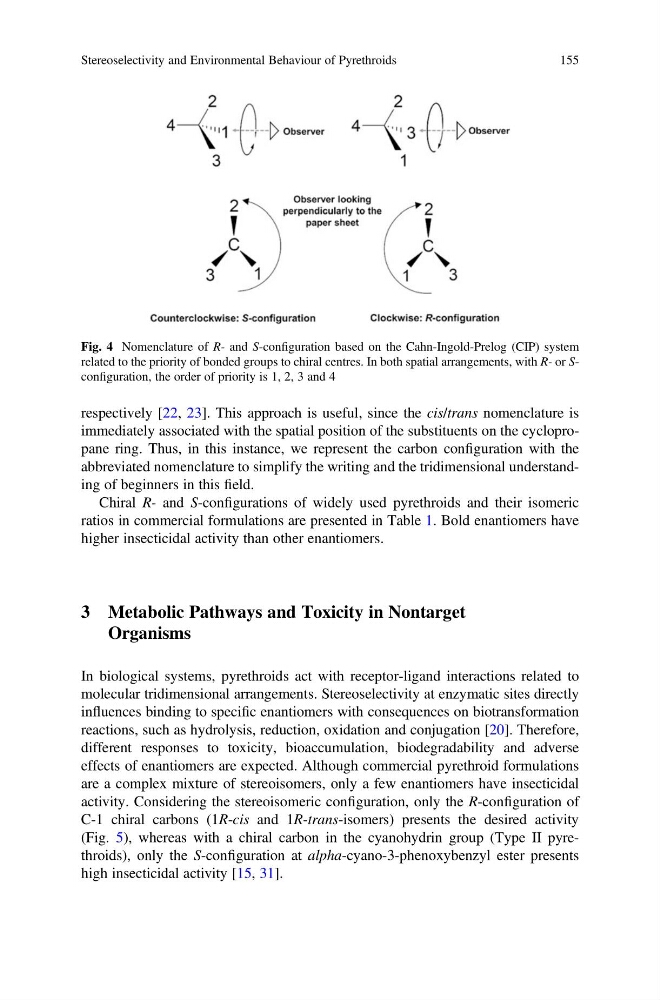
Fig. 4 Nomenclature of R- and S-configuration based on the Cahn-Ingold-Prelog (CIP) system
related to the priority of bonded groups to chiral centres. In both spatial arrangements, with R- or Sconfiguration, the order of priority is 1, 2, 3 and 4
Stereoselectivity and Environmental Behaviour of Pyrethroids
155
immediately associated with the spatial position of the substituents on the cyclopropane ring. Thus, in this instance, we represent the carbon configuration with the
abbreviated nomenclature to simplify the writing and the tridimensional understanding of beginners in this field.
Chiral R- and S-configurations of widely used pyrethroids and their isomeric
ratios in commercial formulations are presented in Table 1. Bold enantiomers have
higher insecticidal activity than other enantiomers.
3 Metabolic Pathways and Toxicity in Nontarget
Organisms
In biological systems, pyrethroids act with receptor-ligand interactions related to
molecular tridimensional arrangements. Stereoselectivity at enzymatic sites directly
influences binding to specific enantiomers with consequences on biotransformation
reactions, such as hydrolysis, reduction, oxidation and conjugation [20]. Therefore,
different responses to toxicity, bioaccumulation, biodegradability and adverse
effects of enantiomers are expected. Although commercial pyrethroid formulations
are a complex mixture of stereoisomers, only a few enantiomers have insecticidal
activity. Considering the stereoisomeric configuration, only the R-configuration of
C-1 chiral carbons (1R-cis and 1R-trans-isomers) presents the desired activity
(Fig. 5), whereas with a chiral carbon in the cyanohydrin group (Type II pyrethroids), only the S-configuration at alpha-cyano-3-phenoxybenzyl ester presents
high insecticidal activity [15, 31].
Fig. 4 Nomenclature of R- and S-configuration based on the Cahn-Ingold-Prelog (CIP) system
related to the priority of bonded groups to chiral centres. In both spatial arrangements, with R- or Sconfiguration, the order of priority is 1, 2, 3 and 4
Stereoselectivity and Environmental Behaviour of Pyrethroids
155