

resistant dam and sensitive sire parentage, over 98% of animals were resistant when
acutely exposed to deltamethrin, and a resistance phenotype (34-fold) persisted into
the F3 generation. Conversely, resistant sire and sensitive dam parentage produced
only 16% of F2 animals that were resistant, and F3 animals had no increase in
resistance. It is important to note, however, that maternal inheritance (the inheritance of mitochondrial DNA) did not fully explain resistance phenotype, suggesting
that a combination of nuclear and mitochondrial changes contribute to a resistance
[115]. In a similar breeding study, Bakke et al. [126] crossed a deltamethrin-resistant
strain of L. salmonis from Norway with a sensitive strain and found that resistant F2
progeny was only produced when the female of the parental generation was
deltamethrin-resistant. Both Bakke et al. [126] and Carmona-Antonanzas et al.
[124] found evidence of the same four amino acid substitutions in mitochondrial
proteins ((NADH dehydrogenase I (glycine-to-serine at position 251), NADH dehydrogenase 5 (leucine-to-serine at position 411), cytochrome C oxidase subunit
1 (leucine-to-serine at position 107), and cytochrome C oxidase subunit 3 (glycine-to-glutamic acid at position 33) (numbering according to GenBank
AY625897.1) from Scottish and Norwegian resistant populations and not in sensitive populations. The presence of the same SNPs in geographically isolated-resistant
populations provides evidence for their role in pyrethroid resistance. CarmonaAntonanzas et al. [124] measured the ATP depletion in deltamethrin-exposed sea
lice and only found that ATP was depleted in sensitive animals. Bakke et al. [126]
found that deltamethrin-resistant sea lice experienced lower levels of skeletal muscle
apoptosis than their sensitive counterparts after deltamethrin treatment. Both studies
showed that deltamethrin resistance is maternally inherited, and they suggest that in
I
II
III
IV
I936V/F
L925I/V
M918L
L1014F/S
Q945R
H 2 N
COOH
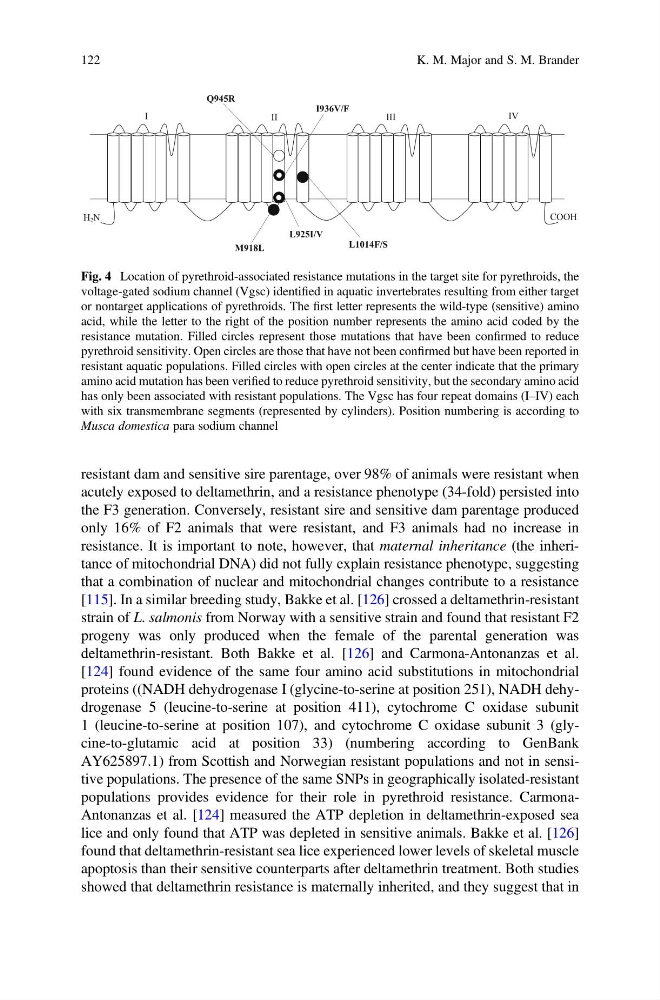
Fig. 4 Location of pyrethroid-associated resistance mutations in the target site for pyrethroids, the
voltage-gated sodium channel (Vgsc) identified in aquatic invertebrates resulting from either target
or nontarget applications of pyrethroids. The first letter represents the wild-type (sensitive) amino
acid, while the letter to the right of the position number represents the amino acid coded by the
resistance mutation. Filled circles represent those mutations that have been confirmed to reduce
pyrethroid sensitivity. Open circles are those that have not been confirmed but have been reported in
resistant aquatic populations. Filled circles with open circles at the center indicate that the primary
amino acid mutation has been verified to reduce pyrethroid sensitivity, but the secondary amino acid
has only been associated with resistant populations. The Vgsc has four repeat domains (I–IV) each
with six transmembrane segments (represented by cylinders). Position numbering is according to
Musca domestica para sodium channel
122
K. M. Major and S. M. Brander
acutely exposed to deltamethrin, and a resistance phenotype (34-fold) persisted into
the F3 generation. Conversely, resistant sire and sensitive dam parentage produced
only 16% of F2 animals that were resistant, and F3 animals had no increase in
resistance. It is important to note, however, that maternal inheritance (the inheritance of mitochondrial DNA) did not fully explain resistance phenotype, suggesting
that a combination of nuclear and mitochondrial changes contribute to a resistance
[115]. In a similar breeding study, Bakke et al. [126] crossed a deltamethrin-resistant
strain of L. salmonis from Norway with a sensitive strain and found that resistant F2
progeny was only produced when the female of the parental generation was
deltamethrin-resistant. Both Bakke et al. [126] and Carmona-Antonanzas et al.
[124] found evidence of the same four amino acid substitutions in mitochondrial
proteins ((NADH dehydrogenase I (glycine-to-serine at position 251), NADH dehydrogenase 5 (leucine-to-serine at position 411), cytochrome C oxidase subunit
1 (leucine-to-serine at position 107), and cytochrome C oxidase subunit 3 (glycine-to-glutamic acid at position 33) (numbering according to GenBank
AY625897.1) from Scottish and Norwegian resistant populations and not in sensitive populations. The presence of the same SNPs in geographically isolated-resistant
populations provides evidence for their role in pyrethroid resistance. CarmonaAntonanzas et al. [124] measured the ATP depletion in deltamethrin-exposed sea
lice and only found that ATP was depleted in sensitive animals. Bakke et al. [126]
found that deltamethrin-resistant sea lice experienced lower levels of skeletal muscle
apoptosis than their sensitive counterparts after deltamethrin treatment. Both studies
showed that deltamethrin resistance is maternally inherited, and they suggest that in
I
II
III
IV
I936V/F
L925I/V
M918L
L1014F/S
Q945R
H 2 N
COOH
Fig. 4 Location of pyrethroid-associated resistance mutations in the target site for pyrethroids, the
voltage-gated sodium channel (Vgsc) identified in aquatic invertebrates resulting from either target
or nontarget applications of pyrethroids. The first letter represents the wild-type (sensitive) amino
acid, while the letter to the right of the position number represents the amino acid coded by the
resistance mutation. Filled circles represent those mutations that have been confirmed to reduce
pyrethroid sensitivity. Open circles are those that have not been confirmed but have been reported in
resistant aquatic populations. Filled circles with open circles at the center indicate that the primary
amino acid mutation has been verified to reduce pyrethroid sensitivity, but the secondary amino acid
has only been associated with resistant populations. The Vgsc has four repeat domains (I–IV) each
with six transmembrane segments (represented by cylinders). Position numbering is according to
Musca domestica para sodium channel
122
K. M. Major and S. M. Brander