

26
D. Luecken and S. Napelenok
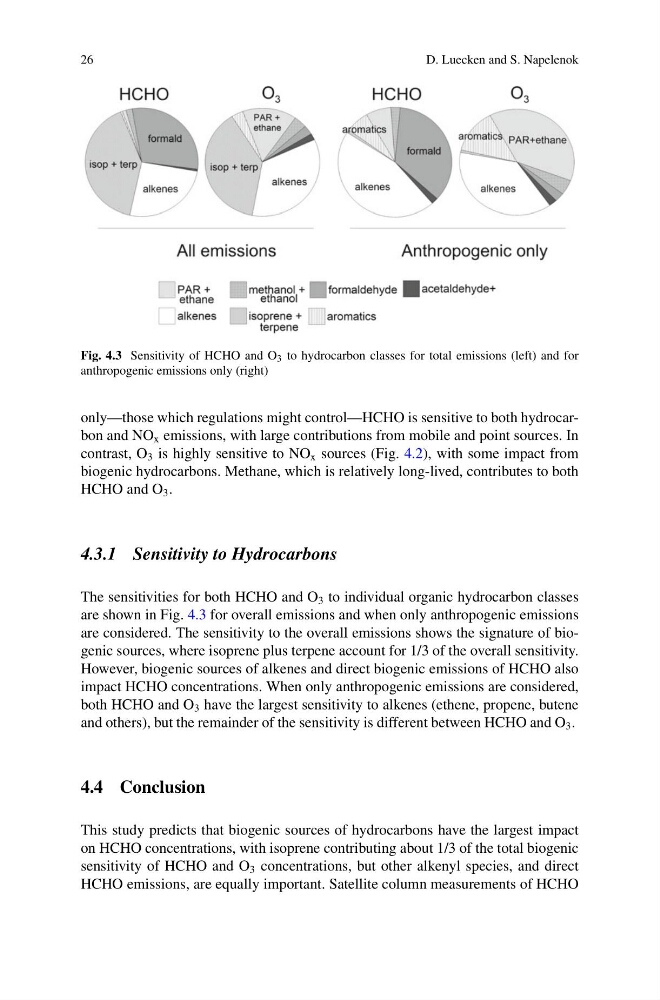
Fig. 4.3 Sensitivity of HCHO and O 3 to hydrocarbon classes for total emissions (left) and for
anthropogenic emissions only (right)
only—those which regulations might control—HCHO is sensitive to both hydrocarbon and NO x emissions, with large contributions from mobile and point sources. In
contrast, O 3 is highly sensitive to NO x sources (Fig. 4.2), with some impact from
biogenic hydrocarbons. Methane, which is relatively long-lived, contributes to both
HCHO and O 3 .
4.3.1 Sensitivity to Hydrocarbons
The sensitivities for both HCHO and O 3 to individual organic hydrocarbon classes
are shown in Fig. 4.3 for overall emissions and when only anthropogenic emissions
are considered. The sensitivity to the overall emissions shows the signature of biogenic sources, where isoprene plus terpene account for 1/3 of the overall sensitivity.
However, biogenic sources of alkenes and direct biogenic emissions of HCHO also
impact HCHO concentrations. When only anthropogenic emissions are considered,
both HCHO and O 3 have the largest sensitivity to alkenes (ethene, propene, butene
and others), but the remainder of the sensitivity is different between HCHO and O 3 .
4.4 Conclusion
This study predicts that biogenic sources of hydrocarbons have the largest impact
on HCHO concentrations, with isoprene contributing about 1/3 of the total biogenic
sensitivity of HCHO and O 3 concentrations, but other alkenyl species, and direct
HCHO emissions, are equally important. Satellite column measurements of HCHO
D. Luecken and S. Napelenok
Fig. 4.3 Sensitivity of HCHO and O 3 to hydrocarbon classes for total emissions (left) and for
anthropogenic emissions only (right)
only—those which regulations might control—HCHO is sensitive to both hydrocarbon and NO x emissions, with large contributions from mobile and point sources. In
contrast, O 3 is highly sensitive to NO x sources (Fig. 4.2), with some impact from
biogenic hydrocarbons. Methane, which is relatively long-lived, contributes to both
HCHO and O 3 .
4.3.1 Sensitivity to Hydrocarbons
The sensitivities for both HCHO and O 3 to individual organic hydrocarbon classes
are shown in Fig. 4.3 for overall emissions and when only anthropogenic emissions
are considered. The sensitivity to the overall emissions shows the signature of biogenic sources, where isoprene plus terpene account for 1/3 of the overall sensitivity.
However, biogenic sources of alkenes and direct biogenic emissions of HCHO also
impact HCHO concentrations. When only anthropogenic emissions are considered,
both HCHO and O 3 have the largest sensitivity to alkenes (ethene, propene, butene
and others), but the remainder of the sensitivity is different between HCHO and O 3 .
4.4 Conclusion
This study predicts that biogenic sources of hydrocarbons have the largest impact
on HCHO concentrations, with isoprene contributing about 1/3 of the total biogenic
sensitivity of HCHO and O 3 concentrations, but other alkenyl species, and direct
HCHO emissions, are equally important. Satellite column measurements of HCHO