

29 Model of Emissions of Gases and Aerosol from Nature Version …
189
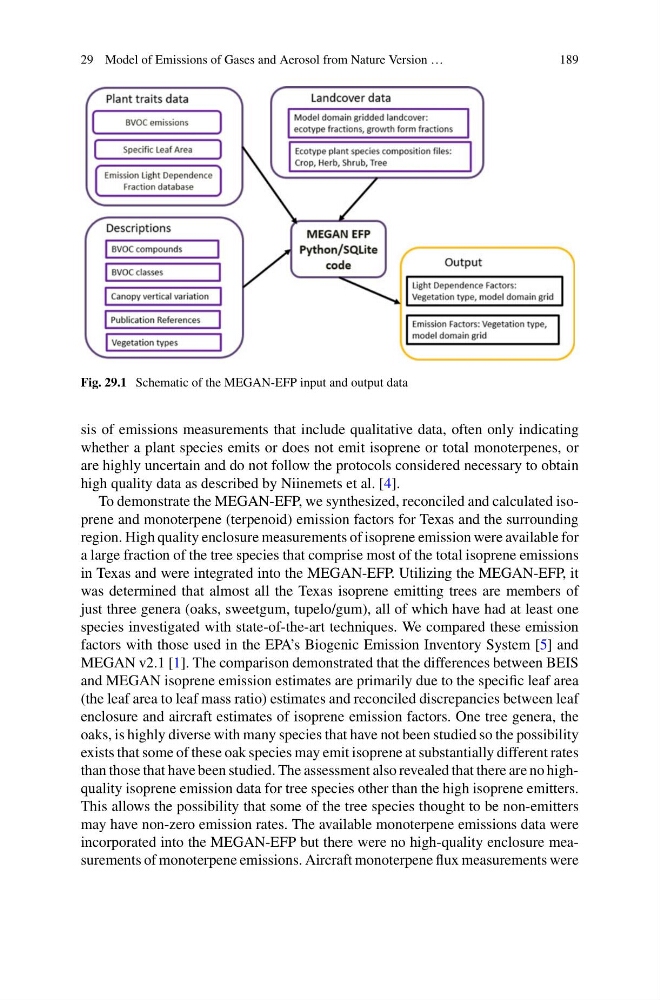
Fig. 29.1 Schematic of the MEGAN-EFP input and output data
sis of emissions measurements that include qualitative data, often only indicating
whether a plant species emits or does not emit isoprene or total monoterpenes, or
are highly uncertain and do not follow the protocols considered necessary to obtain
high quality data as described by Niinemets et al. [4].
To demonstrate the MEGAN-EFP, we synthesized, reconciled and calculated isoprene and monoterpene (terpenoid) emission factors for Texas and the surrounding
region. High quality enclosure measurements of isoprene emission were available for
a large fraction of the tree species that comprise most of the total isoprene emissions
in Texas and were integrated into the MEGAN-EFP. Utilizing the MEGAN-EFP, it
was determined that almost all the Texas isoprene emitting trees are members of
just three genera (oaks, sweetgum, tupelo/gum), all of which have had at least one
species investigated with state-of-the-art techniques. We compared these emission
factors with those used in the EPA’s Biogenic Emission Inventory System [5] and
MEGAN v2.1 [1]. The comparison demonstrated that the differences between BEIS
and MEGAN isoprene emission estimates are primarily due to the specific leaf area
(the leaf area to leaf mass ratio) estimates and reconciled discrepancies between leaf
enclosure and aircraft estimates of isoprene emission factors. One tree genera, the
oaks, is highly diverse with many species that have not been studied so the possibility
exists that some of these oak species may emit isoprene at substantially different rates
than those that have been studied. The assessment also revealed that there are no highquality isoprene emission data for tree species other than the high isoprene emitters.
This allows the possibility that some of the tree species thought to be non-emitters
may have non-zero emission rates. The available monoterpene emissions data were
incorporated into the MEGAN-EFP but there were no high-quality enclosure measurements of monoterpene emissions. Aircraft monoterpene flux measurements were
189
Fig. 29.1 Schematic of the MEGAN-EFP input and output data
sis of emissions measurements that include qualitative data, often only indicating
whether a plant species emits or does not emit isoprene or total monoterpenes, or
are highly uncertain and do not follow the protocols considered necessary to obtain
high quality data as described by Niinemets et al. [4].
To demonstrate the MEGAN-EFP, we synthesized, reconciled and calculated isoprene and monoterpene (terpenoid) emission factors for Texas and the surrounding
region. High quality enclosure measurements of isoprene emission were available for
a large fraction of the tree species that comprise most of the total isoprene emissions
in Texas and were integrated into the MEGAN-EFP. Utilizing the MEGAN-EFP, it
was determined that almost all the Texas isoprene emitting trees are members of
just three genera (oaks, sweetgum, tupelo/gum), all of which have had at least one
species investigated with state-of-the-art techniques. We compared these emission
factors with those used in the EPA’s Biogenic Emission Inventory System [5] and
MEGAN v2.1 [1]. The comparison demonstrated that the differences between BEIS
and MEGAN isoprene emission estimates are primarily due to the specific leaf area
(the leaf area to leaf mass ratio) estimates and reconciled discrepancies between leaf
enclosure and aircraft estimates of isoprene emission factors. One tree genera, the
oaks, is highly diverse with many species that have not been studied so the possibility
exists that some of these oak species may emit isoprene at substantially different rates
than those that have been studied. The assessment also revealed that there are no highquality isoprene emission data for tree species other than the high isoprene emitters.
This allows the possibility that some of the tree species thought to be non-emitters
may have non-zero emission rates. The available monoterpene emissions data were
incorporated into the MEGAN-EFP but there were no high-quality enclosure measurements of monoterpene emissions. Aircraft monoterpene flux measurements were