

17 Using Higher Order Sensitivity Approaches …
105
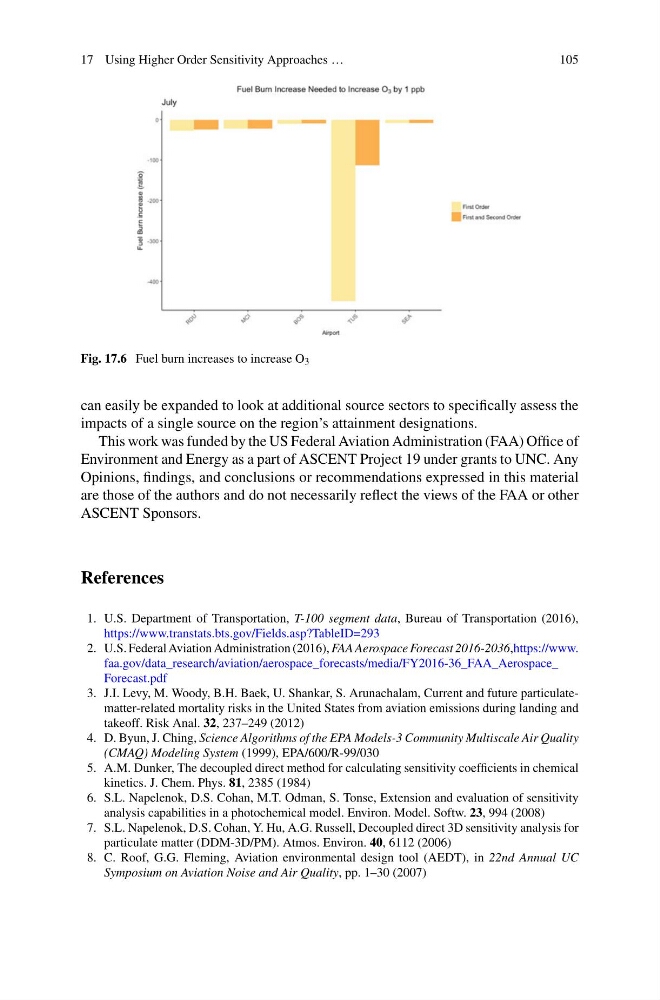
Fig. 17.6 Fuel burn increases to increase O 3
can easily be expanded to look at additional source sectors to specifically assess the
impacts of a single source on the region’s attainment designations.
This work was funded by the US Federal Aviation Administration (FAA) Office of
Environment and Energy as a part of ASCENT Project 19 under grants to UNC. Any
Opinions, findings, and conclusions or recommendations expressed in this material
are those of the authors and do not necessarily reflect the views of the FAA or other
ASCENT Sponsors.
References
1. U.S. Department of Transportation, T-100 segment data, Bureau of Transportation (2016),
https://www.transtats.bts.gov/Fields.asp?TableID=293
2. U.S. Federal Aviation Administration (2016), FAA Aerospace Forecast 2016-2036,https://www.
faa.gov/data_research/aviation/aerospace_forecasts/media/FY2016-36_FAA_Aerospace_
Forecast.pdf
3. J.I. Levy, M. Woody, B.H. Baek, U. Shankar, S. Arunachalam, Current and future particulatematter-related mortality risks in the United States from aviation emissions during landing and
takeoff. Risk Anal. 32, 237–249 (2012)
4. D. Byun, J. Ching, Science Algorithms of the EPA Models-3 Community Multiscale Air Quality
(CMAQ) Modeling System (1999), EPA/600/R-99/030
5. A.M. Dunker, The decoupled direct method for calculating sensitivity coefficients in chemical
kinetics. J. Chem. Phys. 81, 2385 (1984)
6. S.L. Napelenok, D.S. Cohan, M.T. Odman, S. Tonse, Extension and evaluation of sensitivity
analysis capabilities in a photochemical model. Environ. Model. Softw. 23, 994 (2008)
7. S.L. Napelenok, D.S. Cohan, Y. Hu, A.G. Russell, Decoupled direct 3D sensitivity analysis for
particulate matter (DDM-3D/PM). Atmos. Environ. 40, 6112 (2006)
8. C. Roof, G.G. Fleming, Aviation environmental design tool (AEDT), in 22nd Annual UC
Symposium on Aviation Noise and Air Quality, pp. 1–30 (2007)
105
Fig. 17.6 Fuel burn increases to increase O 3
can easily be expanded to look at additional source sectors to specifically assess the
impacts of a single source on the region’s attainment designations.
This work was funded by the US Federal Aviation Administration (FAA) Office of
Environment and Energy as a part of ASCENT Project 19 under grants to UNC. Any
Opinions, findings, and conclusions or recommendations expressed in this material
are those of the authors and do not necessarily reflect the views of the FAA or other
ASCENT Sponsors.
References
1. U.S. Department of Transportation, T-100 segment data, Bureau of Transportation (2016),
https://www.transtats.bts.gov/Fields.asp?TableID=293
2. U.S. Federal Aviation Administration (2016), FAA Aerospace Forecast 2016-2036,https://www.
faa.gov/data_research/aviation/aerospace_forecasts/media/FY2016-36_FAA_Aerospace_
Forecast.pdf
3. J.I. Levy, M. Woody, B.H. Baek, U. Shankar, S. Arunachalam, Current and future particulatematter-related mortality risks in the United States from aviation emissions during landing and
takeoff. Risk Anal. 32, 237–249 (2012)
4. D. Byun, J. Ching, Science Algorithms of the EPA Models-3 Community Multiscale Air Quality
(CMAQ) Modeling System (1999), EPA/600/R-99/030
5. A.M. Dunker, The decoupled direct method for calculating sensitivity coefficients in chemical
kinetics. J. Chem. Phys. 81, 2385 (1984)
6. S.L. Napelenok, D.S. Cohan, M.T. Odman, S. Tonse, Extension and evaluation of sensitivity
analysis capabilities in a photochemical model. Environ. Model. Softw. 23, 994 (2008)
7. S.L. Napelenok, D.S. Cohan, Y. Hu, A.G. Russell, Decoupled direct 3D sensitivity analysis for
particulate matter (DDM-3D/PM). Atmos. Environ. 40, 6112 (2006)
8. C. Roof, G.G. Fleming, Aviation environmental design tool (AEDT), in 22nd Annual UC
Symposium on Aviation Noise and Air Quality, pp. 1–30 (2007)