

64
F. A. Maksimov
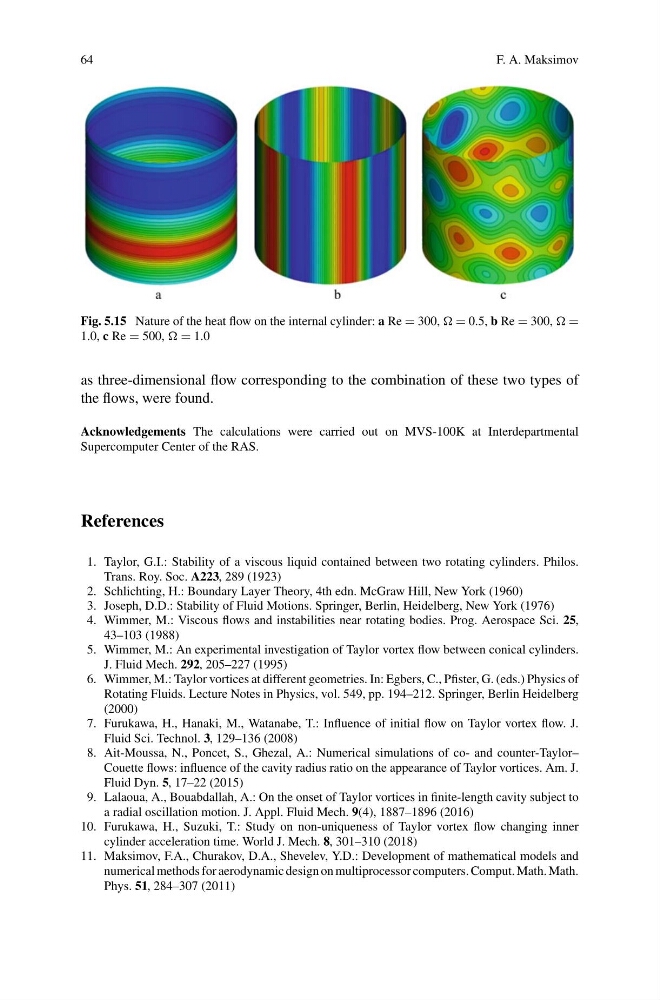
Fig. 5.15 Nature of the heat flow on the internal cylinder: a Re = 300, = 0.5, b Re = 300, =
1.0, c Re = 500, = 1.0
as three-dimensional flow corresponding to the combination of these two types of
the flows, were found.
Acknowledgements The calculations were carried out on MVS-100K at Interdepartmental
Supercomputer Center of the RAS.
References
1. Taylor, G.I.: Stability of a viscous liquid contained between two rotating cylinders. Philos.
Trans. Roy. Soc. A223, 289 (1923)
2. Schlichting, H.: Boundary Layer Theory, 4th edn. McGraw Hill, New York (1960)
3. Joseph, D.D.: Stability of Fluid Motions. Springer, Berlin, Heidelberg, New York (1976)
4. Wimmer, M.: Viscous flows and instabilities near rotating bodies. Prog. Aerospace Sci. 25,
43–103 (1988)
5. Wimmer, M.: An experimental investigation of Taylor vortex flow between conical cylinders.
J. Fluid Mech. 292, 205–227 (1995)
6. Wimmer, M.: Taylor vortices at different geometries. In: Egbers, C., Pfister, G. (eds.) Physics of
Rotating Fluids. Lecture Notes in Physics, vol. 549, pp. 194–212. Springer, Berlin Heidelberg
(2000)
7. Furukawa, H., Hanaki, M., Watanabe, T.: Influence of initial flow on Taylor vortex flow. J.
Fluid Sci. Technol. 3, 129–136 (2008)
8. Ait-Moussa, N., Poncet, S., Ghezal, A.: Numerical simulations of co- and counter-Taylor–
Couette flows: influence of the cavity radius ratio on the appearance of Taylor vortices. Am. J.
Fluid Dyn. 5, 17–22 (2015)
9. Lalaoua, A., Bouabdallah, A.: On the onset of Taylor vortices in finite-length cavity subject to
a radial oscillation motion. J. Appl. Fluid Mech. 9(4), 1887–1896 (2016)
10. Furukawa, H., Suzuki, T.: Study on non-uniqueness of Taylor vortex flow changing inner
cylinder acceleration time. World J. Mech. 8, 301–310 (2018)
11. Maksimov, F.A., Churakov, D.A., Shevelev, Y.D.: Development of mathematical models and
numerical methods for aerodynamic design on multiprocessor computers. Comput. Math. Math.
Phys. 51, 284–307 (2011)
F. A. Maksimov
Fig. 5.15 Nature of the heat flow on the internal cylinder: a Re = 300, = 0.5, b Re = 300, =
1.0, c Re = 500, = 1.0
as three-dimensional flow corresponding to the combination of these two types of
the flows, were found.
Acknowledgements The calculations were carried out on MVS-100K at Interdepartmental
Supercomputer Center of the RAS.
References
1. Taylor, G.I.: Stability of a viscous liquid contained between two rotating cylinders. Philos.
Trans. Roy. Soc. A223, 289 (1923)
2. Schlichting, H.: Boundary Layer Theory, 4th edn. McGraw Hill, New York (1960)
3. Joseph, D.D.: Stability of Fluid Motions. Springer, Berlin, Heidelberg, New York (1976)
4. Wimmer, M.: Viscous flows and instabilities near rotating bodies. Prog. Aerospace Sci. 25,
43–103 (1988)
5. Wimmer, M.: An experimental investigation of Taylor vortex flow between conical cylinders.
J. Fluid Mech. 292, 205–227 (1995)
6. Wimmer, M.: Taylor vortices at different geometries. In: Egbers, C., Pfister, G. (eds.) Physics of
Rotating Fluids. Lecture Notes in Physics, vol. 549, pp. 194–212. Springer, Berlin Heidelberg
(2000)
7. Furukawa, H., Hanaki, M., Watanabe, T.: Influence of initial flow on Taylor vortex flow. J.
Fluid Sci. Technol. 3, 129–136 (2008)
8. Ait-Moussa, N., Poncet, S., Ghezal, A.: Numerical simulations of co- and counter-Taylor–
Couette flows: influence of the cavity radius ratio on the appearance of Taylor vortices. Am. J.
Fluid Dyn. 5, 17–22 (2015)
9. Lalaoua, A., Bouabdallah, A.: On the onset of Taylor vortices in finite-length cavity subject to
a radial oscillation motion. J. Appl. Fluid Mech. 9(4), 1887–1896 (2016)
10. Furukawa, H., Suzuki, T.: Study on non-uniqueness of Taylor vortex flow changing inner
cylinder acceleration time. World J. Mech. 8, 301–310 (2018)
11. Maksimov, F.A., Churakov, D.A., Shevelev, Y.D.: Development of mathematical models and
numerical methods for aerodynamic design on multiprocessor computers. Comput. Math. Math.
Phys. 51, 284–307 (2011)