

62
F. A. Maksimov
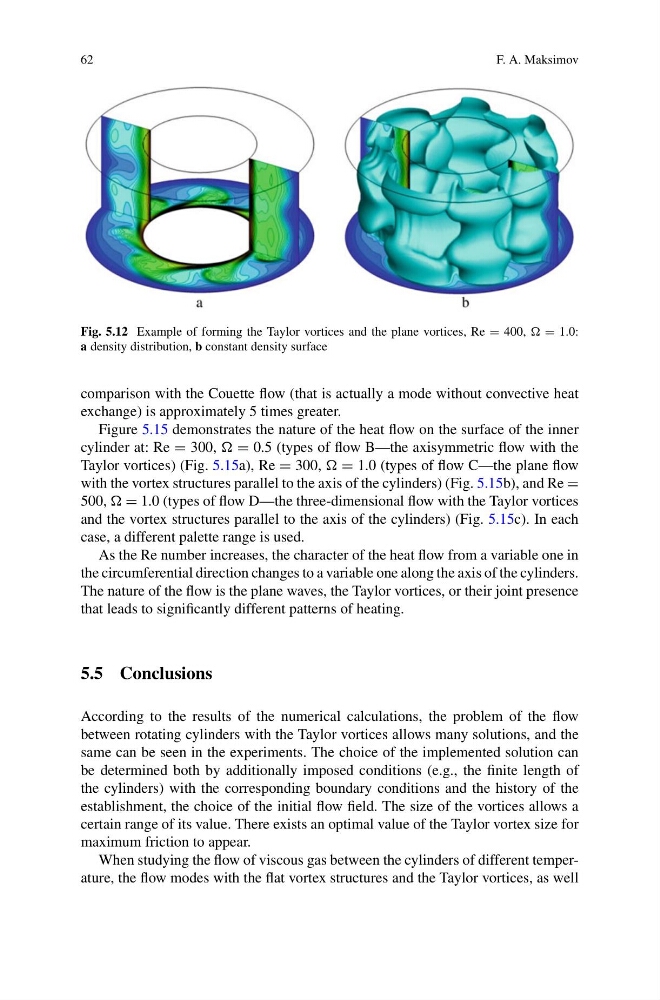
Fig. 5.12 Example of forming the Taylor vortices and the plane vortices, Re = 400, = 1.0:
a density distribution, b constant density surface
comparison with the Couette flow (that is actually a mode without convective heat
exchange) is approximately 5 times greater.
Figure 5.15 demonstrates the nature of the heat flow on the surface of the inner
cylinder at: Re = 300, = 0.5 (types of flow B—the axisymmetric flow with the
Taylor vortices) (Fig. 5.15a), Re = 300, = 1.0 (types of flow C—the plane flow
with the vortex structures parallel to the axis of the cylinders) (Fig. 5.15b), and Re =
500, = 1.0 (types of flow D—the three-dimensional flow with the Taylor vortices
and the vortex structures parallel to the axis of the cylinders) (Fig. 5.15c). In each
case, a different palette range is used.
As the Re number increases, the character of the heat flow from a variable one in
the circumferential direction changes to a variable one along the axis of the cylinders.
The nature of the flow is the plane waves, the Taylor vortices, or their joint presence
that leads to significantly different patterns of heating.
5.5 Conclusions
According to the results of the numerical calculations, the problem of the flow
between rotating cylinders with the Taylor vortices allows many solutions, and the
same can be seen in the experiments. The choice of the implemented solution can
be determined both by additionally imposed conditions (e.g., the finite length of
the cylinders) with the corresponding boundary conditions and the history of the
establishment, the choice of the initial flow field. The size of the vortices allows a
certain range of its value. There exists an optimal value of the Taylor vortex size for
maximum friction to appear.
When studying the flow of viscous gas between the cylinders of different temperature, the flow modes with the flat vortex structures and the Taylor vortices, as well
F. A. Maksimov
Fig. 5.12 Example of forming the Taylor vortices and the plane vortices, Re = 400, = 1.0:
a density distribution, b constant density surface
comparison with the Couette flow (that is actually a mode without convective heat
exchange) is approximately 5 times greater.
Figure 5.15 demonstrates the nature of the heat flow on the surface of the inner
cylinder at: Re = 300, = 0.5 (types of flow B—the axisymmetric flow with the
Taylor vortices) (Fig. 5.15a), Re = 300, = 1.0 (types of flow C—the plane flow
with the vortex structures parallel to the axis of the cylinders) (Fig. 5.15b), and Re =
500, = 1.0 (types of flow D—the three-dimensional flow with the Taylor vortices
and the vortex structures parallel to the axis of the cylinders) (Fig. 5.15c). In each
case, a different palette range is used.
As the Re number increases, the character of the heat flow from a variable one in
the circumferential direction changes to a variable one along the axis of the cylinders.
The nature of the flow is the plane waves, the Taylor vortices, or their joint presence
that leads to significantly different patterns of heating.
5.5 Conclusions
According to the results of the numerical calculations, the problem of the flow
between rotating cylinders with the Taylor vortices allows many solutions, and the
same can be seen in the experiments. The choice of the implemented solution can
be determined both by additionally imposed conditions (e.g., the finite length of
the cylinders) with the corresponding boundary conditions and the history of the
establishment, the choice of the initial flow field. The size of the vortices allows a
certain range of its value. There exists an optimal value of the Taylor vortex size for
maximum friction to appear.
When studying the flow of viscous gas between the cylinders of different temperature, the flow modes with the flat vortex structures and the Taylor vortices, as well