

336
V. N. Lukin and L. N. Chernyshov
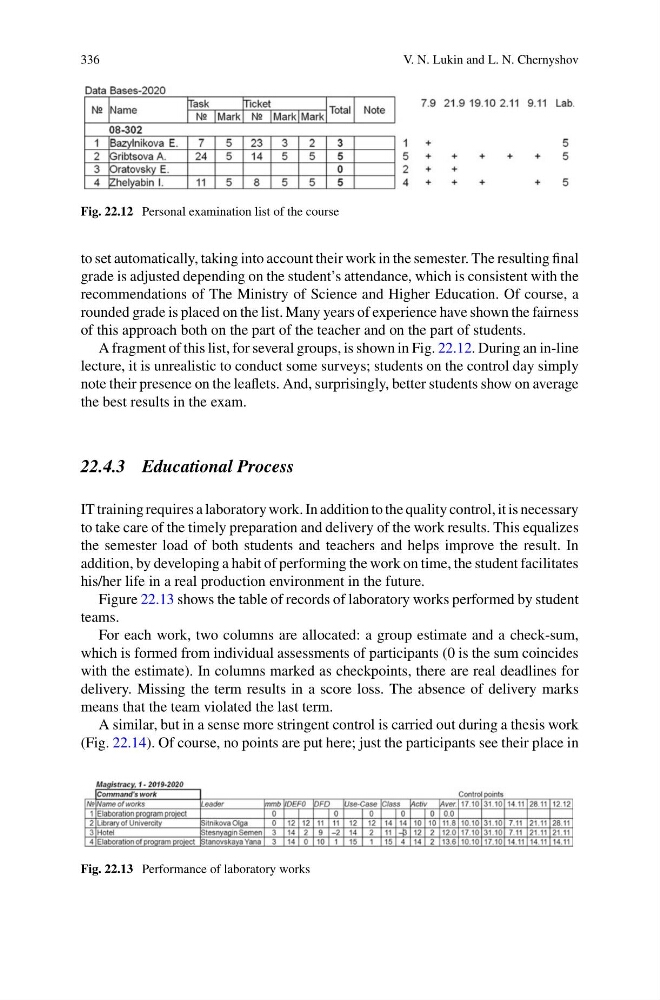
Fig. 22.12 Personal examination list of the course
to set automatically, taking into account their work in the semester. The resulting final
grade is adjusted depending on the student’s attendance, which is consistent with the
recommendations of The Ministry of Science and Higher Education. Of course, a
rounded grade is placed on the list. Many years of experience have shown the fairness
of this approach both on the part of the teacher and on the part of students.
A fragment of this list, for several groups, is shown in Fig. 22.12. During an in-line
lecture, it is unrealistic to conduct some surveys; students on the control day simply
note their presence on the leaflets. And, surprisingly, better students show on average
the best results in the exam.
22.4.3 Educational Process
IT training requires a laboratory work. In addition to the quality control, it is necessary
to take care of the timely preparation and delivery of the work results. This equalizes
the semester load of both students and teachers and helps improve the result. In
addition, by developing a habit of performing the work on time, the student facilitates
his/her life in a real production environment in the future.
Figure 22.13 shows the table of records of laboratory works performed by student
teams.
For each work, two columns are allocated: a group estimate and a check-sum,
which is formed from individual assessments of participants (0 is the sum coincides
with the estimate). In columns marked as checkpoints, there are real deadlines for
delivery. Missing the term results in a score loss. The absence of delivery marks
means that the team violated the last term.
A similar, but in a sense more stringent control is carried out during a thesis work
(Fig. 22.14). Of course, no points are put here; just the participants see their place in
Fig. 22.13 Performance of laboratory works
V. N. Lukin and L. N. Chernyshov
Fig. 22.12 Personal examination list of the course
to set automatically, taking into account their work in the semester. The resulting final
grade is adjusted depending on the student’s attendance, which is consistent with the
recommendations of The Ministry of Science and Higher Education. Of course, a
rounded grade is placed on the list. Many years of experience have shown the fairness
of this approach both on the part of the teacher and on the part of students.
A fragment of this list, for several groups, is shown in Fig. 22.12. During an in-line
lecture, it is unrealistic to conduct some surveys; students on the control day simply
note their presence on the leaflets. And, surprisingly, better students show on average
the best results in the exam.
22.4.3 Educational Process
IT training requires a laboratory work. In addition to the quality control, it is necessary
to take care of the timely preparation and delivery of the work results. This equalizes
the semester load of both students and teachers and helps improve the result. In
addition, by developing a habit of performing the work on time, the student facilitates
his/her life in a real production environment in the future.
Figure 22.13 shows the table of records of laboratory works performed by student
teams.
For each work, two columns are allocated: a group estimate and a check-sum,
which is formed from individual assessments of participants (0 is the sum coincides
with the estimate). In columns marked as checkpoints, there are real deadlines for
delivery. Missing the term results in a score loss. The absence of delivery marks
means that the team violated the last term.
A similar, but in a sense more stringent control is carried out during a thesis work
(Fig. 22.14). Of course, no points are put here; just the participants see their place in
Fig. 22.13 Performance of laboratory works