

16 Application of Multi-agent Optimization Methods …
243
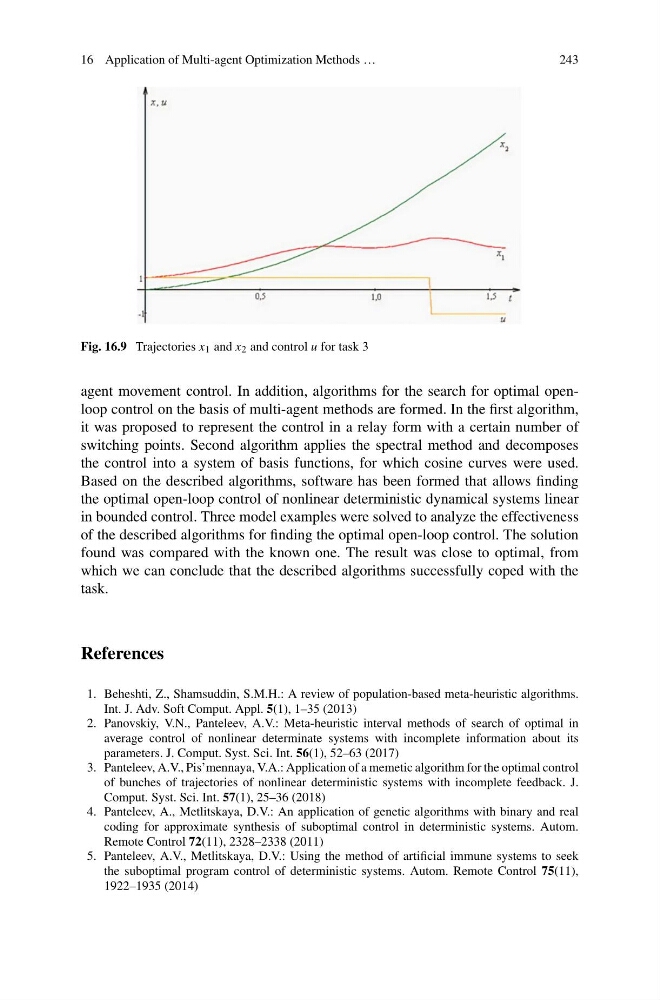
Fig. 16.9 Trajectories x 1 and x 2 and control u for task 3
agent movement control. In addition, algorithms for the search for optimal openloop control on the basis of multi-agent methods are formed. In the first algorithm,
it was proposed to represent the control in a relay form with a certain number of
switching points. Second algorithm applies the spectral method and decomposes
the control into a system of basis functions, for which cosine curves were used.
Based on the described algorithms, software has been formed that allows finding
the optimal open-loop control of nonlinear deterministic dynamical systems linear
in bounded control. Three model examples were solved to analyze the effectiveness
of the described algorithms for finding the optimal open-loop control. The solution
found was compared with the known one. The result was close to optimal, from
which we can conclude that the described algorithms successfully coped with the
task.
References
1. Beheshti, Z., Shamsuddin, S.M.H.: A review of population-based meta-heuristic algorithms.
Int. J. Adv. Soft Comput. Appl. 5(1), 1–35 (2013)
2. Panovskiy, V.N., Panteleev, A.V.: Meta-heuristic interval methods of search of optimal in
average control of nonlinear determinate systems with incomplete information about its
parameters. J. Comput. Syst. Sci. Int. 56(1), 52–63 (2017)
3. Panteleev, A.V., Pis’mennaya, V.A.: Application of a memetic algorithm for the optimal control
of bunches of trajectories of nonlinear deterministic systems with incomplete feedback. J.
Comput. Syst. Sci. Int. 57(1), 25–36 (2018)
4. Panteleev, A., Metlitskaya, D.V.: An application of genetic algorithms with binary and real
coding for approximate synthesis of suboptimal control in deterministic systems. Autom.
Remote Control 72(11), 2328–2338 (2011)
5. Panteleev, A.V., Metlitskaya, D.V.: Using the method of artificial immune systems to seek
the suboptimal program control of deterministic systems. Autom. Remote Control 75(11),
1922–1935 (2014)
243
Fig. 16.9 Trajectories x 1 and x 2 and control u for task 3
agent movement control. In addition, algorithms for the search for optimal openloop control on the basis of multi-agent methods are formed. In the first algorithm,
it was proposed to represent the control in a relay form with a certain number of
switching points. Second algorithm applies the spectral method and decomposes
the control into a system of basis functions, for which cosine curves were used.
Based on the described algorithms, software has been formed that allows finding
the optimal open-loop control of nonlinear deterministic dynamical systems linear
in bounded control. Three model examples were solved to analyze the effectiveness
of the described algorithms for finding the optimal open-loop control. The solution
found was compared with the known one. The result was close to optimal, from
which we can conclude that the described algorithms successfully coped with the
task.
References
1. Beheshti, Z., Shamsuddin, S.M.H.: A review of population-based meta-heuristic algorithms.
Int. J. Adv. Soft Comput. Appl. 5(1), 1–35 (2013)
2. Panovskiy, V.N., Panteleev, A.V.: Meta-heuristic interval methods of search of optimal in
average control of nonlinear determinate systems with incomplete information about its
parameters. J. Comput. Syst. Sci. Int. 56(1), 52–63 (2017)
3. Panteleev, A.V., Pis’mennaya, V.A.: Application of a memetic algorithm for the optimal control
of bunches of trajectories of nonlinear deterministic systems with incomplete feedback. J.
Comput. Syst. Sci. Int. 57(1), 25–36 (2018)
4. Panteleev, A., Metlitskaya, D.V.: An application of genetic algorithms with binary and real
coding for approximate synthesis of suboptimal control in deterministic systems. Autom.
Remote Control 72(11), 2328–2338 (2011)
5. Panteleev, A.V., Metlitskaya, D.V.: Using the method of artificial immune systems to seek
the suboptimal program control of deterministic systems. Autom. Remote Control 75(11),
1922–1935 (2014)