

286
S. Ouda
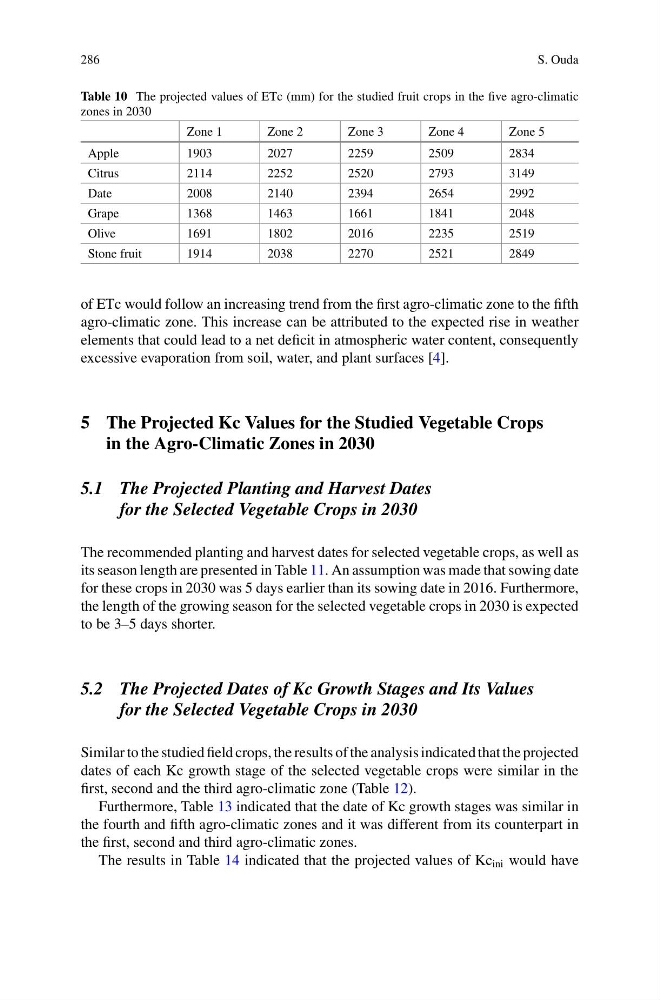
Table 10 The projected values of ETc (mm) for the studied fruit crops in the five agro-climatic
zones in 2030
Zone 1
Zone 2
Zone 3
Zone 4
Zone 5
Apple
1903
2027
2259
2509
2834
Citrus
2114
2252
2520
2793
3149
Date
2008
2140
2394
2654
2992
Grape
1368
1463
1661
1841
2048
Olive
1691
1802
2016
2235
2519
Stone fruit
1914
2038
2270
2521
2849
of ETc would follow an increasing trend from the first agro-climatic zone to the fifth
agro-climatic zone. This increase can be attributed to the expected rise in weather
elements that could lead to a net deficit in atmospheric water content, consequently
excessive evaporation from soil, water, and plant surfaces [4].
5 The Projected Kc Values for the Studied Vegetable Crops
in the Agro-Climatic Zones in 2030
5.1 The Projected Planting and Harvest Dates
for the Selected Vegetable Crops in 2030
The recommended planting and harvest dates for selected vegetable crops, as well as
its season length are presented in Table 11. An assumption was made that sowing date
for these crops in 2030 was 5 days earlier than its sowing date in 2016. Furthermore,
the length of the growing season for the selected vegetable crops in 2030 is expected
to be 3–5 days shorter.
5.2 The Projected Dates of Kc Growth Stages and Its Values
for the Selected Vegetable Crops in 2030
Similar to the studied field crops, the results of the analysis indicated that the projected
dates of each Kc growth stage of the selected vegetable crops were similar in the
first, second and the third agro-climatic zone (Table 12).
Furthermore, Table 13 indicated that the date of Kc growth stages was similar in
the fourth and fifth agro-climatic zones and it was different from its counterpart in
the first, second and third agro-climatic zones.
The results in Table 14 indicated that the projected values of Kc ini would have
S. Ouda
Table 10 The projected values of ETc (mm) for the studied fruit crops in the five agro-climatic
zones in 2030
Zone 1
Zone 2
Zone 3
Zone 4
Zone 5
Apple
1903
2027
2259
2509
2834
Citrus
2114
2252
2520
2793
3149
Date
2008
2140
2394
2654
2992
Grape
1368
1463
1661
1841
2048
Olive
1691
1802
2016
2235
2519
Stone fruit
1914
2038
2270
2521
2849
of ETc would follow an increasing trend from the first agro-climatic zone to the fifth
agro-climatic zone. This increase can be attributed to the expected rise in weather
elements that could lead to a net deficit in atmospheric water content, consequently
excessive evaporation from soil, water, and plant surfaces [4].
5 The Projected Kc Values for the Studied Vegetable Crops
in the Agro-Climatic Zones in 2030
5.1 The Projected Planting and Harvest Dates
for the Selected Vegetable Crops in 2030
The recommended planting and harvest dates for selected vegetable crops, as well as
its season length are presented in Table 11. An assumption was made that sowing date
for these crops in 2030 was 5 days earlier than its sowing date in 2016. Furthermore,
the length of the growing season for the selected vegetable crops in 2030 is expected
to be 3–5 days shorter.
5.2 The Projected Dates of Kc Growth Stages and Its Values
for the Selected Vegetable Crops in 2030
Similar to the studied field crops, the results of the analysis indicated that the projected
dates of each Kc growth stage of the selected vegetable crops were similar in the
first, second and the third agro-climatic zone (Table 12).
Furthermore, Table 13 indicated that the date of Kc growth stages was similar in
the fourth and fifth agro-climatic zones and it was different from its counterpart in
the first, second and third agro-climatic zones.
The results in Table 14 indicated that the projected values of Kc ini would have