

258
E.-S. E. Omran
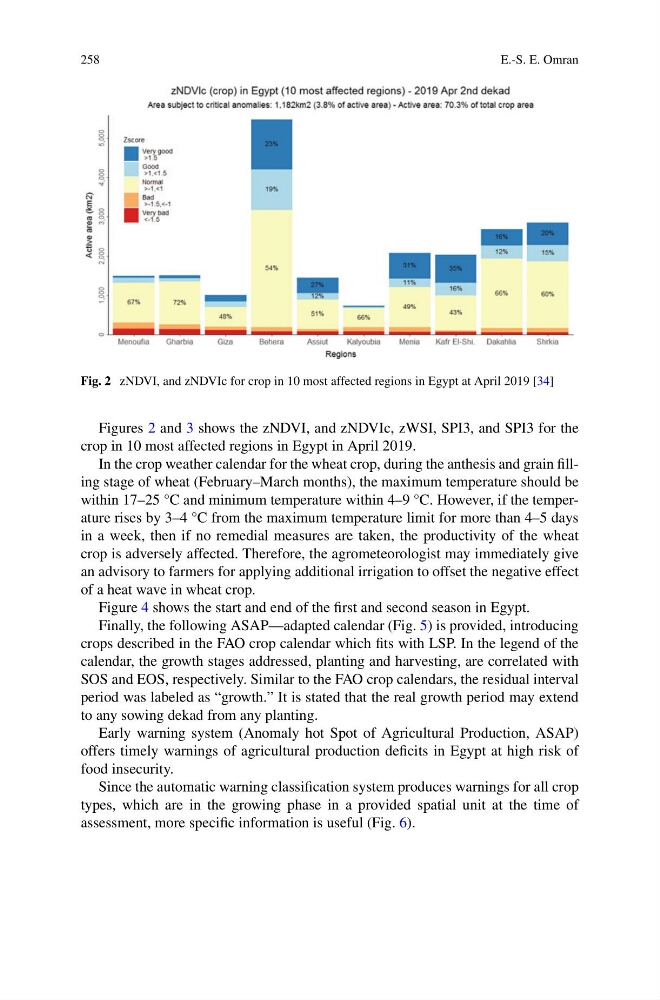
Fig. 2 zNDVI, and zNDVIc for crop in 10 most affected regions in Egypt at April 2019 [34]
Figures 2 and 3 shows the zNDVI, and zNDVIc, zWSI, SPI3, and SPI3 for the
crop in 10 most affected regions in Egypt in April 2019.
In the crop weather calendar for the wheat crop, during the anthesis and grain filling stage of wheat (February–March months), the maximum temperature should be
within 17–25 °C and minimum temperature within 4–9 °C. However, if the temperature rises by 3–4 °C from the maximum temperature limit for more than 4–5 days
in a week, then if no remedial measures are taken, the productivity of the wheat
crop is adversely affected. Therefore, the agrometeorologist may immediately give
an advisory to farmers for applying additional irrigation to offset the negative effect
of a heat wave in wheat crop.
Figure 4 shows the start and end of the first and second season in Egypt.
Finally, the following ASAP—adapted calendar (Fig. 5) is provided, introducing
crops described in the FAO crop calendar which fits with LSP. In the legend of the
calendar, the growth stages addressed, planting and harvesting, are correlated with
SOS and EOS, respectively. Similar to the FAO crop calendars, the residual interval
period was labeled as “growth.” It is stated that the real growth period may extend
to any sowing dekad from any planting.
Early warning system (Anomaly hot Spot of Agricultural Production, ASAP)
offers timely warnings of agricultural production deficits in Egypt at high risk of
food insecurity.
Since the automatic warning classification system produces warnings for all crop
types, which are in the growing phase in a provided spatial unit at the time of
assessment, more specific information is useful (Fig. 6).
E.-S. E. Omran
Fig. 2 zNDVI, and zNDVIc for crop in 10 most affected regions in Egypt at April 2019 [34]
Figures 2 and 3 shows the zNDVI, and zNDVIc, zWSI, SPI3, and SPI3 for the
crop in 10 most affected regions in Egypt in April 2019.
In the crop weather calendar for the wheat crop, during the anthesis and grain filling stage of wheat (February–March months), the maximum temperature should be
within 17–25 °C and minimum temperature within 4–9 °C. However, if the temperature rises by 3–4 °C from the maximum temperature limit for more than 4–5 days
in a week, then if no remedial measures are taken, the productivity of the wheat
crop is adversely affected. Therefore, the agrometeorologist may immediately give
an advisory to farmers for applying additional irrigation to offset the negative effect
of a heat wave in wheat crop.
Figure 4 shows the start and end of the first and second season in Egypt.
Finally, the following ASAP—adapted calendar (Fig. 5) is provided, introducing
crops described in the FAO crop calendar which fits with LSP. In the legend of the
calendar, the growth stages addressed, planting and harvesting, are correlated with
SOS and EOS, respectively. Similar to the FAO crop calendars, the residual interval
period was labeled as “growth.” It is stated that the real growth period may extend
to any sowing dekad from any planting.
Early warning system (Anomaly hot Spot of Agricultural Production, ASAP)
offers timely warnings of agricultural production deficits in Egypt at high risk of
food insecurity.
Since the automatic warning classification system produces warnings for all crop
types, which are in the growing phase in a provided spatial unit at the time of
assessment, more specific information is useful (Fig. 6).