

168
H. Elbasiouny and F. Elbehiry
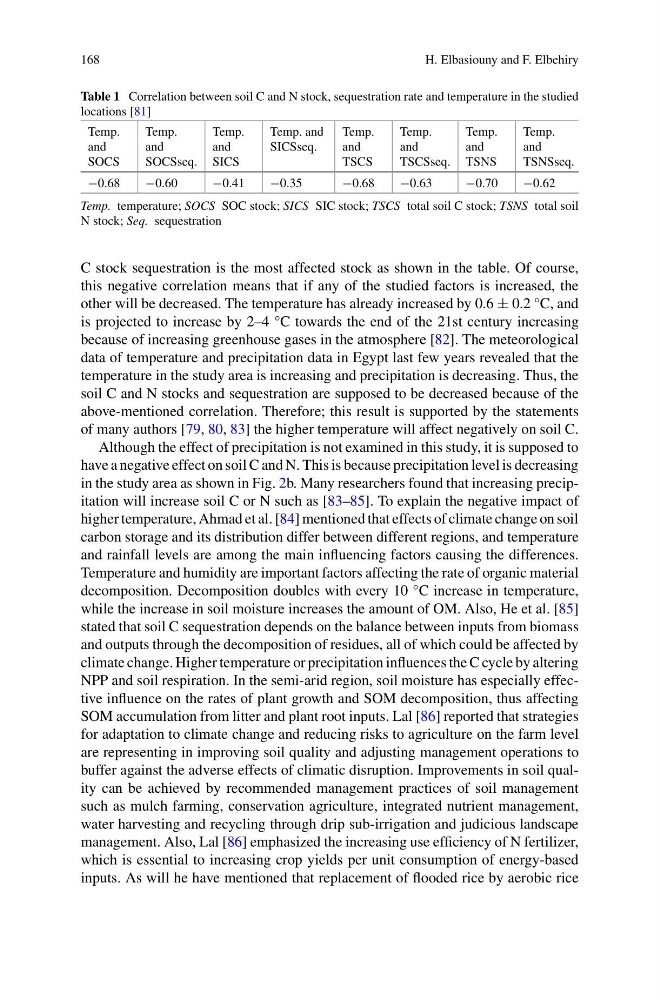
Table 1 Correlation between soil C and N stock, sequestration rate and temperature in the studied
locations [81]
Temp.
and
SOCS
Temp.
and
SOCSseq.
Temp.
and
SICS
Temp. and
SICSseq.
Temp.
and
TSCS
Temp.
and
TSCSseq.
Temp.
and
TSNS
Temp.
and
TSNSseq.
−0.68
−0.60
−0.41
−0.35
−0.68
−0.63
−0.70
−0.62
Temp. temperature; SOCS SOC stock; SICS SIC stock; TSCS total soil C stock; TSNS total soil
N stock; Seq. sequestration
C stock sequestration is the most affected stock as shown in the table. Of course,
this negative correlation means that if any of the studied factors is increased, the
other will be decreased. The temperature has already increased by 0.6 ± 0.2 °C, and
is projected to increase by 2–4 °C towards the end of the 21st century increasing
because of increasing greenhouse gases in the atmosphere [82]. The meteorological
data of temperature and precipitation data in Egypt last few years revealed that the
temperature in the study area is increasing and precipitation is decreasing. Thus, the
soil C and N stocks and sequestration are supposed to be decreased because of the
above-mentioned correlation. Therefore; this result is supported by the statements
of many authors [79, 80, 83] the higher temperature will affect negatively on soil C.
Although the effect of precipitation is not examined in this study, it is supposed to
have a negative effect on soil C and N. This is because precipitation level is decreasing
in the study area as shown in Fig. 2b. Many researchers found that increasing precipitation will increase soil C or N such as [83–85]. To explain the negative impact of
higher temperature, Ahmad et al. [84] mentioned that effects of climate change on soil
carbon storage and its distribution differ between different regions, and temperature
and rainfall levels are among the main influencing factors causing the differences.
Temperature and humidity are important factors affecting the rate of organic material
decomposition. Decomposition doubles with every 10 °C increase in temperature,
while the increase in soil moisture increases the amount of OM. Also, He et al. [85]
stated that soil C sequestration depends on the balance between inputs from biomass
and outputs through the decomposition of residues, all of which could be affected by
climate change. Higher temperature or precipitation influences the C cycle by altering
NPP and soil respiration. In the semi-arid region, soil moisture has especially effective influence on the rates of plant growth and SOM decomposition, thus affecting
SOM accumulation from litter and plant root inputs. Lal [86] reported that strategies
for adaptation to climate change and reducing risks to agriculture on the farm level
are representing in improving soil quality and adjusting management operations to
buffer against the adverse effects of climatic disruption. Improvements in soil quality can be achieved by recommended management practices of soil management
such as mulch farming, conservation agriculture, integrated nutrient management,
water harvesting and recycling through drip sub-irrigation and judicious landscape
management. Also, Lal [86] emphasized the increasing use efficiency of N fertilizer,
which is essential to increasing crop yields per unit consumption of energy-based
inputs. As will he have mentioned that replacement of flooded rice by aerobic rice
H. Elbasiouny and F. Elbehiry
Table 1 Correlation between soil C and N stock, sequestration rate and temperature in the studied
locations [81]
Temp.
and
SOCS
Temp.
and
SOCSseq.
Temp.
and
SICS
Temp. and
SICSseq.
Temp.
and
TSCS
Temp.
and
TSCSseq.
Temp.
and
TSNS
Temp.
and
TSNSseq.
−0.68
−0.60
−0.41
−0.35
−0.68
−0.63
−0.70
−0.62
Temp. temperature; SOCS SOC stock; SICS SIC stock; TSCS total soil C stock; TSNS total soil
N stock; Seq. sequestration
C stock sequestration is the most affected stock as shown in the table. Of course,
this negative correlation means that if any of the studied factors is increased, the
other will be decreased. The temperature has already increased by 0.6 ± 0.2 °C, and
is projected to increase by 2–4 °C towards the end of the 21st century increasing
because of increasing greenhouse gases in the atmosphere [82]. The meteorological
data of temperature and precipitation data in Egypt last few years revealed that the
temperature in the study area is increasing and precipitation is decreasing. Thus, the
soil C and N stocks and sequestration are supposed to be decreased because of the
above-mentioned correlation. Therefore; this result is supported by the statements
of many authors [79, 80, 83] the higher temperature will affect negatively on soil C.
Although the effect of precipitation is not examined in this study, it is supposed to
have a negative effect on soil C and N. This is because precipitation level is decreasing
in the study area as shown in Fig. 2b. Many researchers found that increasing precipitation will increase soil C or N such as [83–85]. To explain the negative impact of
higher temperature, Ahmad et al. [84] mentioned that effects of climate change on soil
carbon storage and its distribution differ between different regions, and temperature
and rainfall levels are among the main influencing factors causing the differences.
Temperature and humidity are important factors affecting the rate of organic material
decomposition. Decomposition doubles with every 10 °C increase in temperature,
while the increase in soil moisture increases the amount of OM. Also, He et al. [85]
stated that soil C sequestration depends on the balance between inputs from biomass
and outputs through the decomposition of residues, all of which could be affected by
climate change. Higher temperature or precipitation influences the C cycle by altering
NPP and soil respiration. In the semi-arid region, soil moisture has especially effective influence on the rates of plant growth and SOM decomposition, thus affecting
SOM accumulation from litter and plant root inputs. Lal [86] reported that strategies
for adaptation to climate change and reducing risks to agriculture on the farm level
are representing in improving soil quality and adjusting management operations to
buffer against the adverse effects of climatic disruption. Improvements in soil quality can be achieved by recommended management practices of soil management
such as mulch farming, conservation agriculture, integrated nutrient management,
water harvesting and recycling through drip sub-irrigation and judicious landscape
management. Also, Lal [86] emphasized the increasing use efficiency of N fertilizer,
which is essential to increasing crop yields per unit consumption of energy-based
inputs. As will he have mentioned that replacement of flooded rice by aerobic rice