

As an alternative, several catalytic methods have been developed in the last
decades; mostly oxidative, these methods decompose pollutants into smaller, safer
molecules, ideally into CO 2 and H 2 O. Photocatalysis, electrocatalysis, Fenton,
photo-Fenton, electro-Fenton, photoelectro-Fenton, sonolysis, and combinations
among thereof are processes that have been used for organics water removal in the
so-called advanced oxidation processes (AOPs). In these processes, an improvement
in the catalyst performance is paramount for increasing their efficiency. This can be
achieved by increasing their active surface area, by doping them to modify their
electronic structure and their ability to move charge, and by blending them with
other materials that confer them new chemical and physical properties which in turn
may result in additive or synergistic effects that enhance their efficiency.
Nowadays, nanotechnology is considered a promising tool to tailor adsorbent
properties to make them more efficient and versatile for removing NSAIDs from
water. Moreover, nanostructured materials could be used in AOPs as catalysts
themselves or be incorporated to catalysts to modify their structure and morphology,
thus enhancing its catalytic activity and making AOPs more feasible and accessible.
In this chapter, we will address some of the recent research approaches in the
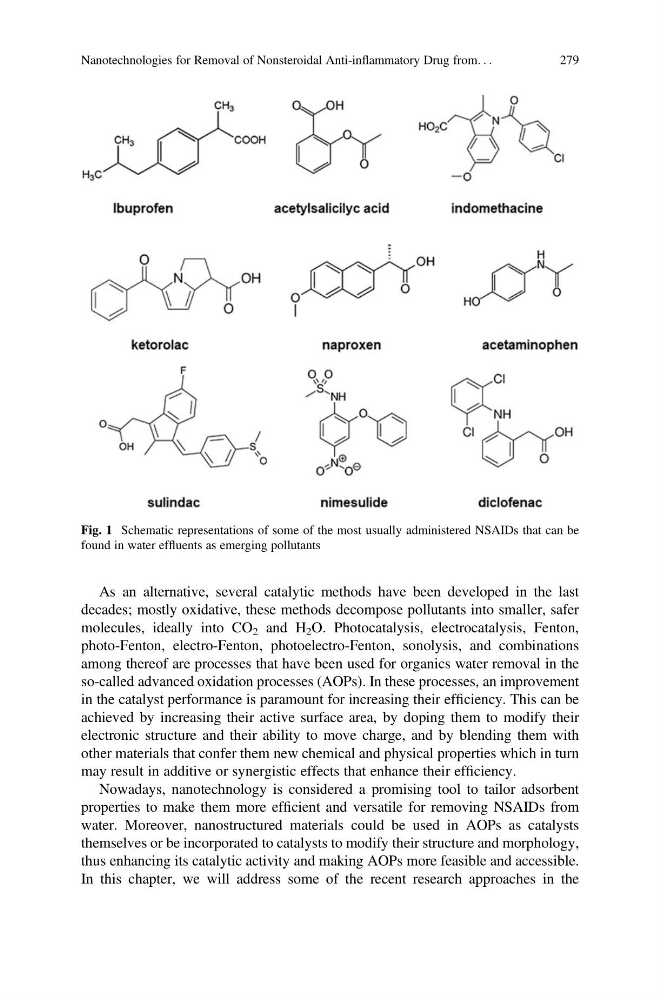
Fig. 1 Schematic representations of some of the most usually administered NSAIDs that can be
found in water effluents as emerging pollutants
Nanotechnologies for Removal of Nonsteroidal Anti-inflammatory Drug from. . .
279
decades; mostly oxidative, these methods decompose pollutants into smaller, safer
molecules, ideally into CO 2 and H 2 O. Photocatalysis, electrocatalysis, Fenton,
photo-Fenton, electro-Fenton, photoelectro-Fenton, sonolysis, and combinations
among thereof are processes that have been used for organics water removal in the
so-called advanced oxidation processes (AOPs). In these processes, an improvement
in the catalyst performance is paramount for increasing their efficiency. This can be
achieved by increasing their active surface area, by doping them to modify their
electronic structure and their ability to move charge, and by blending them with
other materials that confer them new chemical and physical properties which in turn
may result in additive or synergistic effects that enhance their efficiency.
Nowadays, nanotechnology is considered a promising tool to tailor adsorbent
properties to make them more efficient and versatile for removing NSAIDs from
water. Moreover, nanostructured materials could be used in AOPs as catalysts
themselves or be incorporated to catalysts to modify their structure and morphology,
thus enhancing its catalytic activity and making AOPs more feasible and accessible.
In this chapter, we will address some of the recent research approaches in the
Fig. 1 Schematic representations of some of the most usually administered NSAIDs that can be
found in water effluents as emerging pollutants
Nanotechnologies for Removal of Nonsteroidal Anti-inflammatory Drug from. . .
279