

[66]. Traces of acetylsalicylic acid have been reported in samples of municipal waste
waters at levels ranges from13 μg L
À1 [67] to 59.6 μg L
À1 with median levels of
3.6 μg L
À1 [68]. The adverse reactions of ASA include ulceration, hematemesis,
melena [69] and development of ASA resistance in organisms [70]. In addition to the
above data, the impact of ASA on fish stress performance was also reported by Van
Anholt et al. [34] in Mozambique tilapia, Gravel and Vijayan [71] in rainbow trout
and Praskova et al. [72] in zebrafish.
In the current study, the chronic effects of the nonsteroidal anti-inflammatory
drug acetylsalicylic acid to the fish C. carpio were evaluated under laboratory
conditions. During the investigation period (21 days), haematological, biochemical,
enzymological and oxidative stress parameters of fish were altered upon exposure to
ASA. The two concentrations (100 mg L
À1 and 200 mg L
À1
) of acetylsalicylic acid
(ASA) are taken as the Treatment I and II based on the tested concentrations of ASA
in Danio rerio reported by Praskova et al. [72].
A study of blood biochemistry plays a crucial role in monitoring fish health status,
pollution load, stress and disease [73]. In clinical diagnosis laboratories,
haematological variables such as Hb, Hct, RBC and WBC counts are extensively
used in the prediction of health status [74]. The exposure of C. carpio to ASA caused
a significant decline in RBC, haemoglobin and haematocrit values. This might have
resulted from the inhibition of erythropoiesis process by the drug ASA leading to the
anaemic condition of the fish. Similarly, Hemalatha et al. [75] reported that significantly lower values of RBC count and the Hb and Ht levels in Labeo rohita exposed
to an antimicrobial agent, triclosan. Elevated WBC count indicates the production
and circulation of antibodies in the bloodstream which might be due to the stress
induced by the drug to the fish [76, 77].
Inflated MCV, MCH and MCHC levels observed in Cyprinus carpio exposed to
ASA might have resulted from the macrocytic anaemia [78, 79]. Increased red cell
a
a
b
c
c
a
b
b
c
0
5
10
15
20
25
30
35
40
45
50
1
2
4
1
7
(IU/L)
e
s
a
r
e
f
s
n
a
r
t
o
n
i
m
a
e
t
a
t
r
a
p
s
A
Control
Treatment I
Treatment II
Exposure period in days
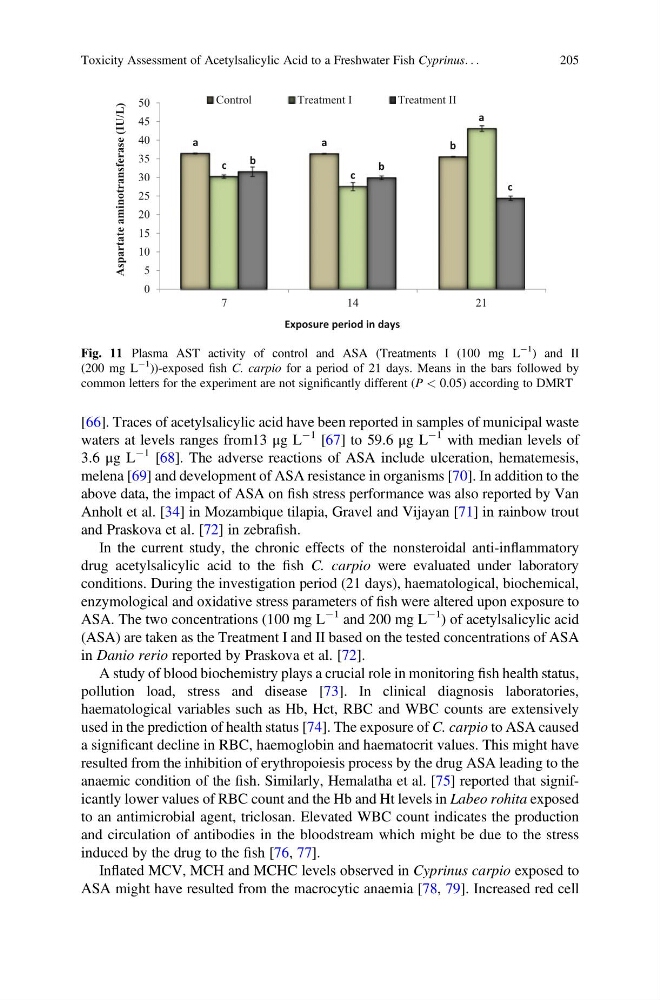
Fig. 11 Plasma AST activity of control and ASA (Treatments I (100 mg L
À1 ) and II
(200 mg L
À1
))-exposed fish C. carpio for a period of 21 days. Means in the bars followed by
common letters for the experiment are not significantly different (P < 0.05) according to DMRT
Toxicity Assessment of Acetylsalicylic Acid to a Freshwater Fish Cyprinus. . .
205
waters at levels ranges from13 μg L
À1 [67] to 59.6 μg L
À1 with median levels of
3.6 μg L
À1 [68]. The adverse reactions of ASA include ulceration, hematemesis,
melena [69] and development of ASA resistance in organisms [70]. In addition to the
above data, the impact of ASA on fish stress performance was also reported by Van
Anholt et al. [34] in Mozambique tilapia, Gravel and Vijayan [71] in rainbow trout
and Praskova et al. [72] in zebrafish.
In the current study, the chronic effects of the nonsteroidal anti-inflammatory
drug acetylsalicylic acid to the fish C. carpio were evaluated under laboratory
conditions. During the investigation period (21 days), haematological, biochemical,
enzymological and oxidative stress parameters of fish were altered upon exposure to
ASA. The two concentrations (100 mg L
À1 and 200 mg L
À1
) of acetylsalicylic acid
(ASA) are taken as the Treatment I and II based on the tested concentrations of ASA
in Danio rerio reported by Praskova et al. [72].
A study of blood biochemistry plays a crucial role in monitoring fish health status,
pollution load, stress and disease [73]. In clinical diagnosis laboratories,
haematological variables such as Hb, Hct, RBC and WBC counts are extensively
used in the prediction of health status [74]. The exposure of C. carpio to ASA caused
a significant decline in RBC, haemoglobin and haematocrit values. This might have
resulted from the inhibition of erythropoiesis process by the drug ASA leading to the
anaemic condition of the fish. Similarly, Hemalatha et al. [75] reported that significantly lower values of RBC count and the Hb and Ht levels in Labeo rohita exposed
to an antimicrobial agent, triclosan. Elevated WBC count indicates the production
and circulation of antibodies in the bloodstream which might be due to the stress
induced by the drug to the fish [76, 77].
Inflated MCV, MCH and MCHC levels observed in Cyprinus carpio exposed to
ASA might have resulted from the macrocytic anaemia [78, 79]. Increased red cell
a
a
b
c
c
a
b
b
c
0
5
10
15
20
25
30
35
40
45
50
1
2
4
1
7
(IU/L)
e
s
a
r
e
f
s
n
a
r
t
o
n
i
m
a
e
t
a
t
r
a
p
s
A
Control
Treatment I
Treatment II
Exposure period in days
Fig. 11 Plasma AST activity of control and ASA (Treatments I (100 mg L
À1 ) and II
(200 mg L
À1
))-exposed fish C. carpio for a period of 21 days. Means in the bars followed by
common letters for the experiment are not significantly different (P < 0.05) according to DMRT
Toxicity Assessment of Acetylsalicylic Acid to a Freshwater Fish Cyprinus. . .
205