

96 h to three PCM concentrations (0.154, 0.75, and 1.51 μg/L), and cytogenotoxicity
was assessed in mussel hemocytes through the application of a suite of eight
different biomarkers, namely, the lysosomal membrane stability (neutral red retention assay), the single cell gel electrophoresis (SCGE) assay, the micronucleus test
(MN test), and assessments of the apoptotic frequency (DNA diffusion assay). The
alteration of mussel oxidative status was assessed by measuring the activity of
superoxide dismutase (SOD), catalase (CAT), glutathione peroxidase (GPx), and
the detoxifying enzyme glutathione S-transferase (GST). No mortality of zebra
mussel over the test or changes in hemocyte viability were induced by PCM
exposure. Although PCM did not induce primary genetic damage in zebra mussel
hemocytes at all the tested concentration, a significant increase of fixed genetic
damage, in terms of both micronuclei and apoptotic frequency, was noted at the end
of the exposure to the highest tested concentrations. Moreover, a significant destabilization of lysosomal membranes and significant modulation of CAT, GPx, and
GST activity was induced by the exposure to high PCM concentrations. All these
data suggested that the exposure to environmental concentrations of PCM might
modulate the oxidative status of freshwater invertebrates, leading to oxidative stress
situation and genetic damage.
2.2 Effects Induced by Diclofenac Exposure
Acute and chronic toxicity of diclofenac (DCF) towards non-target, freshwater
invertebrates has been investigated on rotifers (Plationus patulus), crustaceans
(Daphnia magna and Moina macrocopa), diptera (Chironomus riparius), bivalves
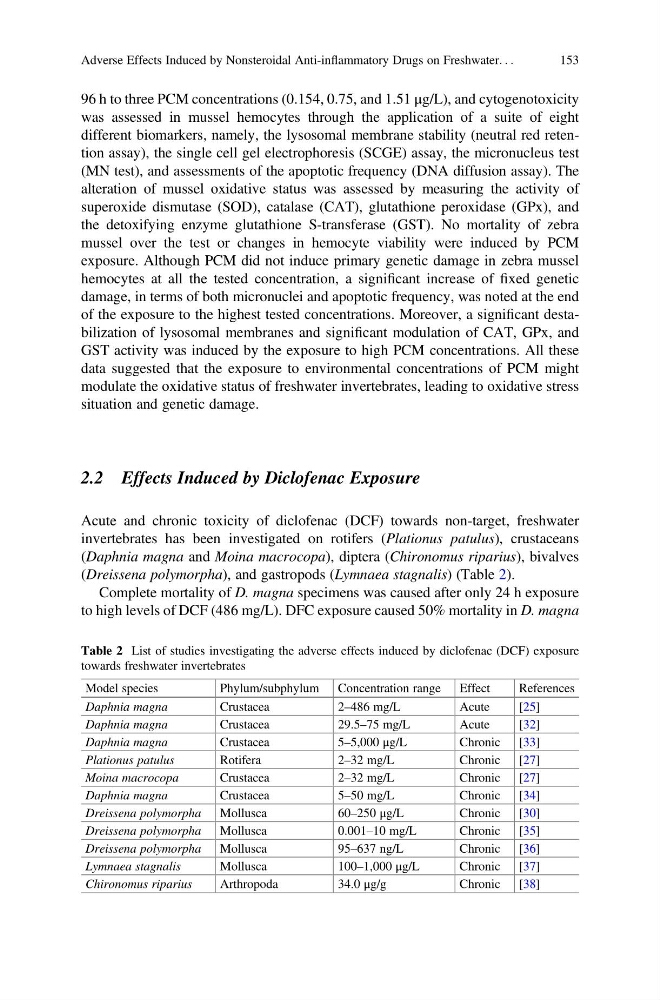
(Dreissena polymorpha), and gastropods (Lymnaea stagnalis) (Table 2).
Complete mortality of D. magna specimens was caused after only 24 h exposure
to high levels of DCF (486 mg/L). DFC exposure caused 50% mortality in D. magna
Table 2 List of studies investigating the adverse effects induced by diclofenac (DCF) exposure
towards freshwater invertebrates
Model species
Phylum/subphylum Concentration range Effect
References
Daphnia magna
Crustacea
2–486 mg/L
Acute
[25]
Daphnia magna
Crustacea
29.5–75 mg/L
Acute
[32]
Daphnia magna
Crustacea
5–5,000 μg/L
Chronic [33]
Plationus patulus
Rotifera
2–32 mg/L
Chronic [27]
Moina macrocopa
Crustacea
2–32 mg/L
Chronic [27]
Daphnia magna
Crustacea
5–50 mg/L
Chronic [34]
Dreissena polymorpha Mollusca
60–250 μg/L
Chronic [30]
Dreissena polymorpha Mollusca
0.001–10 mg/L
Chronic [35]
Dreissena polymorpha Mollusca
95–637 ng/L
Chronic [36]
Lymnaea stagnalis
Mollusca
100–1,000 μg/L
Chronic [37]
Chironomus riparius
Arthropoda
34.0 μg/g
Chronic [38]
Adverse Effects Induced by Nonsteroidal Anti-inflammatory Drugs on Freshwater. . .
153
was assessed in mussel hemocytes through the application of a suite of eight
different biomarkers, namely, the lysosomal membrane stability (neutral red retention assay), the single cell gel electrophoresis (SCGE) assay, the micronucleus test
(MN test), and assessments of the apoptotic frequency (DNA diffusion assay). The
alteration of mussel oxidative status was assessed by measuring the activity of
superoxide dismutase (SOD), catalase (CAT), glutathione peroxidase (GPx), and
the detoxifying enzyme glutathione S-transferase (GST). No mortality of zebra
mussel over the test or changes in hemocyte viability were induced by PCM
exposure. Although PCM did not induce primary genetic damage in zebra mussel
hemocytes at all the tested concentration, a significant increase of fixed genetic
damage, in terms of both micronuclei and apoptotic frequency, was noted at the end
of the exposure to the highest tested concentrations. Moreover, a significant destabilization of lysosomal membranes and significant modulation of CAT, GPx, and
GST activity was induced by the exposure to high PCM concentrations. All these
data suggested that the exposure to environmental concentrations of PCM might
modulate the oxidative status of freshwater invertebrates, leading to oxidative stress
situation and genetic damage.
2.2 Effects Induced by Diclofenac Exposure
Acute and chronic toxicity of diclofenac (DCF) towards non-target, freshwater
invertebrates has been investigated on rotifers (Plationus patulus), crustaceans
(Daphnia magna and Moina macrocopa), diptera (Chironomus riparius), bivalves
(Dreissena polymorpha), and gastropods (Lymnaea stagnalis) (Table 2).
Complete mortality of D. magna specimens was caused after only 24 h exposure
to high levels of DCF (486 mg/L). DFC exposure caused 50% mortality in D. magna
Table 2 List of studies investigating the adverse effects induced by diclofenac (DCF) exposure
towards freshwater invertebrates
Model species
Phylum/subphylum Concentration range Effect
References
Daphnia magna
Crustacea
2–486 mg/L
Acute
[25]
Daphnia magna
Crustacea
29.5–75 mg/L
Acute
[32]
Daphnia magna
Crustacea
5–5,000 μg/L
Chronic [33]
Plationus patulus
Rotifera
2–32 mg/L
Chronic [27]
Moina macrocopa
Crustacea
2–32 mg/L
Chronic [27]
Daphnia magna
Crustacea
5–50 mg/L
Chronic [34]
Dreissena polymorpha Mollusca
60–250 μg/L
Chronic [30]
Dreissena polymorpha Mollusca
0.001–10 mg/L
Chronic [35]
Dreissena polymorpha Mollusca
95–637 ng/L
Chronic [36]
Lymnaea stagnalis
Mollusca
100–1,000 μg/L
Chronic [37]
Chironomus riparius
Arthropoda
34.0 μg/g
Chronic [38]
Adverse Effects Induced by Nonsteroidal Anti-inflammatory Drugs on Freshwater. . .
153