

6.2 Fans
199
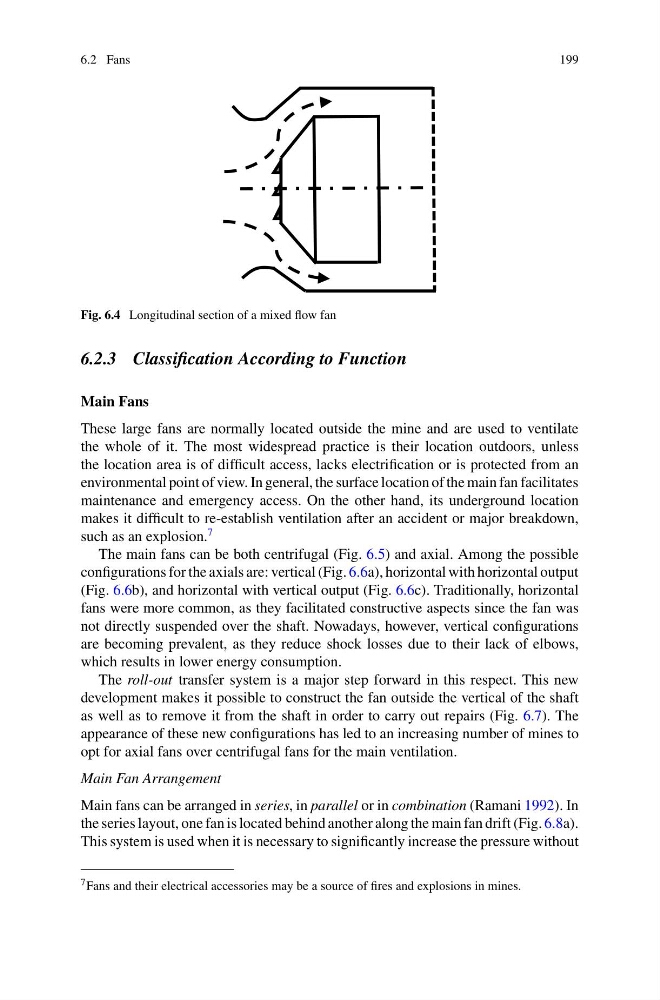
Fig. 6.4 Longitudinal section of a mixed flow fan
6.2.3 Classification According to Function
Main Fans
These large fans are normally located outside the mine and are used to ventilate
the whole of it. The most widespread practice is their location outdoors, unless
the location area is of difficult access, lacks electrification or is protected from an
environmental point of view. In general, the surface location of the main fan facilitates
maintenance and emergency access. On the other hand, its underground location
makes it difficult to re-establish ventilation after an accident or major breakdown,
such as an explosion.
7
The main fans can be both centrifugal (Fig. 6.5) and axial. Among the possible
configurations for the axials are: vertical (Fig. 6.6a), horizontal with horizontal output
(Fig. 6.6b), and horizontal with vertical output (Fig. 6.6c). Traditionally, horizontal
fans were more common, as they facilitated constructive aspects since the fan was
not directly suspended over the shaft. Nowadays, however, vertical configurations
are becoming prevalent, as they reduce shock losses due to their lack of elbows,
which results in lower energy consumption.
The roll-out transfer system is a major step forward in this respect. This new
development makes it possible to construct the fan outside the vertical of the shaft
as well as to remove it from the shaft in order to carry out repairs (Fig. 6.7). The
appearance of these new configurations has led to an increasing number of mines to
opt for axial fans over centrifugal fans for the main ventilation.
Main Fan Arrangement
Main fans can be arranged in series, in parallel or in combination (Ramani 1992). In
the series layout, one fan is located behind another along the main fan drift (Fig. 6.8a).
This system is used when it is necessary to significantly increase the pressure without
7 Fans and their electrical accessories may be a source of fires and explosions in mines.
199
Fig. 6.4 Longitudinal section of a mixed flow fan
6.2.3 Classification According to Function
Main Fans
These large fans are normally located outside the mine and are used to ventilate
the whole of it. The most widespread practice is their location outdoors, unless
the location area is of difficult access, lacks electrification or is protected from an
environmental point of view. In general, the surface location of the main fan facilitates
maintenance and emergency access. On the other hand, its underground location
makes it difficult to re-establish ventilation after an accident or major breakdown,
such as an explosion.
7
The main fans can be both centrifugal (Fig. 6.5) and axial. Among the possible
configurations for the axials are: vertical (Fig. 6.6a), horizontal with horizontal output
(Fig. 6.6b), and horizontal with vertical output (Fig. 6.6c). Traditionally, horizontal
fans were more common, as they facilitated constructive aspects since the fan was
not directly suspended over the shaft. Nowadays, however, vertical configurations
are becoming prevalent, as they reduce shock losses due to their lack of elbows,
which results in lower energy consumption.
The roll-out transfer system is a major step forward in this respect. This new
development makes it possible to construct the fan outside the vertical of the shaft
as well as to remove it from the shaft in order to carry out repairs (Fig. 6.7). The
appearance of these new configurations has led to an increasing number of mines to
opt for axial fans over centrifugal fans for the main ventilation.
Main Fan Arrangement
Main fans can be arranged in series, in parallel or in combination (Ramani 1992). In
the series layout, one fan is located behind another along the main fan drift (Fig. 6.8a).
This system is used when it is necessary to significantly increase the pressure without
7 Fans and their electrical accessories may be a source of fires and explosions in mines.