

6.2 Fans
197
a)
b)
c)
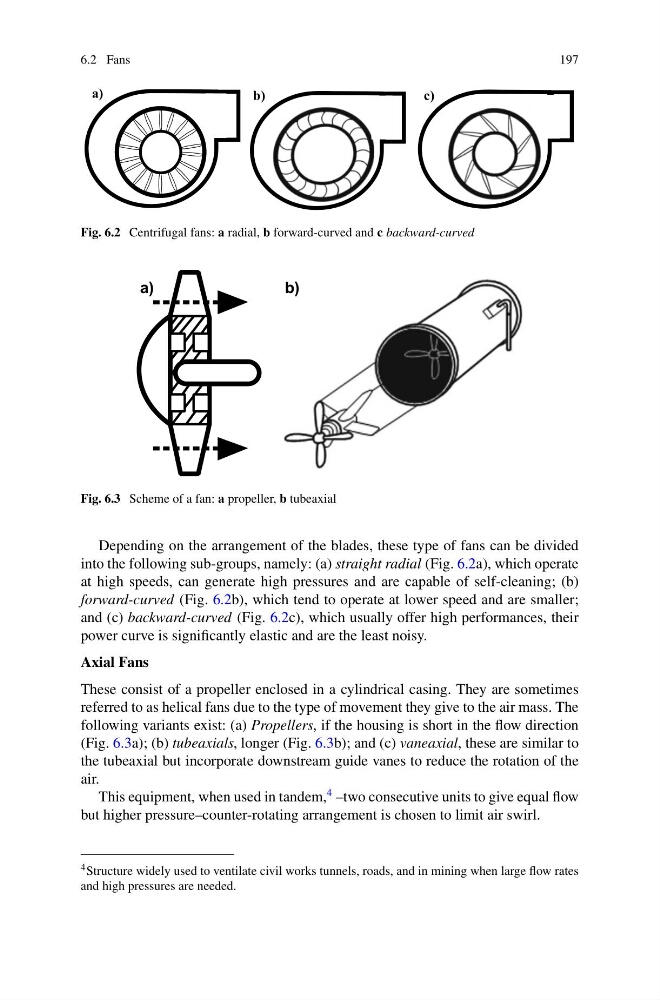
Fig. 6.2 Centrifugal fans: a radial, b forward-curved and c backward-curved
a)
b)
Fig. 6.3 Scheme of a fan: a propeller, b tubeaxial
Depending on the arrangement of the blades, these type of fans can be divided
into the following sub-groups, namely: (a) straight radial (Fig. 6.2a), which operate
at high speeds, can generate high pressures and are capable of self-cleaning; (b)
forward-curved (Fig. 6.2b), which tend to operate at lower speed and are smaller;
and (c) backward-curved (Fig. 6.2c), which usually offer high performances, their
power curve is significantly elastic and are the least noisy.
Axial Fans
These consist of a propeller enclosed in a cylindrical casing. They are sometimes
referred to as helical fans due to the type of movement they give to the air mass. The
following variants exist: (a) Propellers, if the housing is short in the flow direction
(Fig. 6.3a); (b) tubeaxials, longer (Fig. 6.3b); and (c) vaneaxial, these are similar to
the tubeaxial but incorporate downstream guide vanes to reduce the rotation of the
air.
This equipment, when used in tandem,
4 –two consecutive units to give equal flow
but higher pressure–counter-rotating arrangement is chosen to limit air swirl.
4 Structure widely used to ventilate civil works tunnels, roads, and in mining when large flow rates
and high pressures are needed.
197
a)
b)
c)
Fig. 6.2 Centrifugal fans: a radial, b forward-curved and c backward-curved
a)
b)
Fig. 6.3 Scheme of a fan: a propeller, b tubeaxial
Depending on the arrangement of the blades, these type of fans can be divided
into the following sub-groups, namely: (a) straight radial (Fig. 6.2a), which operate
at high speeds, can generate high pressures and are capable of self-cleaning; (b)
forward-curved (Fig. 6.2b), which tend to operate at lower speed and are smaller;
and (c) backward-curved (Fig. 6.2c), which usually offer high performances, their
power curve is significantly elastic and are the least noisy.
Axial Fans
These consist of a propeller enclosed in a cylindrical casing. They are sometimes
referred to as helical fans due to the type of movement they give to the air mass. The
following variants exist: (a) Propellers, if the housing is short in the flow direction
(Fig. 6.3a); (b) tubeaxials, longer (Fig. 6.3b); and (c) vaneaxial, these are similar to
the tubeaxial but incorporate downstream guide vanes to reduce the rotation of the
air.
This equipment, when used in tandem,
4 –two consecutive units to give equal flow
but higher pressure–counter-rotating arrangement is chosen to limit air swirl.
4 Structure widely used to ventilate civil works tunnels, roads, and in mining when large flow rates
and high pressures are needed.