

455
12.7 Exercises
rate for T 0 = 225 K (10 km height), M 0 = 0.85 (flight Mach number), pressure ratio of the compressor: p 02 /p 01 = 40 and combustion gas temperature at turbine inlet
T 03 = 1675 K. Properties of atmospheric air: C p = 1005 J/kg, R = 287 J/kgK. Combustion gas properties C p = 1150 J/kgK, R = 287 J/kgK. Assume
0.90
c
t
h
h
∞
∞
=
=
for
compressor and turbine and assume h ∞ = 0.97 for the nozzle. Ignore the pressure
drop in the combustion chamber (in practice about 4 %) and heat losses to the surroundings (in practice about 1 %). Ignore the mass flow increase within the turbine
and nozzle by adding fuel (in practice about 2 %). Ignore losses at the engine inlet.
Determine the energy rise within the generated thrust flow. The corresponding
power is the dynamic power. Compare this power with the thermal power, which
is the power released by the fuel (take T 0 as reference temperature for the heating
value). The ratio of dynamic power and thermal power is the thermal efficiency of
the aero-engine. Determine this efficiency. Compare with the results in Table 12.1
(results should be approximately the same).
Determine the propulsive power, which is the power useful for propulsion. Compare propulsive power to dynamic power. The ratio is the propulsive efficiency. Determine this efficiency and establish that it is very low for the aero-engine studied.
The reason is the big difference between the jet flow speed and the flight speed so
that the kinetic energy dissipated into the atmosphere is high. Determine the overall
efficiency. This is the ratio of propulsive power to thermal power.
12.7.2 Single-Flow Jet Engine with Post-Combustion
Consider the engine from the foregoing exercise with added post-combustion before the nozzle, raising the temperature to 1450 K. Determine the specific thrust
with post-combustion. Determine the thermal efficiency and the overall efficiency.
Compare with the results from Exercise 12.7.1. Establish that thrust increases significantly with a great overall efficiency drop. In military engines (bypass engines
with small bypass ratio) post-combustion is switched on at take-off. Due to the
strongly increased thrust, the aircraft may reach flight height at a much shorter
distance. Post-combustion is also switched on during combat to increase thrust and
thus manoeuvrability.
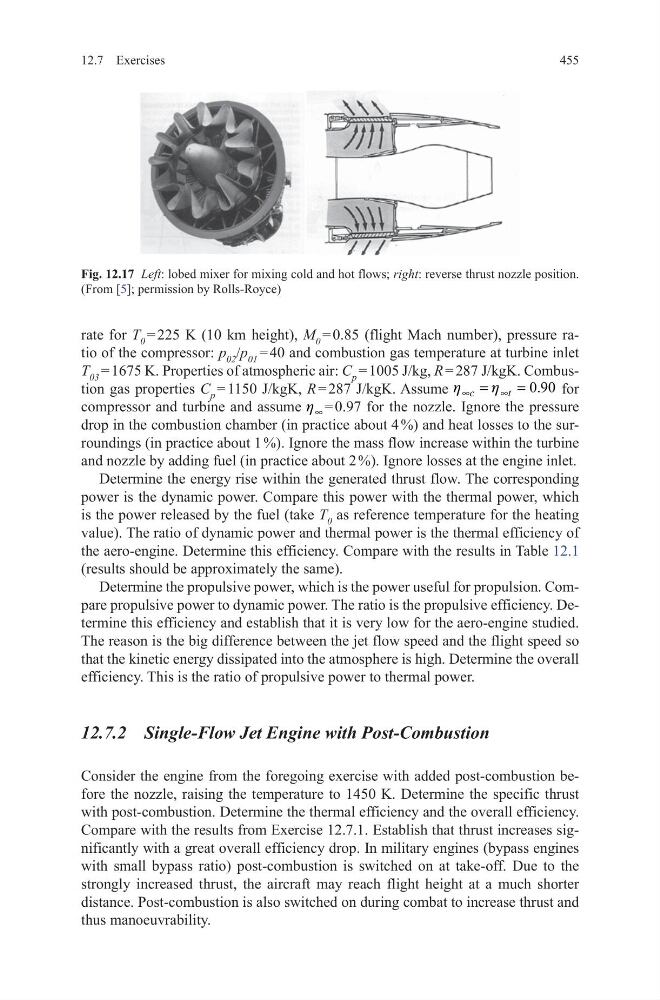
Fig. 12.17 Left: lobed mixer for mixing cold and hot flows; right: reverse thrust nozzle position.
(From [5]; permission by Rolls-Royce)
12.7 Exercises
rate for T 0 = 225 K (10 km height), M 0 = 0.85 (flight Mach number), pressure ratio of the compressor: p 02 /p 01 = 40 and combustion gas temperature at turbine inlet
T 03 = 1675 K. Properties of atmospheric air: C p = 1005 J/kg, R = 287 J/kgK. Combustion gas properties C p = 1150 J/kgK, R = 287 J/kgK. Assume
0.90
c
t
h
h
∞
∞
=
=
for
compressor and turbine and assume h ∞ = 0.97 for the nozzle. Ignore the pressure
drop in the combustion chamber (in practice about 4 %) and heat losses to the surroundings (in practice about 1 %). Ignore the mass flow increase within the turbine
and nozzle by adding fuel (in practice about 2 %). Ignore losses at the engine inlet.
Determine the energy rise within the generated thrust flow. The corresponding
power is the dynamic power. Compare this power with the thermal power, which
is the power released by the fuel (take T 0 as reference temperature for the heating
value). The ratio of dynamic power and thermal power is the thermal efficiency of
the aero-engine. Determine this efficiency. Compare with the results in Table 12.1
(results should be approximately the same).
Determine the propulsive power, which is the power useful for propulsion. Compare propulsive power to dynamic power. The ratio is the propulsive efficiency. Determine this efficiency and establish that it is very low for the aero-engine studied.
The reason is the big difference between the jet flow speed and the flight speed so
that the kinetic energy dissipated into the atmosphere is high. Determine the overall
efficiency. This is the ratio of propulsive power to thermal power.
12.7.2 Single-Flow Jet Engine with Post-Combustion
Consider the engine from the foregoing exercise with added post-combustion before the nozzle, raising the temperature to 1450 K. Determine the specific thrust
with post-combustion. Determine the thermal efficiency and the overall efficiency.
Compare with the results from Exercise 12.7.1. Establish that thrust increases significantly with a great overall efficiency drop. In military engines (bypass engines
with small bypass ratio) post-combustion is switched on at take-off. Due to the
strongly increased thrust, the aircraft may reach flight height at a much shorter
distance. Post-combustion is also switched on during combat to increase thrust and
thus manoeuvrability.
Fig. 12.17 Left: lobed mixer for mixing cold and hot flows; right: reverse thrust nozzle position.
(From [5]; permission by Rolls-Royce)