

353
10.2 Types of Wind Energy Conversion Systems
chord angle and blade speed. As wind velocity increases, the separation zone grows
towards the tip. Thus, there is a spontaneous power limitation with increasing wind
speed at a constant rotational speed. A blade may be designed appropriately, so that
the power is approximately limited to the rated power with wind speeds exceeding
the rated value. This is called stall control. With pitch control, the blade is turned
towards the axial direction at higher wind velocities, causing a decrease of the angle
of attack over the whole span. Pitch control requires rotor blade mounting to the
hub by means of a bearing. A lever mechanism is incorporated into the turning
hub or the individual blades are provided with pitch motors. The advantage with
pitch control is that the rotor may be made powerless by positioning the blades
aligned with the wind direction. This is called feathering the blades. Feathering is
applied in stormy weather. The wind turbine is switched off from a certain wind
speed (typically 25 m/s, see Sect. 10.4) by feathering the rotor. In feathered pitch
position at standstill, rotor blade stresses are minimal. With stall control, the rotor
is stopped in stormy weather by means of a mechanical brake. Mechanical stress
on the rotor blades is then much higher than on a feathered rotor, but no strong
problem arises with wind turbines up to the 1 MW order, in a moderate climate.
Larger wind turbines are provided with pitch control or with active stall control.
Stall control as described up to now is called passive stall control. There is also an
active stall control system. Power limitation at higher wind speeds is achieved by
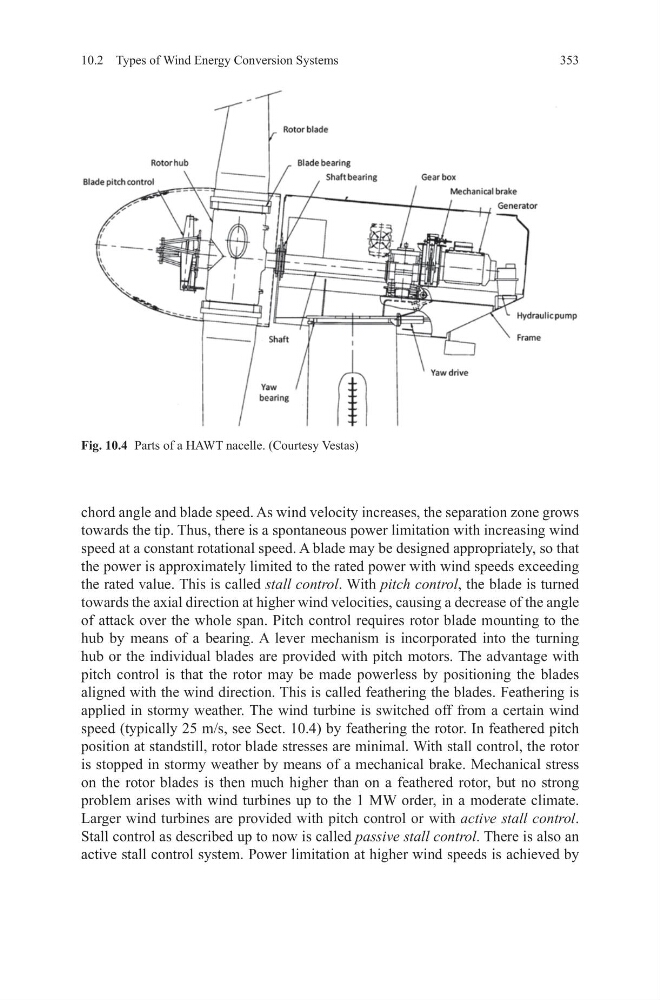
Fig. 10.4 Parts of a HAWT nacelle. (Courtesy Vestas)
10.2 Types of Wind Energy Conversion Systems
chord angle and blade speed. As wind velocity increases, the separation zone grows
towards the tip. Thus, there is a spontaneous power limitation with increasing wind
speed at a constant rotational speed. A blade may be designed appropriately, so that
the power is approximately limited to the rated power with wind speeds exceeding
the rated value. This is called stall control. With pitch control, the blade is turned
towards the axial direction at higher wind velocities, causing a decrease of the angle
of attack over the whole span. Pitch control requires rotor blade mounting to the
hub by means of a bearing. A lever mechanism is incorporated into the turning
hub or the individual blades are provided with pitch motors. The advantage with
pitch control is that the rotor may be made powerless by positioning the blades
aligned with the wind direction. This is called feathering the blades. Feathering is
applied in stormy weather. The wind turbine is switched off from a certain wind
speed (typically 25 m/s, see Sect. 10.4) by feathering the rotor. In feathered pitch
position at standstill, rotor blade stresses are minimal. With stall control, the rotor
is stopped in stormy weather by means of a mechanical brake. Mechanical stress
on the rotor blades is then much higher than on a feathered rotor, but no strong
problem arises with wind turbines up to the 1 MW order, in a moderate climate.
Larger wind turbines are provided with pitch control or with active stall control.
Stall control as described up to now is called passive stall control. There is also an
active stall control system. Power limitation at higher wind speeds is achieved by
Fig. 10.4 Parts of a HAWT nacelle. (Courtesy Vestas)