

7.4 Imperfect Similitude
271
efficiency diminishes somewhat. Due to the combined effects of slip increase and
incidence, the rotor must be trimmed down less than predicted by the simple similitude reasoning. A reduction factor has to be applied to the theoretical diameter
decrease. This factor depends somewhat on the specific speed. An average value is
about 0.75 [9].
7.4.5 Reduced Scale Models
When developing large dimension machines (hydraulic turbines, large pumps), tests
are sometimes performed on a reduced scale model. When using the same fluid, the
Reynolds number diminishes. In addition, perfect geometric similitude is impossible due to no constant relative roughness and no constant relative clearance values.
As most machines are manufactured with the same techniques (e.g. casting) or the
same machine tools, wall roughness typically is of the same order of magnitude. So,
absolute roughness is approximately constant and relative roughness is not. Clearances are typically kept as small as possible, requiring a certain minimum value to
be workable. Further, there is never an exact geometric similitude as some parts
(e.g. blades) have a minimum thickness imposed by the production technique. In
order to take into account the Reynolds number decrease and the increase of relative
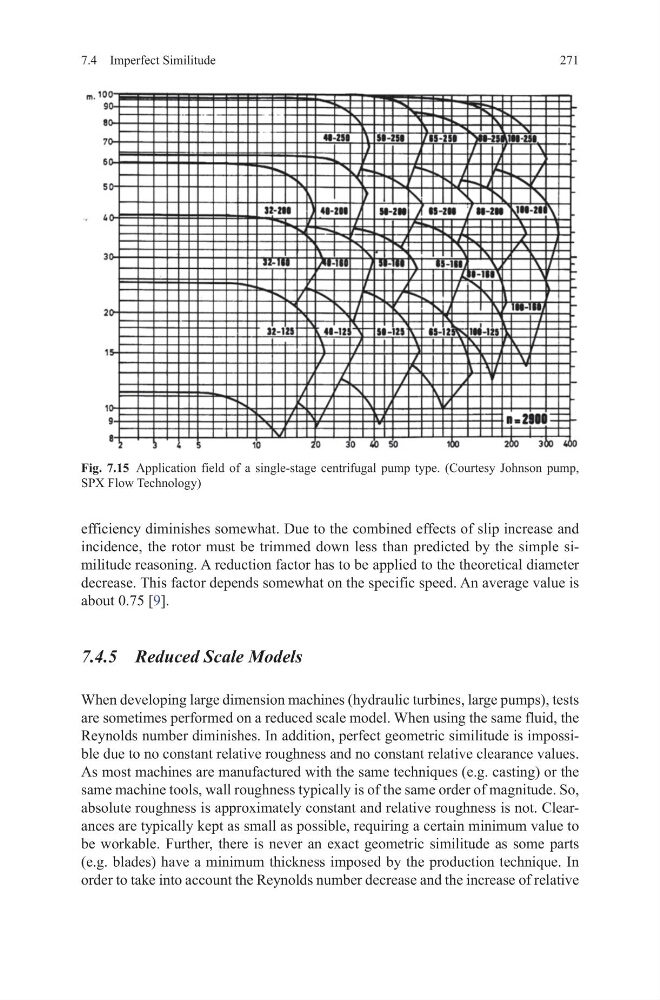
Fig. 7.15 Application field of a single-stage centrifugal pump type. (Courtesy Johnson pump,
SPX Flow Technology)
271
efficiency diminishes somewhat. Due to the combined effects of slip increase and
incidence, the rotor must be trimmed down less than predicted by the simple similitude reasoning. A reduction factor has to be applied to the theoretical diameter
decrease. This factor depends somewhat on the specific speed. An average value is
about 0.75 [9].
7.4.5 Reduced Scale Models
When developing large dimension machines (hydraulic turbines, large pumps), tests
are sometimes performed on a reduced scale model. When using the same fluid, the
Reynolds number diminishes. In addition, perfect geometric similitude is impossible due to no constant relative roughness and no constant relative clearance values.
As most machines are manufactured with the same techniques (e.g. casting) or the
same machine tools, wall roughness typically is of the same order of magnitude. So,
absolute roughness is approximately constant and relative roughness is not. Clearances are typically kept as small as possible, requiring a certain minimum value to
be workable. Further, there is never an exact geometric similitude as some parts
(e.g. blades) have a minimum thickness imposed by the production technique. In
order to take into account the Reynolds number decrease and the increase of relative
Fig. 7.15 Application field of a single-stage centrifugal pump type. (Courtesy Johnson pump,
SPX Flow Technology)