

120
3 Fans
designer wants to provide for separation at the suction side and flow reversal at the
pressure side at reduced flow rate. Anyhow, these phenomena cannot be avoided at
very low flow rate (flow pattern of Fig. 3.9, left).
3.4 Internal Losses with Radial Fans
This section analyses internal losses with radial fans, but the discussion largely applies to radial pumps and radial compressors as well.
3.4.1 Turning Loss at Rotor Entrance
The fluid axially enters the eye of the rotor and turns 90º into the radial direction.
The turning generates a loss analogous to loss in a bend. In energy measure, this
loss is about 10 % of the kinetic energy of the flow in the narrowest section of the
suction eye.
3.4.2 Incidence Loss at Rotor Entrance
Figure 3.15 is a sketch of the inflow of a cascade (radial, axial or mixed flow), with
infinitely thin blades. The blades are drawn straight, but this is not crucial for the result. The flow just upstream of the cascade is not aligned with the blades, but makes
an incidence angle δ with them. The flow deflects from the inlet velocity w 1 to the
velocity w 2 inside the blade passage with a deflection angle δ = β 1 − β 2 .
Continuity of the mass flow results in
The meridional component of the velocity is constant. So, the deflection velocity
w def is in the tangential direction. The deflection causes energy dissipation, which
can be calculated from the momentum conservation equation, projected onto the β 2
direction:
w
w
1
1
2
2
cos
c os .
β
β
=
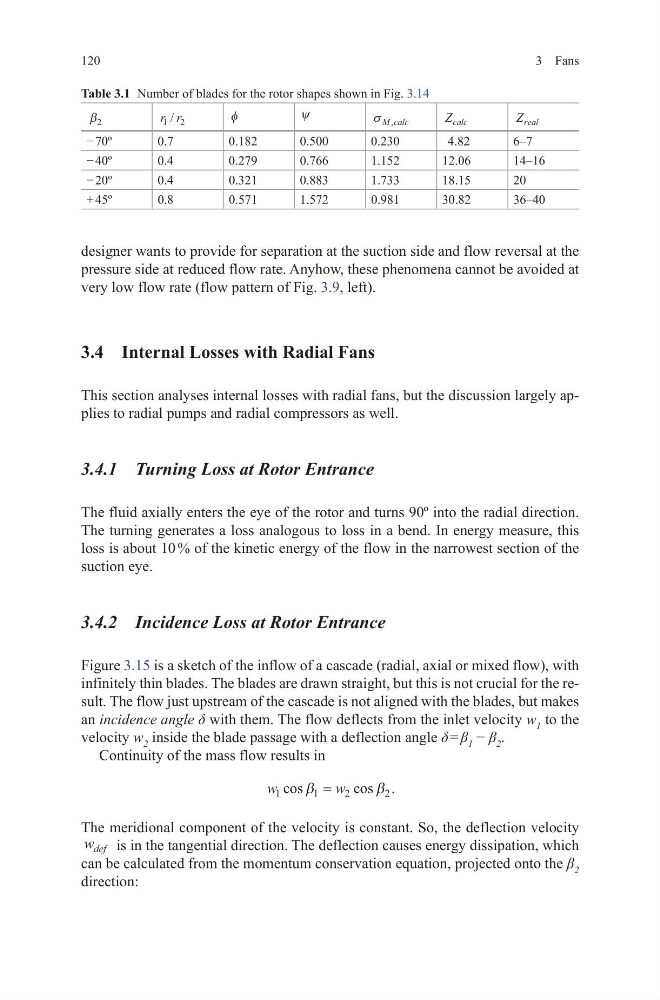
Table 3.1 Number of blades for the rotor shapes shown in Fig. 3.14
β 2
r r
1 2
/
φ
ψ
σ M calc
,
Z calc
Z real
− 70º
0.7
0.182
0.500
0.230
4.82
6–7
− 40º
0.4
0.279
0.766
1.152
12.06
14–16
− 20º
0.4
0.321
0.883
1.733
18.15
20
+ 45º
0.8
0.571
1.572
0.981
30.82
36–40
3 Fans
designer wants to provide for separation at the suction side and flow reversal at the
pressure side at reduced flow rate. Anyhow, these phenomena cannot be avoided at
very low flow rate (flow pattern of Fig. 3.9, left).
3.4 Internal Losses with Radial Fans
This section analyses internal losses with radial fans, but the discussion largely applies to radial pumps and radial compressors as well.
3.4.1 Turning Loss at Rotor Entrance
The fluid axially enters the eye of the rotor and turns 90º into the radial direction.
The turning generates a loss analogous to loss in a bend. In energy measure, this
loss is about 10 % of the kinetic energy of the flow in the narrowest section of the
suction eye.
3.4.2 Incidence Loss at Rotor Entrance
Figure 3.15 is a sketch of the inflow of a cascade (radial, axial or mixed flow), with
infinitely thin blades. The blades are drawn straight, but this is not crucial for the result. The flow just upstream of the cascade is not aligned with the blades, but makes
an incidence angle δ with them. The flow deflects from the inlet velocity w 1 to the
velocity w 2 inside the blade passage with a deflection angle δ = β 1 − β 2 .
Continuity of the mass flow results in
The meridional component of the velocity is constant. So, the deflection velocity
w def is in the tangential direction. The deflection causes energy dissipation, which
can be calculated from the momentum conservation equation, projected onto the β 2
direction:
w
w
1
1
2
2
cos
c os .
β
β
=
Table 3.1 Number of blades for the rotor shapes shown in Fig. 3.14
β 2
r r
1 2
/
φ
ψ
σ M calc
,
Z calc
Z real
− 70º
0.7
0.182
0.500
0.230
4.82
6–7
− 40º
0.4
0.279
0.766
1.152
12.06
14–16
− 20º
0.4
0.321
0.883
1.733
18.15
20
+ 45º
0.8
0.571
1.572
0.981
30.82
36–40