

(UV/H 2 O 2 ) treatment (Dwyer and Lant 2008) have been used for elimination of
melanoidins and decolorization of SW and/or PMDE, but these treatment techniques
are not practicable at big scale due to the elevated cost, blockage of filtration column,
and generation of huge amount of toxic sludge and other secondary pollutants (Liang
et al. 2009b). Therefore, adequate treatment of SW and/or PMDE in an eco-friendly
manner is necessary prior to its disposal into the environment (Chowdhary et al.
2017). Interest in the microbial degradation and detoxification of distillery waste has
intensified in recent years as mankind strives to find sustainable ways to cleanup and
restore polluted sites. Due to the relatively low cost and the variations of work
progress, the biological methods have been most widely used all over the world.
Bioremediation is an eco-friendly technique that employs many different microbes
acting in parallel or sequentially to degrade and detoxify toxic contaminants. It is
defined as the acceleration of the natural metabolic process whereby microorganisms
(i.e., bacteria, actinomycetes, and fungi), green plant (termed phytoremediation), or
their enzymes degrade or transform toxic contaminants to CO 2 (carbon dioxide),
H 2 O (water), microbial biomass, inorganic salts, and other by-products (metabolites)
that may be less toxic than the parent compounds (USEPA 2006, 2012a). Thus, the
use of microbes for degradation and detoxification of pollutants is now being
increasingly applied as the technology of choice for cleanup or restores contaminated sites to environmentally sustainable (Megharaj et al. 2011).
The aim of this book chapter is to provide a concise discussion of the processes
associated with the use of biological agents to remediate hazardous complex distillery waste. In this chapter, we describe phytoextractions strategy of the plant with
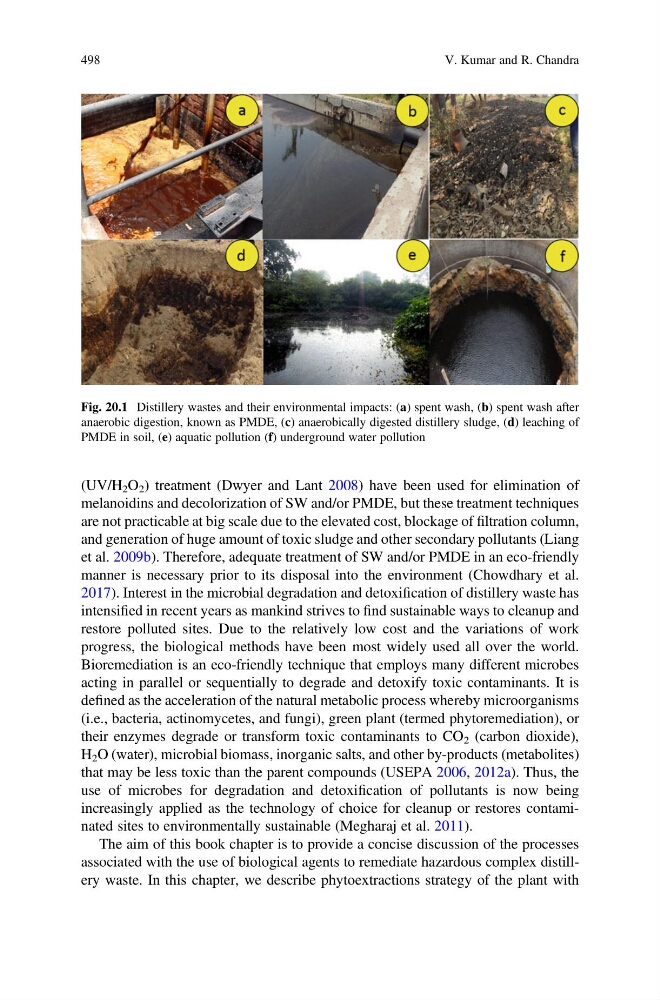
Fig. 20.1 Distillery wastes and their environmental impacts: (a) spent wash, (b) spent wash after
anaerobic digestion, known as PMDE, (c) anaerobically digested distillery sludge, (d) leaching of
PMDE in soil, (e) aquatic pollution (f) underground water pollution
498
V. Kumar and R. Chandra
melanoidins and decolorization of SW and/or PMDE, but these treatment techniques
are not practicable at big scale due to the elevated cost, blockage of filtration column,
and generation of huge amount of toxic sludge and other secondary pollutants (Liang
et al. 2009b). Therefore, adequate treatment of SW and/or PMDE in an eco-friendly
manner is necessary prior to its disposal into the environment (Chowdhary et al.
2017). Interest in the microbial degradation and detoxification of distillery waste has
intensified in recent years as mankind strives to find sustainable ways to cleanup and
restore polluted sites. Due to the relatively low cost and the variations of work
progress, the biological methods have been most widely used all over the world.
Bioremediation is an eco-friendly technique that employs many different microbes
acting in parallel or sequentially to degrade and detoxify toxic contaminants. It is
defined as the acceleration of the natural metabolic process whereby microorganisms
(i.e., bacteria, actinomycetes, and fungi), green plant (termed phytoremediation), or
their enzymes degrade or transform toxic contaminants to CO 2 (carbon dioxide),
H 2 O (water), microbial biomass, inorganic salts, and other by-products (metabolites)
that may be less toxic than the parent compounds (USEPA 2006, 2012a). Thus, the
use of microbes for degradation and detoxification of pollutants is now being
increasingly applied as the technology of choice for cleanup or restores contaminated sites to environmentally sustainable (Megharaj et al. 2011).
The aim of this book chapter is to provide a concise discussion of the processes
associated with the use of biological agents to remediate hazardous complex distillery waste. In this chapter, we describe phytoextractions strategy of the plant with
Fig. 20.1 Distillery wastes and their environmental impacts: (a) spent wash, (b) spent wash after
anaerobic digestion, known as PMDE, (c) anaerobically digested distillery sludge, (d) leaching of
PMDE in soil, (e) aquatic pollution (f) underground water pollution
498
V. Kumar and R. Chandra