

5.2.1 Role of Genetic Engineering in Developing Plants
for Phytoremediation
Transfer of selective genes into candidate plants results in the development of
transgenic plant with enhanced ability for metal uptake, transformation, and accumulation from the polluted environments. Genes from foreign source have been
isolated and transferred into plants like Nicotiana tobacuum, Brassica juncea,
Arabidopsis thaliana, Lycopersicon esculentum, etc. to enhance the
phytoremediation potential (Abhilash et al. 2009). The pathway through which
plants detoxify heavy metals is sequestration with heavy-metal-binding peptides
called phytochelatins or their precursor, glutathione (GSH). Biosynthesis of
phytochelatins (PCs) in plants has been modified to increase the heavy metal
accumulation.
Brassica juncea (Indian mustard) transgenic plants were developed with
overexpressing gshII (gene encoding glutathione synthetase) which accumulated
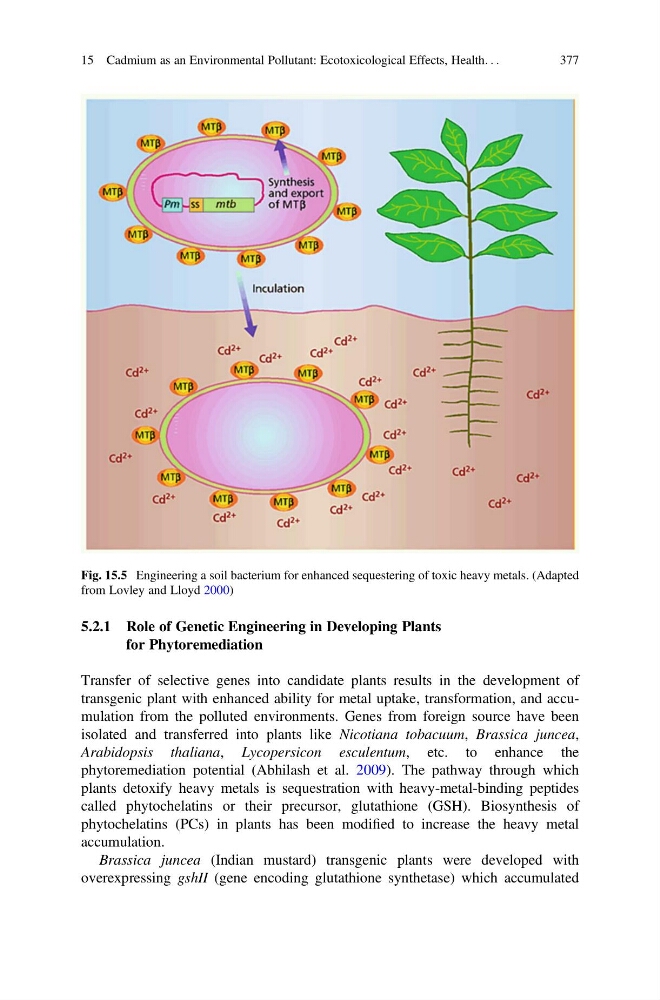
Fig. 15.5 Engineering a soil bacterium for enhanced sequestering of toxic heavy metals. (Adapted
from Lovley and Lloyd 2000)
15 Cadmium as an Environmental Pollutant: Ecotoxicological Effects, Health. . .
377
for Phytoremediation
Transfer of selective genes into candidate plants results in the development of
transgenic plant with enhanced ability for metal uptake, transformation, and accumulation from the polluted environments. Genes from foreign source have been
isolated and transferred into plants like Nicotiana tobacuum, Brassica juncea,
Arabidopsis thaliana, Lycopersicon esculentum, etc. to enhance the
phytoremediation potential (Abhilash et al. 2009). The pathway through which
plants detoxify heavy metals is sequestration with heavy-metal-binding peptides
called phytochelatins or their precursor, glutathione (GSH). Biosynthesis of
phytochelatins (PCs) in plants has been modified to increase the heavy metal
accumulation.
Brassica juncea (Indian mustard) transgenic plants were developed with
overexpressing gshII (gene encoding glutathione synthetase) which accumulated
Fig. 15.5 Engineering a soil bacterium for enhanced sequestering of toxic heavy metals. (Adapted
from Lovley and Lloyd 2000)
15 Cadmium as an Environmental Pollutant: Ecotoxicological Effects, Health. . .
377