

inoculum size of 8% at pH 6 after incubation time of 144 h (Talukdar and Kumar
2015).
All filamentous fungi belonging to Zygomycetes group showed a great ability for
heavy metal removal. These fungi contain large amounts of polymers of chitosan,
N-acetyl chitin, and deacetylated glucosamine on their cell wall. These polymers
have large amounts of potential binding sites in the form of hydroxyl, amine, and
carboxyl groups. The amine group containing nitrogen atom and the hydroxyl group
containing oxygen atom have ability to bind a proton or a metal ion, respectively,
and helps in heavy metal removal (Das et al. 2007).
5.1.3 Bioremediation of Cadmium Using Algae
Algae play an important role in bioremediation and act as important bioremediation
agents. A number of microalgae, viz., Chlorella sp., Ankistrodesmus sp., and
Enmosphaera sp., have been used for heavy metal removal from the aqueous
medium (Rai et al. 1981). Aquatic plants mainly micro and macro algae have the
ability to absorb metals and take up toxic elements from the environment or
transform them into less harmful ones (Mitra et al. 2012). Heavy metals are removed
by microalgae from polluted water by two mechanisms: first is metabolism dependent uptake into the cells at low concentration, and second is by non-active adsorption process known as biosorption (Matagi et al. 1998). Microalgae such as
Chlorella, Scenedesmus, and Arthrospira also showed great potential to remove
and incorporate heavy metals like lead (Aksu and Kustal 1991), cadmium, nickel, or
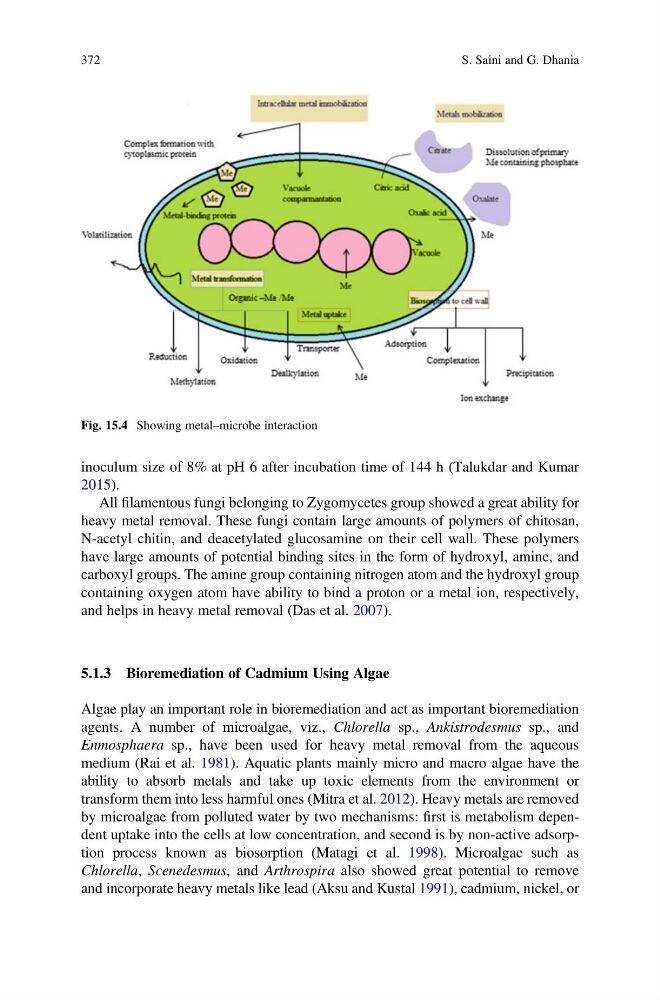
Fig. 15.4 Showing metal–microbe interaction
372
S. Saini and G. Dhania
2015).
All filamentous fungi belonging to Zygomycetes group showed a great ability for
heavy metal removal. These fungi contain large amounts of polymers of chitosan,
N-acetyl chitin, and deacetylated glucosamine on their cell wall. These polymers
have large amounts of potential binding sites in the form of hydroxyl, amine, and
carboxyl groups. The amine group containing nitrogen atom and the hydroxyl group
containing oxygen atom have ability to bind a proton or a metal ion, respectively,
and helps in heavy metal removal (Das et al. 2007).
5.1.3 Bioremediation of Cadmium Using Algae
Algae play an important role in bioremediation and act as important bioremediation
agents. A number of microalgae, viz., Chlorella sp., Ankistrodesmus sp., and
Enmosphaera sp., have been used for heavy metal removal from the aqueous
medium (Rai et al. 1981). Aquatic plants mainly micro and macro algae have the
ability to absorb metals and take up toxic elements from the environment or
transform them into less harmful ones (Mitra et al. 2012). Heavy metals are removed
by microalgae from polluted water by two mechanisms: first is metabolism dependent uptake into the cells at low concentration, and second is by non-active adsorption process known as biosorption (Matagi et al. 1998). Microalgae such as
Chlorella, Scenedesmus, and Arthrospira also showed great potential to remove
and incorporate heavy metals like lead (Aksu and Kustal 1991), cadmium, nickel, or
Fig. 15.4 Showing metal–microbe interaction
372
S. Saini and G. Dhania