

smelters. Rice grown in that area has high concentration of cadmium, and long-term
consumption of it has been linked to tubular impairment with a loss of reabsorptive
capacity for nutrients, vitamins, and minerals and nephropathy and proteinuria
(Friberg et al. 1974; Jarup 2002).
Besides this several investigators observed an increased prevalence of kidney
stones in workers occupationally exposed to cadmium (Friberg et al. 1986; WHO
1992). As compared to control populations where 5% of cases of kidney stones were
reported, prevalence rates of 18–44% have been noted in cadmium-exposed
workers. Increased rate of stone formation is possibly related to cadmium-induced
renal damage leading to hypercalciuria and hyperphosphateuria; but other contributing factors may include uric aciduria, reduced urinary citrate, and renal tubular
acidosis (Kazantzis 1979).
4.1.2 Skeletal Lesions and “Itai-itai” Disease
Significant skeletal lesions have been observed in later stages in severe chronic
cadmium poisoning (Alfvén et al. 2004). Cadmium interferes with the metabolism of
calcium, magnesium, iron, zinc, and copper and leads to demineralization of the
bones, intense bone-associated pain, and osteomalacia, osteoporosis, and other
disorders of the bones. Cadmium also reduces the normal activation of vitamin
D. Vitamin D is activated in the kidney to calcitriol (1,25-dihydroxy vitamin D),
which plays an important role in the absorption of calcium from the gut and in the
calcification of the bone (Aoshima and Kasuya 1991).
Prolonged exposure to cadmium may give rise to itai-itai (“ouch-ouch”) disease.
Itai-itai or “ouch-ouch” disease, so named from the painful screams due to severe
pain in the joints and the spine, was caused by ingestion of runoff water containing
cadmium released from mining companies in Toyama Prefecture, Japan (Kagawa
1994). Farmers in the region used the runoff for irrigating rice paddies and other
Gastrointestinal
effects
Cancer
risk
Cadmium
toxicity
Reproductive
health
Respiratory
effects
Renal
dysfunction
Skeletal
lesions
Developmental
effects
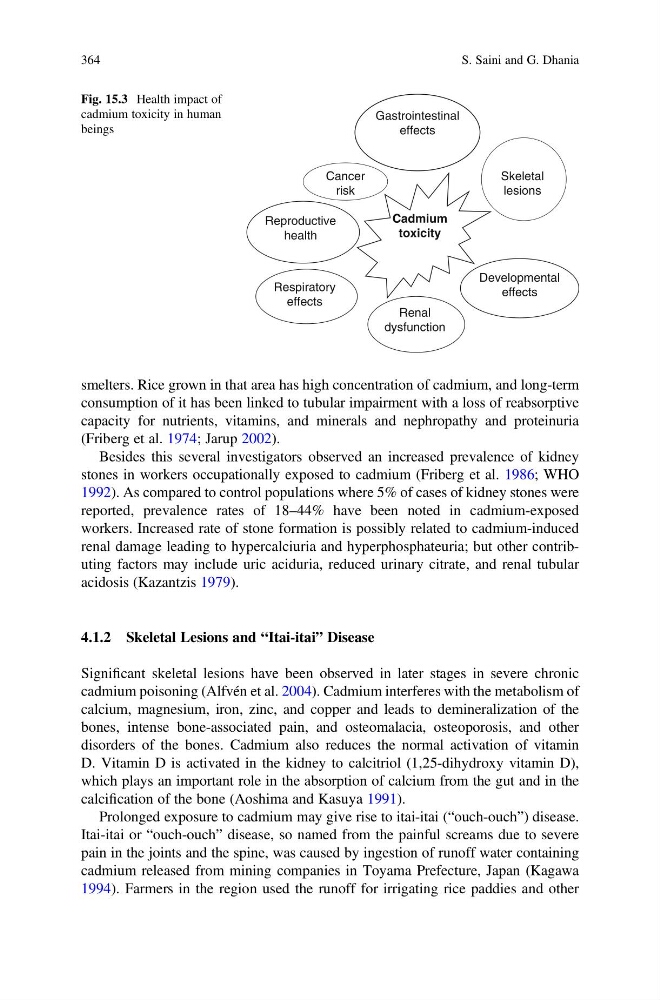
Fig. 15.3 Health impact of
cadmium toxicity in human
beings
364
S. Saini and G. Dhania
consumption of it has been linked to tubular impairment with a loss of reabsorptive
capacity for nutrients, vitamins, and minerals and nephropathy and proteinuria
(Friberg et al. 1974; Jarup 2002).
Besides this several investigators observed an increased prevalence of kidney
stones in workers occupationally exposed to cadmium (Friberg et al. 1986; WHO
1992). As compared to control populations where 5% of cases of kidney stones were
reported, prevalence rates of 18–44% have been noted in cadmium-exposed
workers. Increased rate of stone formation is possibly related to cadmium-induced
renal damage leading to hypercalciuria and hyperphosphateuria; but other contributing factors may include uric aciduria, reduced urinary citrate, and renal tubular
acidosis (Kazantzis 1979).
4.1.2 Skeletal Lesions and “Itai-itai” Disease
Significant skeletal lesions have been observed in later stages in severe chronic
cadmium poisoning (Alfvén et al. 2004). Cadmium interferes with the metabolism of
calcium, magnesium, iron, zinc, and copper and leads to demineralization of the
bones, intense bone-associated pain, and osteomalacia, osteoporosis, and other
disorders of the bones. Cadmium also reduces the normal activation of vitamin
D. Vitamin D is activated in the kidney to calcitriol (1,25-dihydroxy vitamin D),
which plays an important role in the absorption of calcium from the gut and in the
calcification of the bone (Aoshima and Kasuya 1991).
Prolonged exposure to cadmium may give rise to itai-itai (“ouch-ouch”) disease.
Itai-itai or “ouch-ouch” disease, so named from the painful screams due to severe
pain in the joints and the spine, was caused by ingestion of runoff water containing
cadmium released from mining companies in Toyama Prefecture, Japan (Kagawa
1994). Farmers in the region used the runoff for irrigating rice paddies and other
Gastrointestinal
effects
Cancer
risk
Cadmium
toxicity
Reproductive
health
Respiratory
effects
Renal
dysfunction
Skeletal
lesions
Developmental
effects
Fig. 15.3 Health impact of
cadmium toxicity in human
beings
364
S. Saini and G. Dhania