

suspended algal treatment systems. This is because concentrated microalgal pastes
can be directly harvested (Molina-Grima et al. 2003). Attached algal treatment
systems were firstly reported in the 1970s with rotating disc made of aluminum
(Torpey et al. 1971), and then various types of rotating algal biofilm reactor (RARB)
and ATS were developed (Gross and Wen 2014). Among them, ATS has been well
known for the scale-up of algal wastewater treatment processes. ATS consists of a
plastic mesh for attached filamentous algal growth in a raceway by pumping the
water (Adey et al. 2011). As water flows down the plastic mesh in a raceway,
nutrients are removed by filamentous algae. The commercialization of the technology is under way by Hydro Mentia Technologies LLC (~30 MGD of treatment
capacity) on the hectare scale in Florida, USA (Christenson and Sims 2011).
3.4.3 Potential Technology: Separating Cultivation System
The main trade-off of microalgae-based wastewater treatment systems is large land
area required for mass algal growth. Light transmittance is also important in designing and scaling up microalgae-based wastewater treatment systems as it is frequently
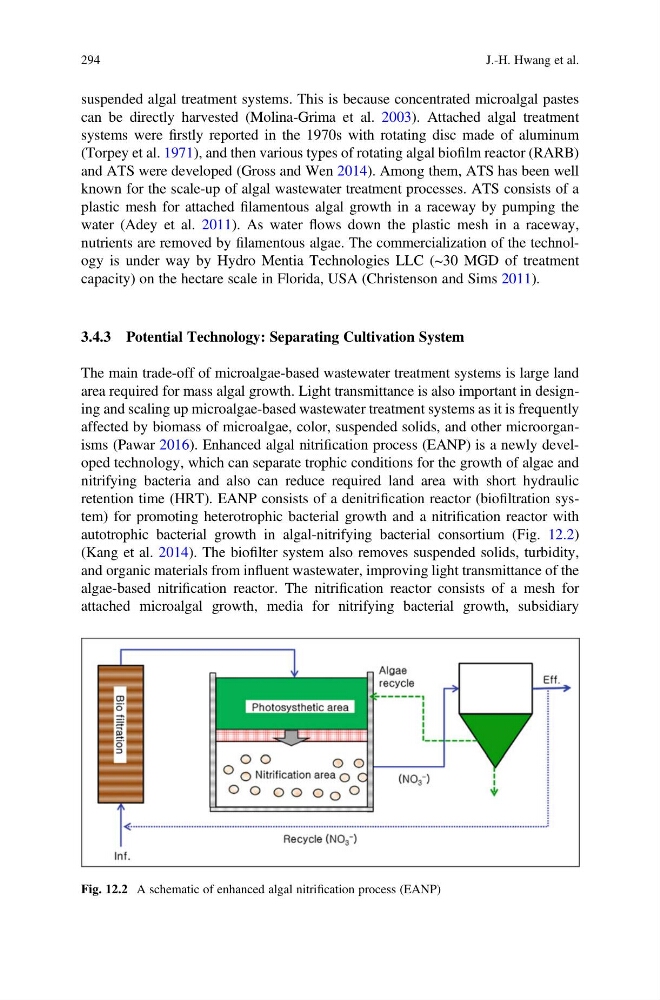
affected by biomass of microalgae, color, suspended solids, and other microorganisms (Pawar 2016). Enhanced algal nitrification process (EANP) is a newly developed technology, which can separate trophic conditions for the growth of algae and
nitrifying bacteria and also can reduce required land area with short hydraulic
retention time (HRT). EANP consists of a denitrification reactor (biofiltration system) for promoting heterotrophic bacterial growth and a nitrification reactor with
autotrophic bacterial growth in algal-nitrifying bacterial consortium (Fig. 12.2)
(Kang et al. 2014). The biofilter system also removes suspended solids, turbidity,
and organic materials from influent wastewater, improving light transmittance of the
algae-based nitrification reactor. The nitrification reactor consists of a mesh for
attached microalgal growth, media for nitrifying bacterial growth, subsidiary
Fig. 12.2 A schematic of enhanced algal nitrification process (EANP)
294
J.-H. Hwang et al.
can be directly harvested (Molina-Grima et al. 2003). Attached algal treatment
systems were firstly reported in the 1970s with rotating disc made of aluminum
(Torpey et al. 1971), and then various types of rotating algal biofilm reactor (RARB)
and ATS were developed (Gross and Wen 2014). Among them, ATS has been well
known for the scale-up of algal wastewater treatment processes. ATS consists of a
plastic mesh for attached filamentous algal growth in a raceway by pumping the
water (Adey et al. 2011). As water flows down the plastic mesh in a raceway,
nutrients are removed by filamentous algae. The commercialization of the technology is under way by Hydro Mentia Technologies LLC (~30 MGD of treatment
capacity) on the hectare scale in Florida, USA (Christenson and Sims 2011).
3.4.3 Potential Technology: Separating Cultivation System
The main trade-off of microalgae-based wastewater treatment systems is large land
area required for mass algal growth. Light transmittance is also important in designing and scaling up microalgae-based wastewater treatment systems as it is frequently
affected by biomass of microalgae, color, suspended solids, and other microorganisms (Pawar 2016). Enhanced algal nitrification process (EANP) is a newly developed technology, which can separate trophic conditions for the growth of algae and
nitrifying bacteria and also can reduce required land area with short hydraulic
retention time (HRT). EANP consists of a denitrification reactor (biofiltration system) for promoting heterotrophic bacterial growth and a nitrification reactor with
autotrophic bacterial growth in algal-nitrifying bacterial consortium (Fig. 12.2)
(Kang et al. 2014). The biofilter system also removes suspended solids, turbidity,
and organic materials from influent wastewater, improving light transmittance of the
algae-based nitrification reactor. The nitrification reactor consists of a mesh for
attached microalgal growth, media for nitrifying bacterial growth, subsidiary
Fig. 12.2 A schematic of enhanced algal nitrification process (EANP)
294
J.-H. Hwang et al.