

et al. 2004). Chlorella sorokiniana in aggregation with bacteria has been shown to
degrade salicylate that is effective for removing oil (Muñoz et al. 2006). A study by
Radwan et al. (2002) found that the macroalgae covered with biofilm-forming
bacteria are able to degrade oil. There is a wide range of algae and bacteria
immobilized available for oil degradation. However, it should be noted that no
single algal biomass immobilized is suitable for oil removal. Immobilized cell
systems can also entrap the microalgal cells into a matrix which is effective for
algae harvesting (Gonzalez-Bashan et al. 2000). One apparent advantage over other
harvesting methods is low-energy consumption.
3.1.3 Integrated Photobioreactors
Improvements in the design of photobioreactors (PBRs) are needed to boost productivity and to minimize the use of wastewater with effective nutrient removal
(Kumar et al. 2011). Three important features of PBR design and operation are
nutrient demand which contributes to operating costs (Slade and Bauen 2013); water
demand (Harto et al. 2010) which is especially important in sunny, but arid regions;
and harvested biomass concentration (Christenson and Sims 2011).
Many designs of PBRs have been introduced to improve cultivation and reduce
costs. The most common configurations include tubular systems, flattened plate-type
systems, and ultrathin immobilized configurations. However, most PBRs have
problems with pH increase or dissolved oxygen (DO) buildup, particularly at large
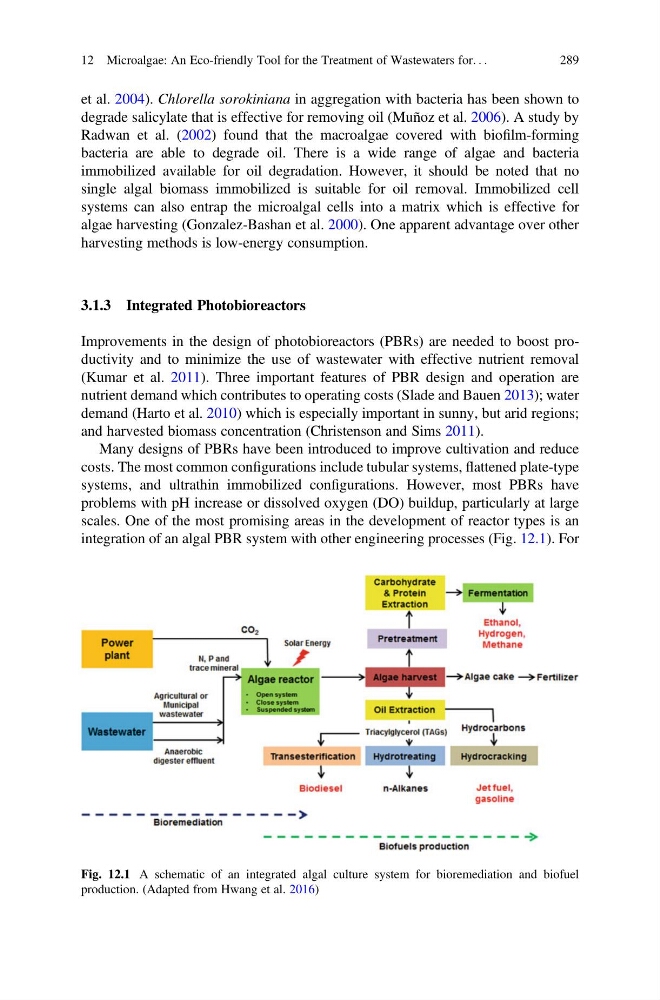
scales. One of the most promising areas in the development of reactor types is an
integration of an algal PBR system with other engineering processes (Fig. 12.1). For
Fig. 12.1 A schematic of an integrated algal culture system for bioremediation and biofuel
production. (Adapted from Hwang et al. 2016)
12 Microalgae: An Eco-friendly Tool for the Treatment of Wastewaters for. . .
289
degrade salicylate that is effective for removing oil (Muñoz et al. 2006). A study by
Radwan et al. (2002) found that the macroalgae covered with biofilm-forming
bacteria are able to degrade oil. There is a wide range of algae and bacteria
immobilized available for oil degradation. However, it should be noted that no
single algal biomass immobilized is suitable for oil removal. Immobilized cell
systems can also entrap the microalgal cells into a matrix which is effective for
algae harvesting (Gonzalez-Bashan et al. 2000). One apparent advantage over other
harvesting methods is low-energy consumption.
3.1.3 Integrated Photobioreactors
Improvements in the design of photobioreactors (PBRs) are needed to boost productivity and to minimize the use of wastewater with effective nutrient removal
(Kumar et al. 2011). Three important features of PBR design and operation are
nutrient demand which contributes to operating costs (Slade and Bauen 2013); water
demand (Harto et al. 2010) which is especially important in sunny, but arid regions;
and harvested biomass concentration (Christenson and Sims 2011).
Many designs of PBRs have been introduced to improve cultivation and reduce
costs. The most common configurations include tubular systems, flattened plate-type
systems, and ultrathin immobilized configurations. However, most PBRs have
problems with pH increase or dissolved oxygen (DO) buildup, particularly at large
scales. One of the most promising areas in the development of reactor types is an
integration of an algal PBR system with other engineering processes (Fig. 12.1). For
Fig. 12.1 A schematic of an integrated algal culture system for bioremediation and biofuel
production. (Adapted from Hwang et al. 2016)
12 Microalgae: An Eco-friendly Tool for the Treatment of Wastewaters for. . .
289