

Mahar et al. 2016). The negative effects of heavy metals such as Hg, Cd, Cr, Pb, and
Ar on soil, water, plants, animals, and humans have been studied extensively (Salem
et al. 2000; Tripathi et al. 2007; Gulati et al. 2010; Iqbal 2012). Moreover, many
studies have explored the efficiency of different plant varieties for remediating
different toxic metal contaminants (Kim et al. 2010; Gomes et al. 2016). For
example, the efficiency of accumulating Cu, Zn, and Pb by the plant species
Eleocharis acicularis was reported by Ha et al. (2011). Oosten and Maggio (2015)
and Gomes et al. (2016) also reviewed the use of genetically modified halophytic
plants in remediating HM-contaminated soils.
2 Source and Impacts of Toxic Metal Contamination in Soil
With the rapid development of global industry, HMs pollutants enter the soil through
a variety of paths. In natural sources, parent soil materials and the soil-forming
process are the two most important factors. Contaminated soil not only affects the
yield and quality of agricultural products, but also relates to the quality of the
Enhancing metals and
metalloids ligand production
(MTs, PCs, GSH)
Accumulation
Volatilization
Translocation
Uptake
Transport
metals/ metalloids
Modification
Detoxification
Conversion of metals and
metalloids to less toxic
and volatile forms
Manipulating metals/
metalloids transporter
genes and uptake system
(influx/ efflux)
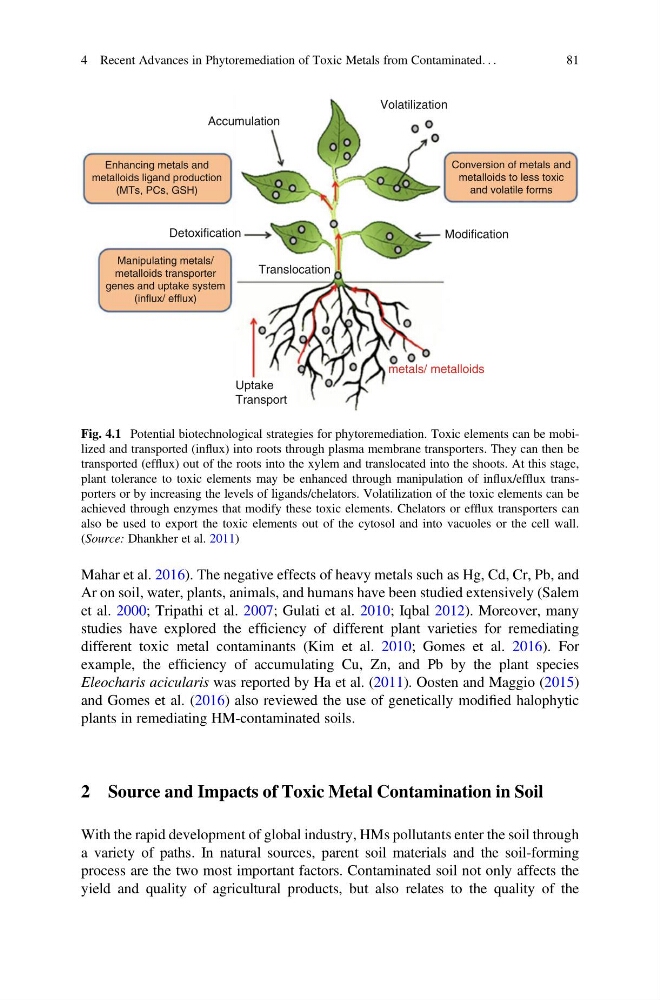
Fig. 4.1 Potential biotechnological strategies for phytoremediation. Toxic elements can be mobilized and transported (influx) into roots through plasma membrane transporters. They can then be
transported (efflux) out of the roots into the xylem and translocated into the shoots. At this stage,
plant tolerance to toxic elements may be enhanced through manipulation of influx/efflux transporters or by increasing the levels of ligands/chelators. Volatilization of the toxic elements can be
achieved through enzymes that modify these toxic elements. Chelators or efflux transporters can
also be used to export the toxic elements out of the cytosol and into vacuoles or the cell wall.
(Source: Dhankher et al. 2011)
4 Recent Advances in Phytoremediation of Toxic Metals from Contaminated. . .
81
Ar on soil, water, plants, animals, and humans have been studied extensively (Salem
et al. 2000; Tripathi et al. 2007; Gulati et al. 2010; Iqbal 2012). Moreover, many
studies have explored the efficiency of different plant varieties for remediating
different toxic metal contaminants (Kim et al. 2010; Gomes et al. 2016). For
example, the efficiency of accumulating Cu, Zn, and Pb by the plant species
Eleocharis acicularis was reported by Ha et al. (2011). Oosten and Maggio (2015)
and Gomes et al. (2016) also reviewed the use of genetically modified halophytic
plants in remediating HM-contaminated soils.
2 Source and Impacts of Toxic Metal Contamination in Soil
With the rapid development of global industry, HMs pollutants enter the soil through
a variety of paths. In natural sources, parent soil materials and the soil-forming
process are the two most important factors. Contaminated soil not only affects the
yield and quality of agricultural products, but also relates to the quality of the
Enhancing metals and
metalloids ligand production
(MTs, PCs, GSH)
Accumulation
Volatilization
Translocation
Uptake
Transport
metals/ metalloids
Modification
Detoxification
Conversion of metals and
metalloids to less toxic
and volatile forms
Manipulating metals/
metalloids transporter
genes and uptake system
(influx/ efflux)
Fig. 4.1 Potential biotechnological strategies for phytoremediation. Toxic elements can be mobilized and transported (influx) into roots through plasma membrane transporters. They can then be
transported (efflux) out of the roots into the xylem and translocated into the shoots. At this stage,
plant tolerance to toxic elements may be enhanced through manipulation of influx/efflux transporters or by increasing the levels of ligands/chelators. Volatilization of the toxic elements can be
achieved through enzymes that modify these toxic elements. Chelators or efflux transporters can
also be used to export the toxic elements out of the cytosol and into vacuoles or the cell wall.
(Source: Dhankher et al. 2011)
4 Recent Advances in Phytoremediation of Toxic Metals from Contaminated. . .
81