

Forest Resources of Jharkhand, Eastern India …
85
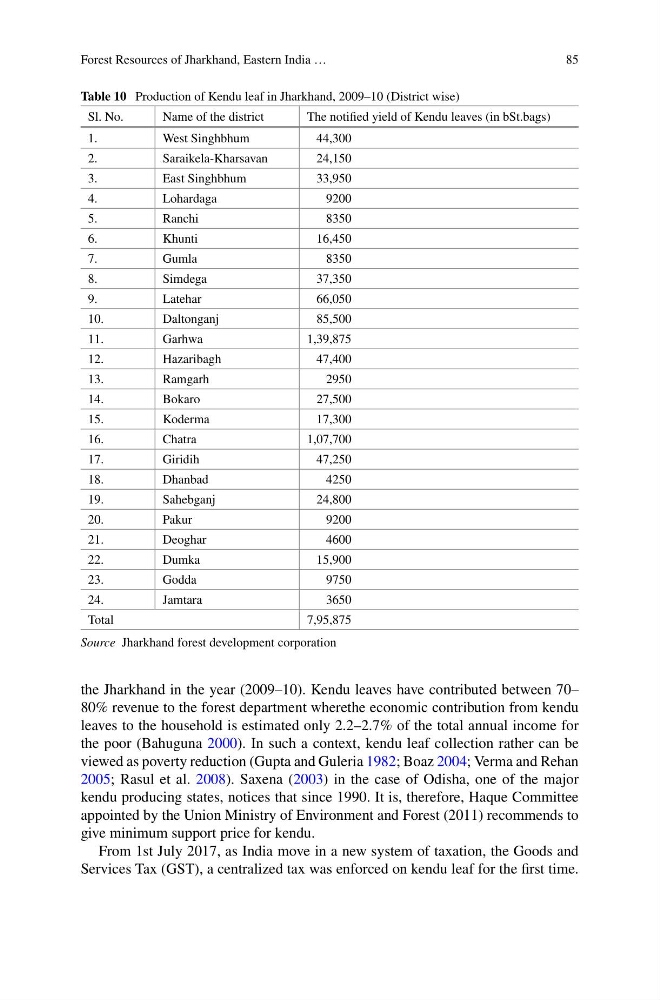
Table 10 Production of Kendu leaf in Jharkhand, 2009–10 (District wise)
Sl. No.
Name of the district
The notified yield of Kendu leaves (in bSt.bags)
1.
West Singhbhum
44,300
2.
Saraikela-Kharsavan
24,150
3.
East Singhbhum
33,950
4.
Lohardaga
9200
5.
Ranchi
8350
6.
Khunti
16,450
7.
Gumla
8350
8.
Simdega
37,350
9.
Latehar
66,050
10.
Daltonganj
85,500
11.
Garhwa
1,39,875
12.
Hazaribagh
47,400
13.
Ramgarh
2950
14.
Bokaro
27,500
15.
Koderma
17,300
16.
Chatra
1,07,700
17.
Giridih
47,250
18.
Dhanbad
4250
19.
Sahebganj
24,800
20.
Pakur
9200
21.
Deoghar
4600
22.
Dumka
15,900
23.
Godda
9750
24.
Jamtara
3650
Total
7,95,875
Source Jharkhand forest development corporation
the Jharkhand in the year (2009–10). Kendu leaves have contributed between 70–
80% revenue to the forest department wherethe economic contribution from kendu
leaves to the household is estimated only 2.2–2.7% of the total annual income for
the poor (Bahuguna 2000). In such a context, kendu leaf collection rather can be
viewed as poverty reduction (Gupta and Guleria 1982; Boaz 2004; Verma and Rehan
2005; Rasul et al. 2008). Saxena (2003) in the case of Odisha, one of the major
kendu producing states, notices that since 1990. It is, therefore, Haque Committee
appointed by the Union Ministry of Environment and Forest (2011) recommends to
give minimum support price for kendu.
From 1st July 2017, as India move in a new system of taxation, the Goods and
Services Tax (GST), a centralized tax was enforced on kendu leaf for the first time.
85
Table 10 Production of Kendu leaf in Jharkhand, 2009–10 (District wise)
Sl. No.
Name of the district
The notified yield of Kendu leaves (in bSt.bags)
1.
West Singhbhum
44,300
2.
Saraikela-Kharsavan
24,150
3.
East Singhbhum
33,950
4.
Lohardaga
9200
5.
Ranchi
8350
6.
Khunti
16,450
7.
Gumla
8350
8.
Simdega
37,350
9.
Latehar
66,050
10.
Daltonganj
85,500
11.
Garhwa
1,39,875
12.
Hazaribagh
47,400
13.
Ramgarh
2950
14.
Bokaro
27,500
15.
Koderma
17,300
16.
Chatra
1,07,700
17.
Giridih
47,250
18.
Dhanbad
4250
19.
Sahebganj
24,800
20.
Pakur
9200
21.
Deoghar
4600
22.
Dumka
15,900
23.
Godda
9750
24.
Jamtara
3650
Total
7,95,875
Source Jharkhand forest development corporation
the Jharkhand in the year (2009–10). Kendu leaves have contributed between 70–
80% revenue to the forest department wherethe economic contribution from kendu
leaves to the household is estimated only 2.2–2.7% of the total annual income for
the poor (Bahuguna 2000). In such a context, kendu leaf collection rather can be
viewed as poverty reduction (Gupta and Guleria 1982; Boaz 2004; Verma and Rehan
2005; Rasul et al. 2008). Saxena (2003) in the case of Odisha, one of the major
kendu producing states, notices that since 1990. It is, therefore, Haque Committee
appointed by the Union Ministry of Environment and Forest (2011) recommends to
give minimum support price for kendu.
From 1st July 2017, as India move in a new system of taxation, the Goods and
Services Tax (GST), a centralized tax was enforced on kendu leaf for the first time.